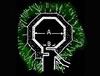
Wn352 les rochers du Calenfrier Auderville

FLAK · K.V.U.Gruppe Joburg · AOK 7 Normandy · France

Wn352 les rochers du Calenfrier Auderville

Wn352 les rochers du Calenfrier, Auderville
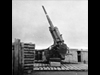
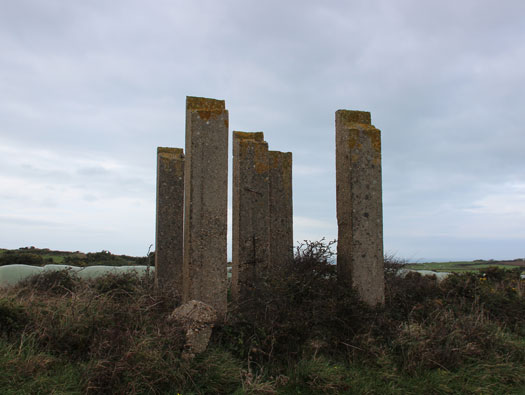
Flak position that was laid out to protect the building of many heavy gun positions and radar sites in the Hague peninsular to the west of Cherbourg. Later completely removed and all that is left are the five concrete plinths.
Wn352 les rochers du Calenfrier, Auderville
Flak group..
Flak group..

Wn352 les rochers du Calenfrier, Auderville

Wn352 les rochers du Calenfrier, Auderville
 

Google

Wn352 les rochers du Calenfrier, Auderville

Wn352 les rochers du Calenfrier, Auderville
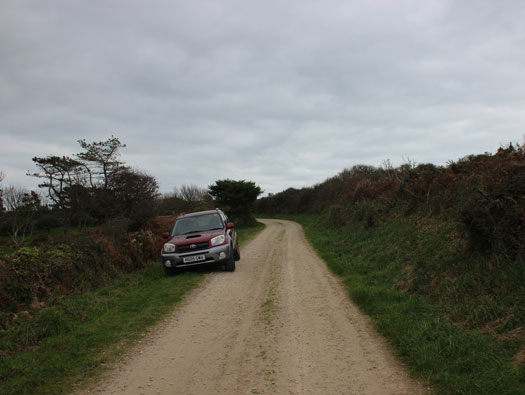
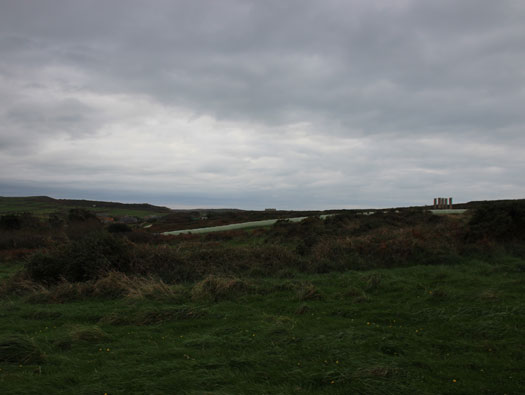
So its October 2017 and I am in Normandy to visit my friend John and his wife in Fierville-les-Mines. I have some spare time and decide to have a 'mooch' around in my Rav 4 (now sadly moved on). Just checked, as of 2025 its still on the road. I had seen some mysterious concrete posts in the distance on many occasions and decided it was time to find them.

11 October 2017

Wn352 les rochers du Calenfrier, Auderville

Wn352 les rochers du Calenfrier, Auderville
This site was armed, as early as February 1942, by a temporary anti-aircraft battery consisting of six 8.8cm Flak 18 guns. This battery, 4./344, belonged to the Schwere-Flak-Abteilung 344 (heavy anti-aircraft battery) under the command of Major Eugen Maier, who deployed his four batteries mainly in the western sector of Cherbourg and remained in position until November 1943 then they moving to Rouen. On the top of this windswept hill, six field gun emplacements were built, as well as about fifteen wooden barracks used as accommodations for the gun crews. A fire control post, located to the north west, is equipped with a Flak Kommandogerät 40 and to the south, a 60cm searchlight (Scheinwerfer) occupying a wooden platform mounted on concrete piles. The AA batterie was placed here to help defend the radar and radio-navigation sites in the area and for the protection of the two coastal batteries at Auderville. Currently, nothing remains of these wooden structures except for the five concrete piles that served as foundations.

11 October 2017

8.8cm batterie layout.
Wn352 les rochers du Calenfrier, Auderville

Wn352 les rochers du Calenfrier, Auderville
Wn352 les rochers du Calenfrier, Auderville
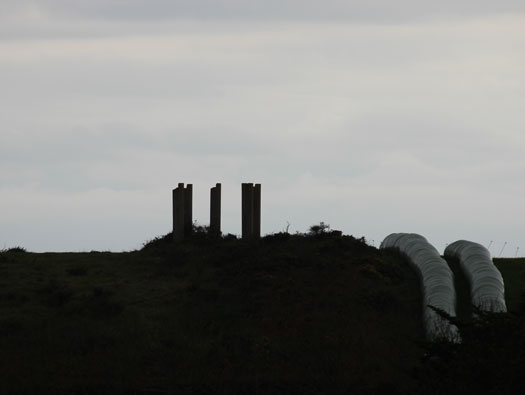
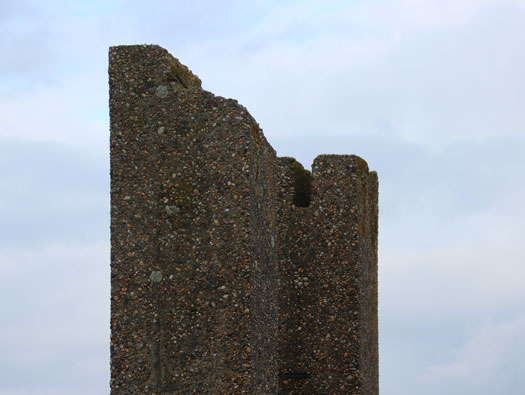
This is the view from a distance, just five concrete posts.

11 October 2017

Wn352 les rochers du Calenfrier, Auderville

Wn352 les rochers du Calenfrier, Auderville
 

11 October 2017

Wn352 les rochers du Calenfrier, Auderville
Wn352 les rochers du Calenfrier, Auderville
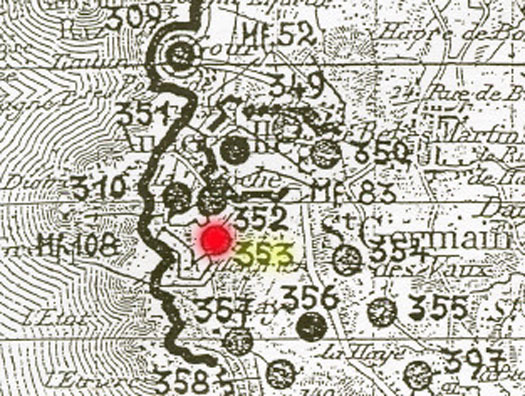
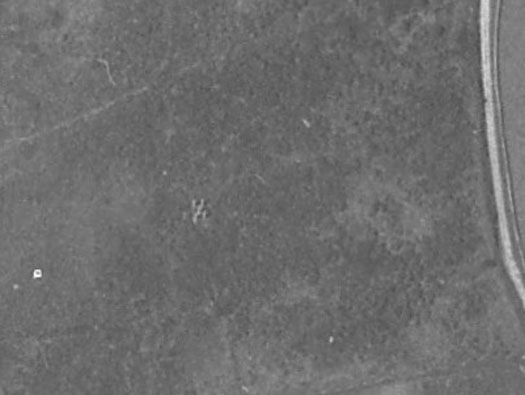
An air photo in 1947 of the area and only the five concrete posts are visible, I can see now positions of any of the guns or the huts.

1947 IGNF

Wn352 les rochers du Calenfrier, Auderville

Wn352 les rochers du Calenfrier, Auderville

11 October 2017
Wn352 les rochers du Calenfrier, Auderville

Wn352 les rochers du Calenfrier, Auderville
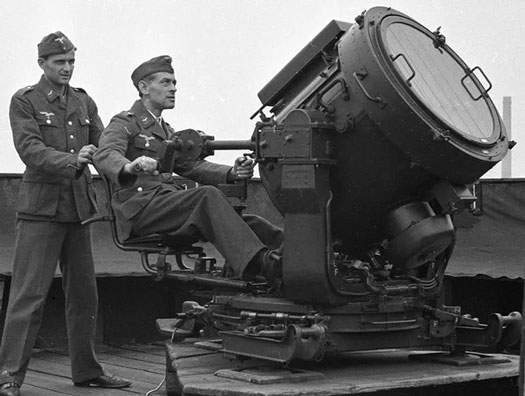
A 60cm searchlight (Scheinwerfer) occupying a wooden emplacement mounted on concrete piles. So that is what it was for.

11 October 2017

Wn352 les rochers du Calenfrier, Auderville

Wn352 les rochers du Calenfrier, Auderville

Plan Kurt

Wn352 les rochers du Calenfrier, Auderville

Wn352 les rochers du Calenfrier, Auderville
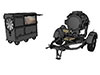
60 cm Flakscheinwerfer (anti-aircraft searchlight) (Flak-Sw 36). The SW 36 anti-aircraft searchlight was developed in the late 1930s. It was a lightweight and portable device, easy to deploy. Its primary function was to search for and detect enemy aircraft at low and medium altitudes. The projector is powered by a generator. The 60 cm projector is equipped with a 60 cm diameter parabolic reflector lens. The focal length is 250 mm. As with heavier projectors, the high-density arc lamp is mounted inverted within the projector. The diffused light intensity is 135 million candela. Under favourable weather conditions, the light beam can be carried to a maximum altitude of 5200 m. The optimal operating altitude is 1500 m. However, with beam dispersion, target detection is possible up to a distance of 3500 meters. The power consumption is 90 amperes at 60 volts. Thanks to the handles implemented by the room manager seated behind the projector, the projector can be manually aligned on-site and in azimuth. The beam can be blocked by a shutter. Setting up the projector requires a team of five: 1. Room Chief, who issues the orders. 1. Soldier responsible for monitoring and locating the projector. They are responsible for maintenance and repair in case of a malfunction. They are subject to the room manager's instructions. 1. Soldier responsible for setting up the projector and aligning the beam with the target. 1. Soldier responsible for the generator. 1. truck driver. Manufactured by AEG, Bodenbach Zeiss & Jena 1941 to 1945 and 6376 were made.

Bundesarchiv

Sd.Ah 51 trailer and generator.

Wn352 les rochers du Calenfrier, Auderville

Wn352 les rochers du Calenfrier, Auderville
Each pier had a slot in the top to place a wooden plank and then the rest of the wooden assembly would tie into the piers.

11 October 2017

Wn352 les rochers du Calenfrier, Auderville

Wn352 les rochers du Calenfrier, Auderville
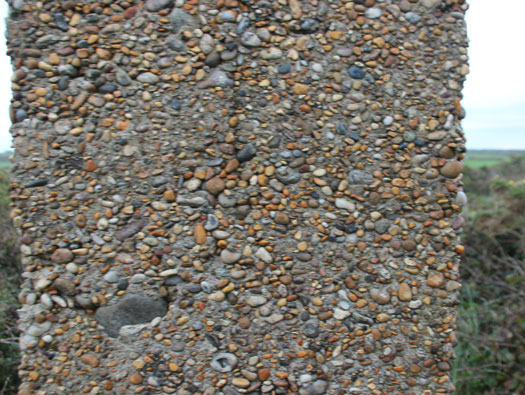
The concrete looks more stone than sand & cement?

11 October 2017

Wn352 les rochers du Calenfrier, Auderville

Wn352 les rochers du Calenfrier, Auderville

11 October 2017
Wn352 les rochers du Calenfrier, Auderville
Wn352 les rochers du Calenfrier, Auderville
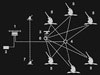
Layout of an anti-aircraft batterie, the six guns laid out in a circle.

1 - Befchlsstelle - Command centre.

2 - Stromaggregat - Generator.

3 - Kommandogerät 40 - Range finder/Height finder.

4 - Verteilerkasten - Distribution box.

5 - Geschutze - Protected positions.

6 - Drosselkaston - Throttle (communications box).

7 - Leichter Flaktruppe - Light anti-aircraft troops

Multi-core command cable.

Wn352 les rochers du Calenfrier, Auderville
Wn352 les rochers du Calenfrier, Auderville

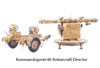
Range finder. This was placed to the N/W of the batterie. There are no remains of the batterie. Flak Kommandogerät 40. Was of a stereoscopic design and had a four meter optical tube. It was designed to work with heavy FlaK 18s and Flak 40s. In order to operate effectively, the Kommandogerät 40 required at least a crew of five men. Inside were two telescopic lenses, operator lenses, and adjustable mirrors. By calculating the length of the tube and the angle at which the lenses were positioned, the crew could pinpoint where the target aircraft was. The optics used in the design were high quality like most made in Germany at the time. Furthermore, the Kommandogerät 40 was a crucial part of any FlaK defence and was met by praise from many a fire-control team.  The machine itself could rotate a full 360 degrees and had an elevation range from 0 to 90 degrees. The total weight of the Kommandogerät 40 was around 915 kilograms and this did become a disadvantage because it made the machine near immobile. Another disadvantage was that it took a skilled crew to operate it. The Kommandogerät 40 was designed in the late 1930s to replace aging World War I era equipment in Germany's anti-aircraft divisions. In 1940, it was accepted for service. It was produced in the thousands and was used in a variety of settings where it was needed.

Wiki

Bundesarchiv

Multi-core command cable.
Flak Kommandogerät 40 and trailer.

Wn352 les rochers du Calenfrier, Auderville
Wn352 les rochers du Calenfrier, Auderville
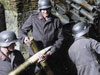
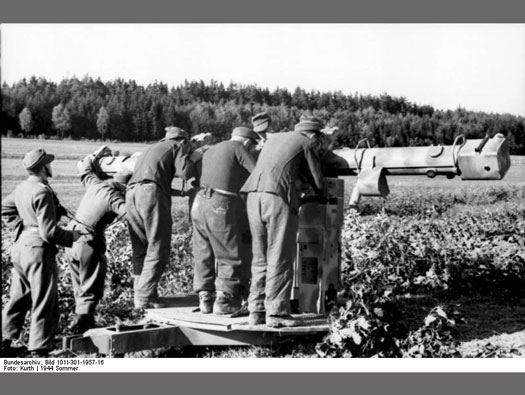
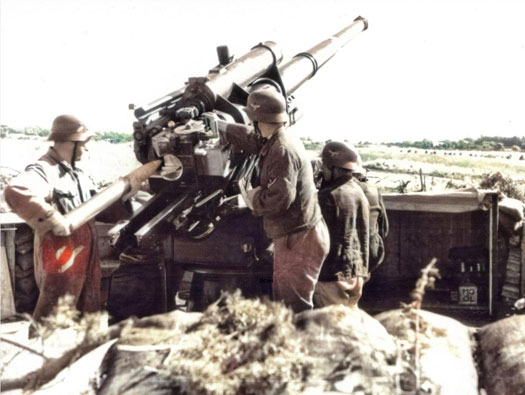
8.8cm Flak in a field position as the ones here would have been. A Flak Company would be fully self-contained, they would have had transport, generator, range finder, command and usually six guns. They could move, set up and, fight. Here they were around for some time, so instead of living in tents, they had several wooden huts built.

Bundesarchiv

Wn352 les rochers du Calenfrier, Auderville
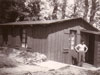
A German wooden hut near Cherbourg.
Wn352 les rochers du Calenfrier, Auderville
Wn352 les rochers du Calenfrier, Auderville
Wn352 les rochers du Calenfrier, Auderville

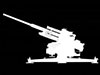
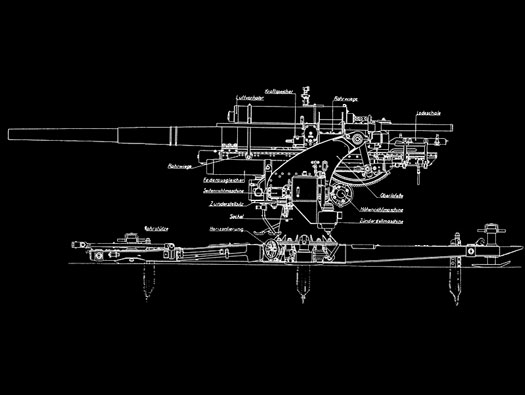
8.8 cm Flugabwehrkanone 18. First variant had a new semi-automatic breech, making it a rapid-fire gun. It entered production in Germany in 1933 and used the Sonderanhänger 201 trailer. Its weight was seven tonnes. Rate of fire was 15 to 20 rounds per minute. It was later fitted with a gun shield to protect the crew when engaging ground targets. Produced by Krupp.

Name - 8.8 cm Flak 18. Crew - 11 (Commander, two gun operators, two fuze setter operators, loader, four ammunition assistants, and the driver).

Weight in firing position - 5,150 kg Total weight 7,450 kg.

Dimensions in towing position: Length -

7.7 m. Width 2.2 m. Height - 2.4 m.

Dimensions in deployed position:

Length -5.8 m. Height 2.14 m.

Primary Armament - 8.8 cm L/56 gun.

Elevation - -3° to +85°.

Ammunition - 88×57mm 1R cartridge.

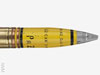
88×57mm 1R cartridge.
Wn352 les rochers du Calenfrier, Auderville
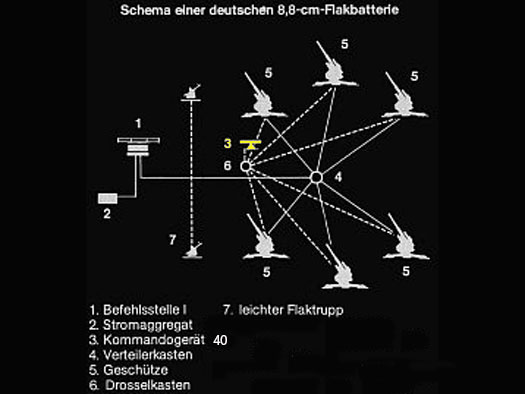
Plan of a Flak field position.

Wn352 les rochers du Calenfrier, Auderville
Wn352 les rochers du Calenfrier, Auderville
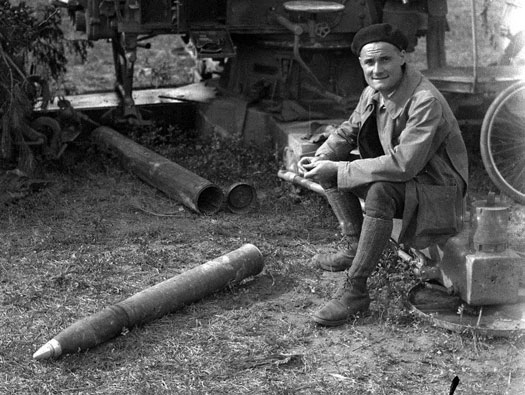
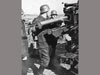
I would think a post war photo of a Frenchman posing in front of an 8.8cm Flak shell, it gives an idea how big they were.
Wn352 les rochers du Calenfrier, Auderville
Wn352 les rochers du Calenfrier, Auderville
Wn352 les rochers du Calenfrier, Auderville
 

11 October 2017