Bo42 Bordeaux U-Boat Pens
U-BOAR PEN · K.V.Gruppe Bordeaux · OK 1 Vendée - Charente Maritime · France

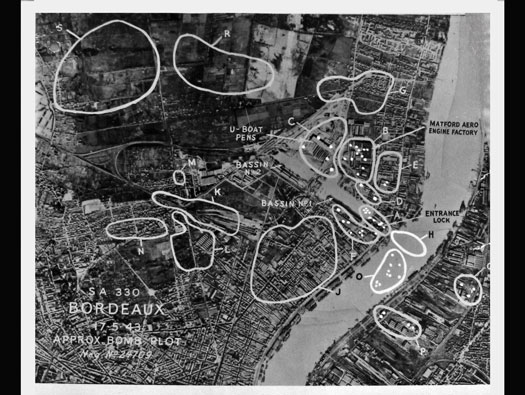
WO 2252/92 is a War Office file and dated 1 May 1944, some of the photos are of the actual shelter, you have to wonder how the Allied intelligence managed to get the photos. They probably were sent over by the French Resistance workers.
The ADM file is from NID 03635/43 (Naval Intelligence Division).
ADM 1/14763
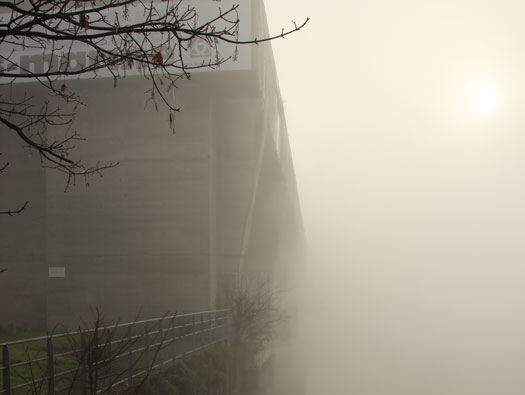
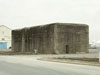
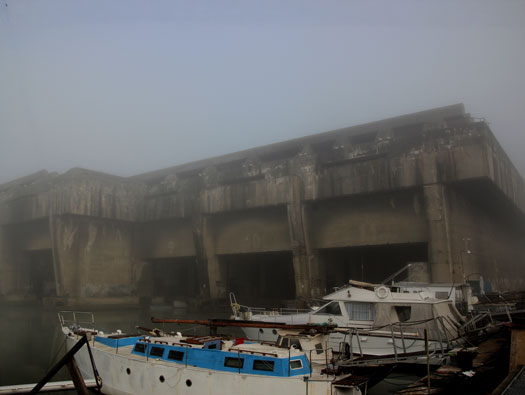
We visited Bordeaux on the 09 November 2012, I am writing this funnily enough on the 08 November 2026. We arrived at the bunker and due to fog could not see it and gradually the fog started to clear. Today Nov 2026 and I awoke to fog.
09 November 2012
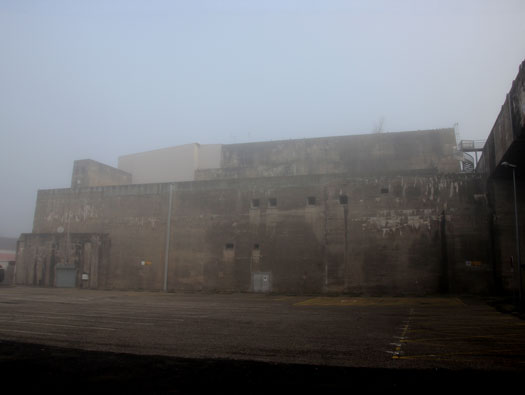
Following the capitulation of France in June 1940, the Kriegsmarine (German Navy) moved swiftly to establish a chain of U-boat bases along the west coast of France. This afforded much quicker and safer access across the Bay of Biscay to the North Atlantic convoy routes between Britain and North America, compared with the long and dangerous sailing from their German bases, around Scotland. These U-boat bases were at Brest, Lorient, St Nazaire, La Pallice and here at Bordeaux.
09 November 2012
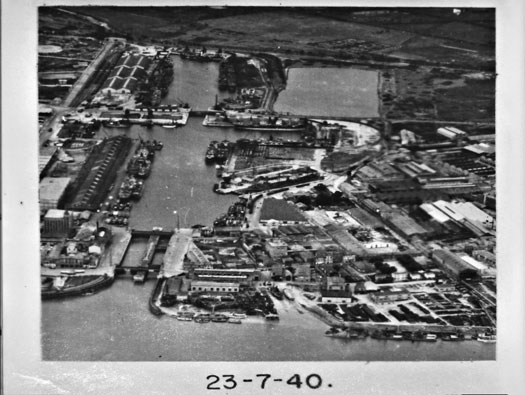
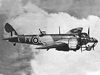
23 July 1940, Bordeaux as the Germans would have found it, an RAF reconnaissance photo. Possibly taken by a Bristol Blenheim crew mwmber.
WO 2252/92
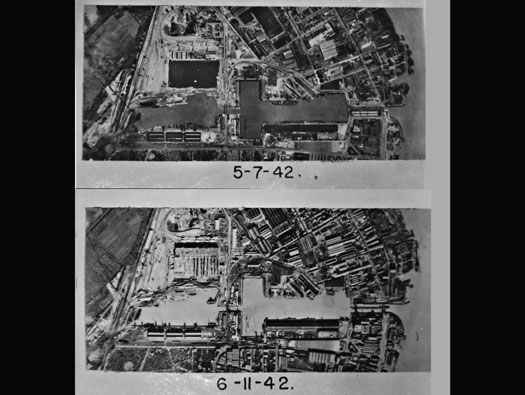
05 July 1942 and work has started by the Todt Org. They have incorporated an original basin and built over it.
06 November 1942 and work has cracked on a lot. The foundations are in, walls being built up and the individual docks can be seen, before the roof goes on.


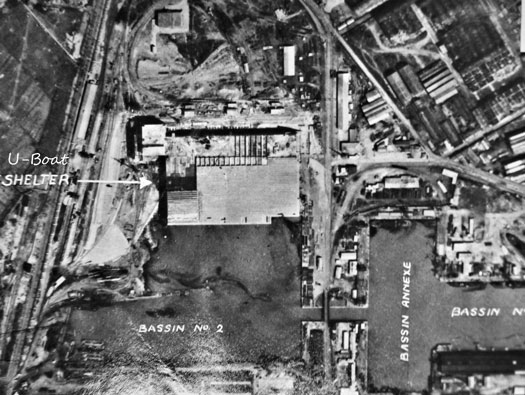
Unsure of date, the main roof is on, but the rear workshop roof seems missing. On the far left of the building is the generator block for power to run the whole complex, if the mains power goes off.
WO 2252/92
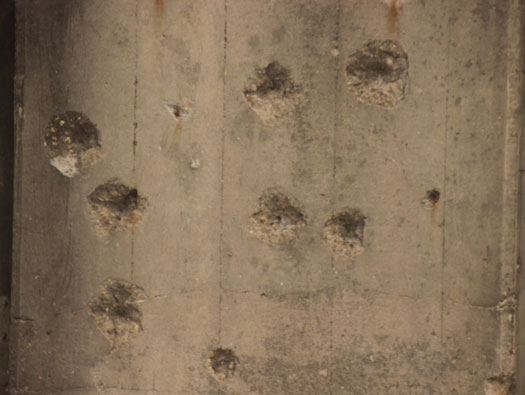
Battle damage.
09 November 2012
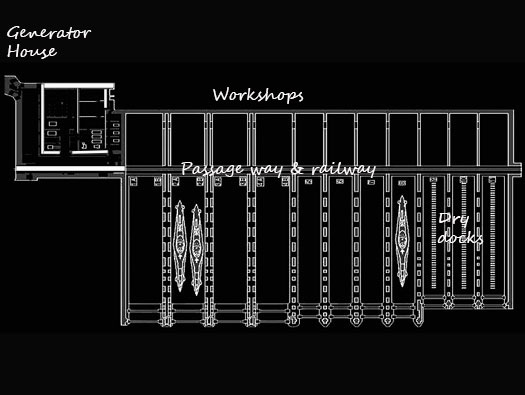
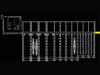
Plan of the U-Boat shelter with on the left the Generator house. At the rear a row of workshops and in front all the pens. RELIKTE states that it may also have been a store for torpedoes?
Four double docks, four singles and three dry docks.
Behind was a SK Trafo bunker to keep the railway engine safe from bombing.
WO 2252/92
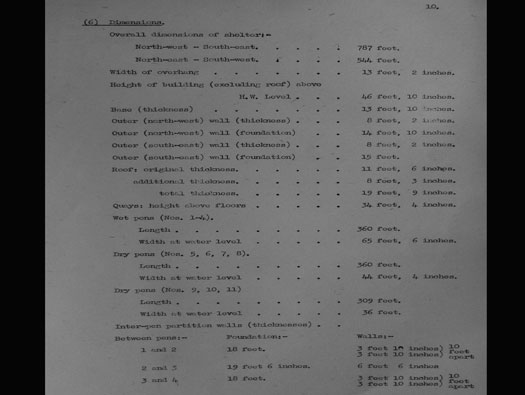
Bunker dimensions.
WO 252/92
A bombing raid was mounted on 17 May 1943 but regrettably some bombs missed and caused local civilian casualties; a plaque commemorates their contribution to the eventual Allied victory. The bunker complex was bombed again on 11 and 14 August 1944 and received several direct hits; however, after the liberation, Allied troops found no damage had been caused to the massive structure.
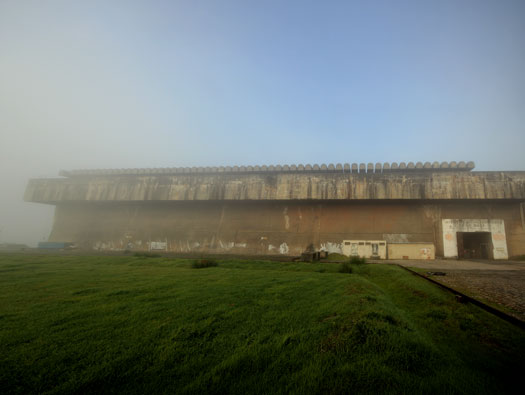
09 November 2012
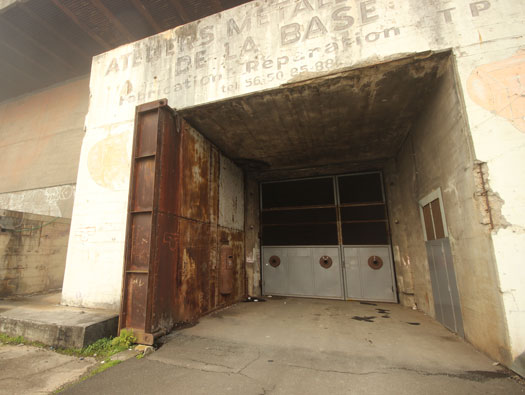
09 November 2012
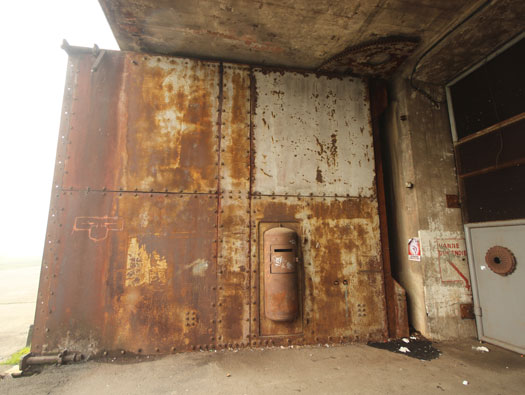
The original door, I am not sure which way it hinges,
09 November 2012
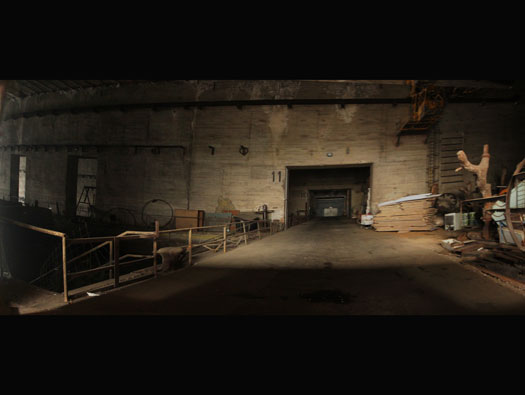
Looking into the first two dry docks, there were three dry and the rest are wet docks.
09 November 2012
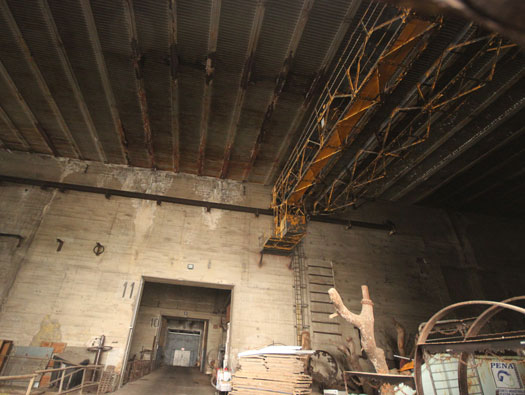
A massive moving gantry crane to load and unload U-Bouats.
09 November 2012
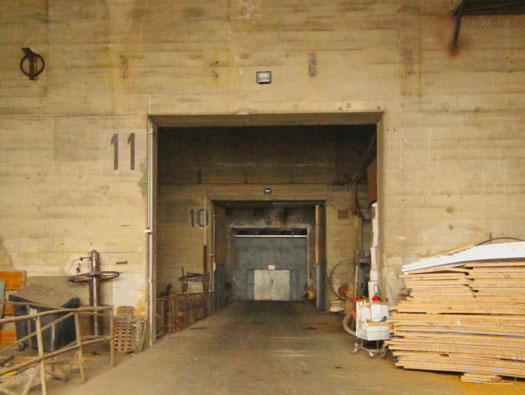
Dock 11 and looking into dock 10. There would have been a full length clear passageway right down to the end block. A train also could access along here bringing in materials , torpedoes and any other items needed to run a U-Boat at sea. This was also home to the mother ships or sea cows that were larger U-buats that carried extra fuel, ammunition and food to re supply U-Boats at sea.
09 November 2012
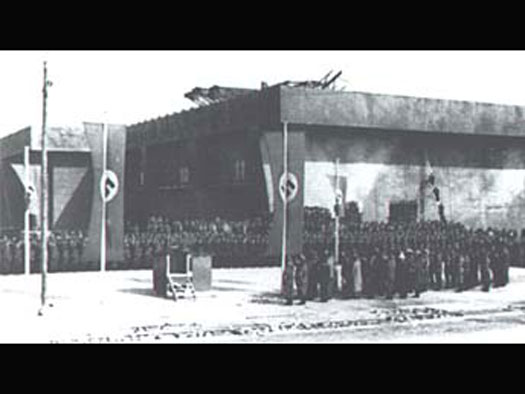
The opening of the U-Boat pen in 1943.
Bundesarchiv
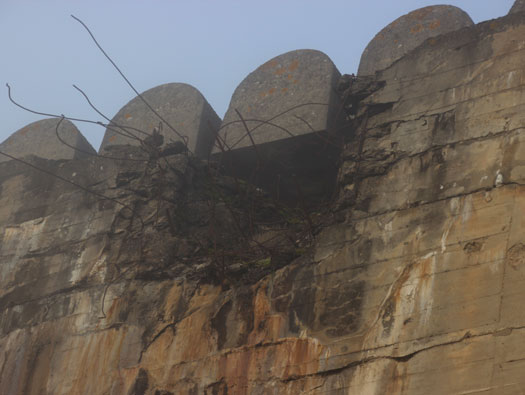
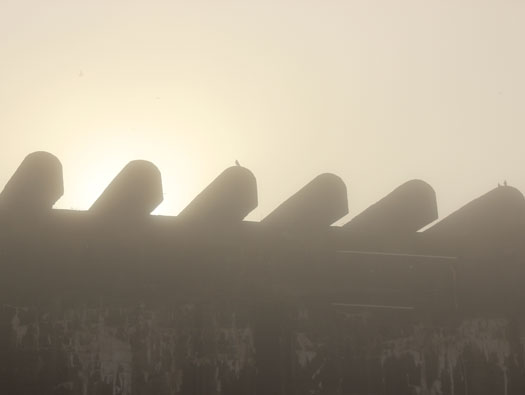
The roof of the bunker was re-enforced after its construction and the catcher bars were laid on the top.. These were to pre detonate bombs, before they hit the main roof. Here at Bordeaux the whole roof structure had its catcher bars all in place. Unlike most other bunkers in France. The first picture here is of a report on bombing the bunker. When captured by Allied soldiers, it was found to be undamaged inside. So it worked.
09 November 2012
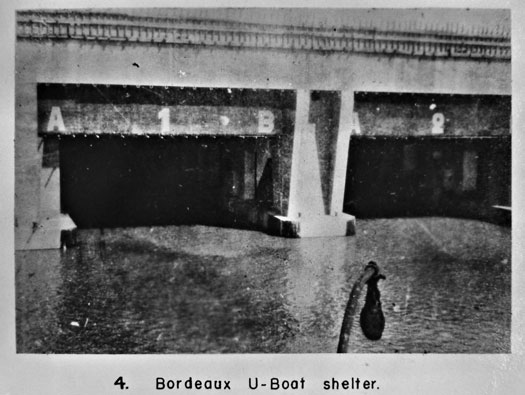
1A & 1B and 2A & 2B.
wO 252/92
The three dry pens, they all had lock gates but only these three could be pumped out. So if a boat did not not need to come out of the water it could use the more open pens. As I said they all have lock gates to stop the effect of a bomb near miss into the water, causes a large wave and in some cases crush the U-Bout up into the roof. This happened to some E-Boat pens in Le Havre when a Tallboy missed.
09 November 2012
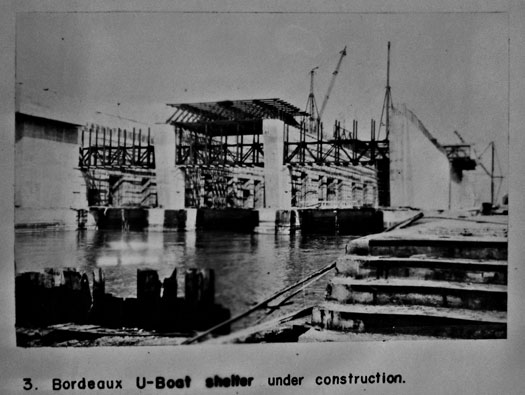
WO 252/92
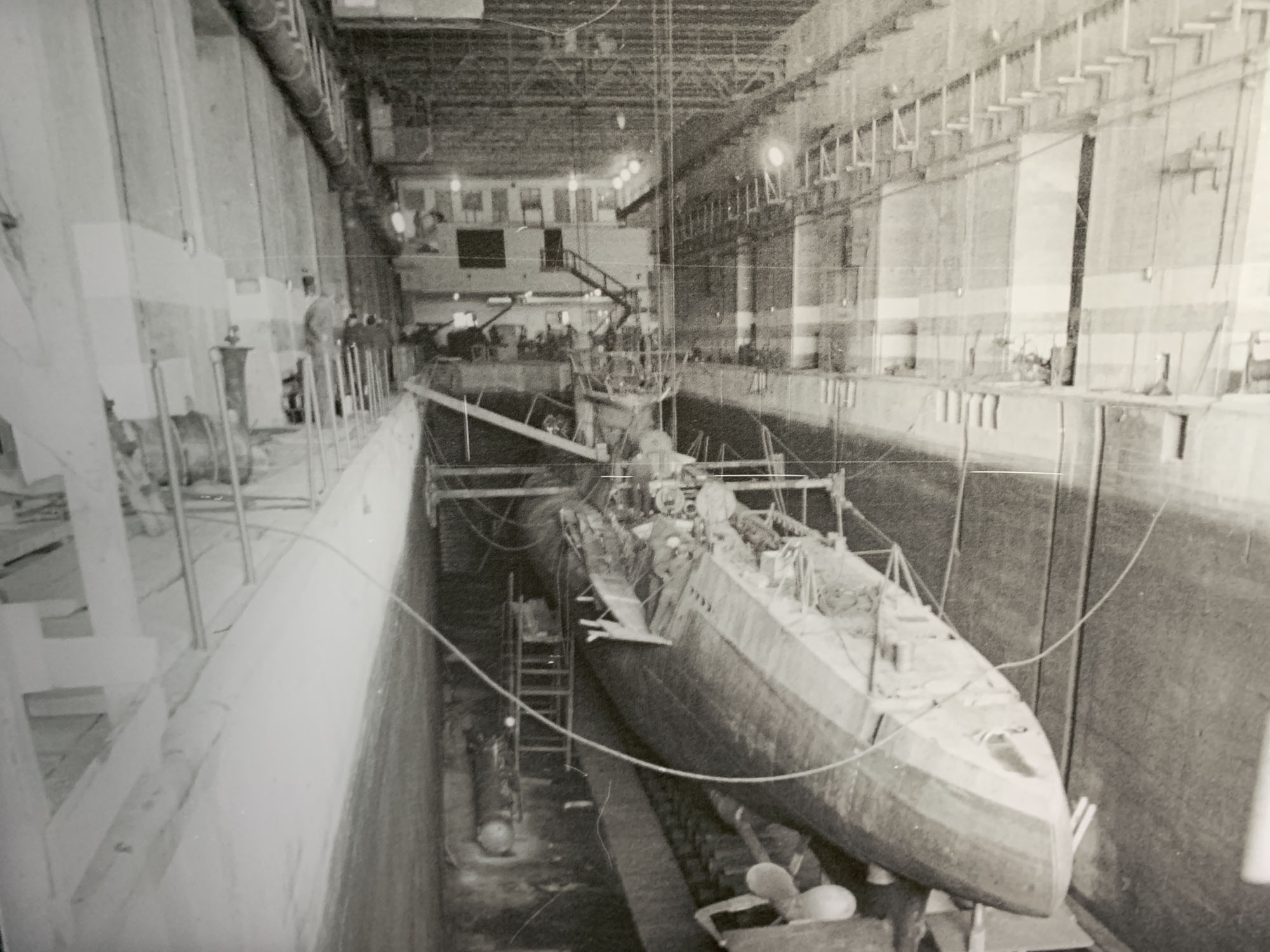
An Italian submarine in a dock.
The Italian Royal Navy established a submarine base at Bordeaux, which was within the German occupation zone. The Italians were allocated a sector of the Atlantic south of Lisbon to patrol. The base was opened in August 1940 and in 1941 the captured French passenger ship De Grasse was used as a depot ship before being returned to the Vichy Government in June 1942.
Admiral Angelo Parona commanded the submarines at BETASOM under the operational control of Konteradmiral (Rear Admiral) Karl Dönitz. Dönitz was the "Commander of the Submarines" ( Befehlshaber der U-Boote) for the German Kriegsmarine About 1,600 men were based at BETASOM.
BETASOM (an acronym of Bordeaux Sommergibie or Sommergibilli) was the name of the submarine base here.
Bundesarchiv Le pallice
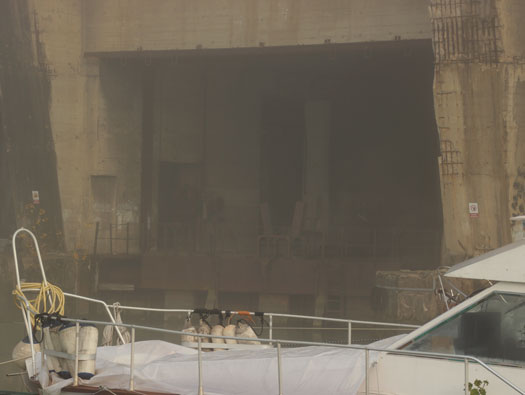
You can just see the lock gate in still place.
09 November 2012
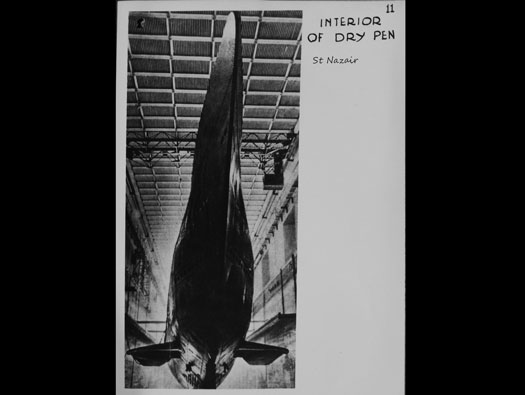
This is from a file about Operation Chariot, the attack on St Nazaire docks.
DEFE 2/128
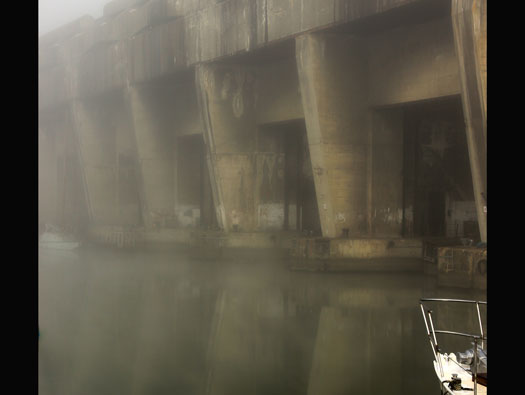
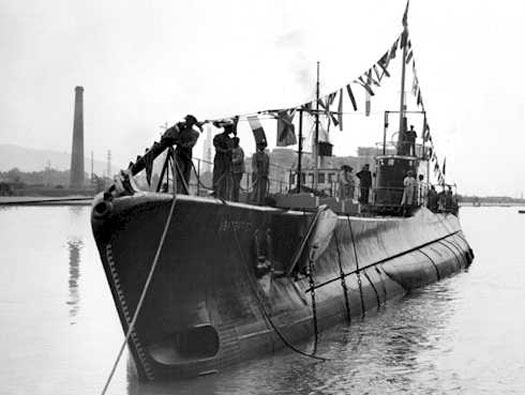
The Regia Marina submarine Barbarigo coming into port.
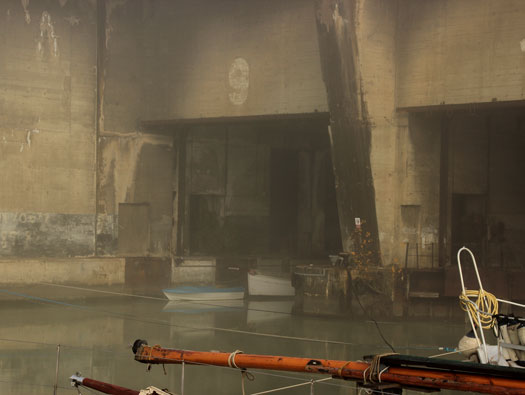
Pen 9.
The supply boats, milche cow Type XIV submarines, the mine layers, and torpedo transports, all made Bordeaux their Home Base. They needed large amounts of fuel, so a large fuel storage bunker was built with a direct pipeline into the bunker here.
09 November 2012
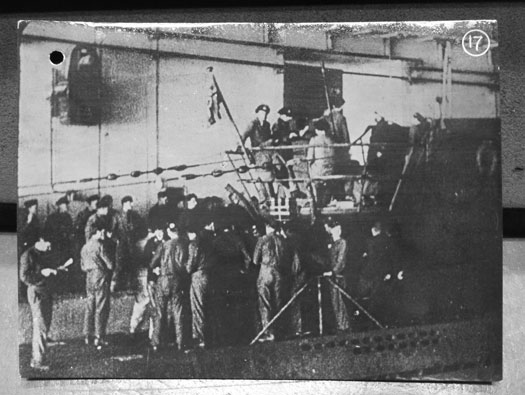
This is from a file about Operation Chariot, the attack on St Nazaire docks.
It looks to be a still from a German propaganda film. Unknown where it was filmed.
DEFE 2/128
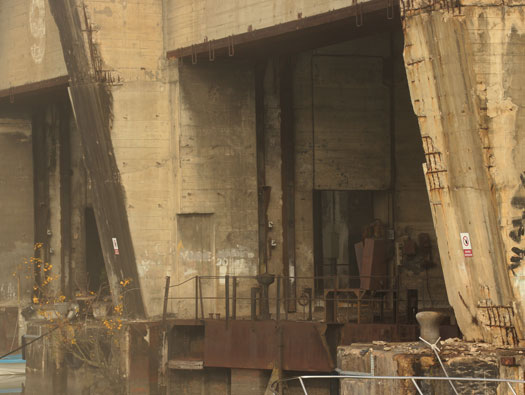
Pen 8.
The first, U-178 arrived on the 17th. of June 1943 was the first German boat to dock here. Some 25 Italian Submarines were to be based here.
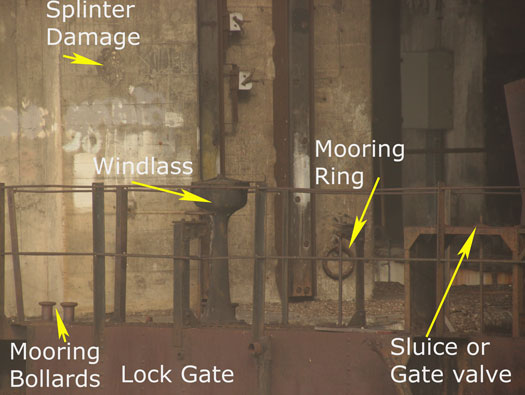
09 November 2012
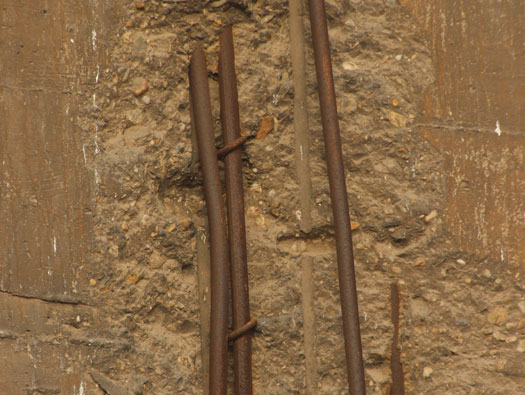
Very large re enforcement bars showing through the concrete.
09 November 2012
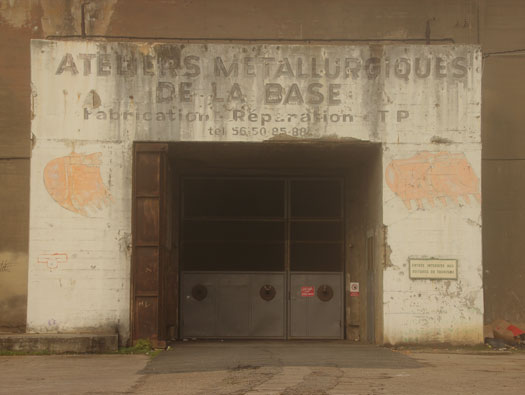
The main entrance to the rear of the bunker/ A railway running all the way through.
09 November 2012
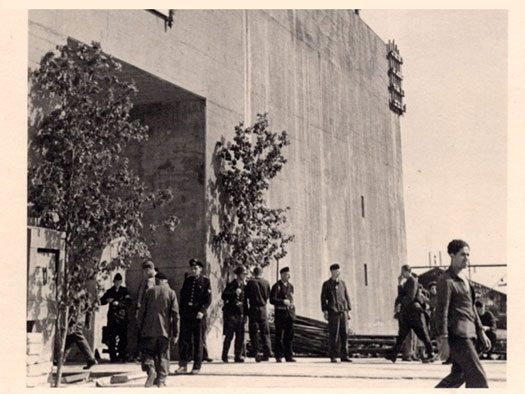
Getting ready for the opening ceremony.
PB
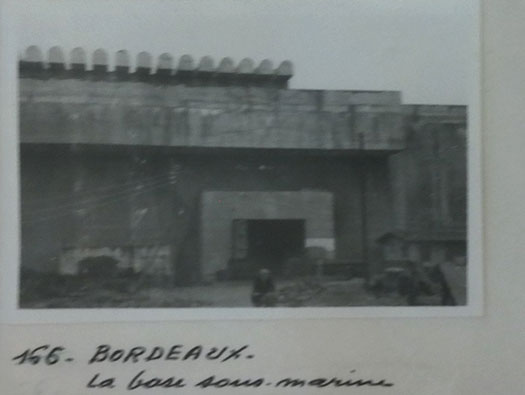
1945/46 picture
SHM

BSL the new owners of the bunker, now an art instillation and open to the public.
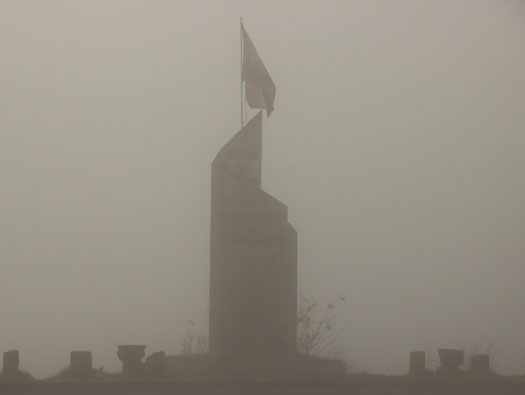
Memorial dedicated to Primarily honour Spanish Republican refugees and prisoners (alongside French, Italian, Belgian, and Dutch workers) who were forced by the Organization Todt to build the massive concrete U-boat bunker between 1941 and 1943.
End.
09 November 2012