Needs Oar Point ALG
RAF · Hampshire · England · United Kingdom

RAF Needs Oar Point ALG
An Advanced Landing Ground, there were many airfields built in Britain during WW2 and most had a complete infrastructure and runways. With ALG's these were built as an airfield that can be erected quickly and also remove very quickly and placed back into food production.
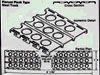
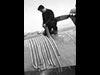
With D-Day looming, more space and runways were needed in the south of England. They came up with ALG's. Temporary runways of Sommerfeld Tracking (a wire mesh strengthened with steel rods and pinned to the turf with steel spikes like tent pegs). Pierced Steel planking was also used for aircraft hard standings and marshaling areas. Very few huts were built and most lived in tents or the odd requisitioned house/farm. Aircraft servicing was done in one of the four Blister hangars.
Fuel was stored in underground tanks and ammunition/bombs were stored in open compounds. The reason for a lot of this lac of infrastructure was to come into its own when D-Day arrived and ALG's were built all across the French countryside as the Allies advanced into Germany. Some airmen never slept under a solid roof for over six months.


RAF Needs Oar Point ALG
RAF Needs Oar Point ALG
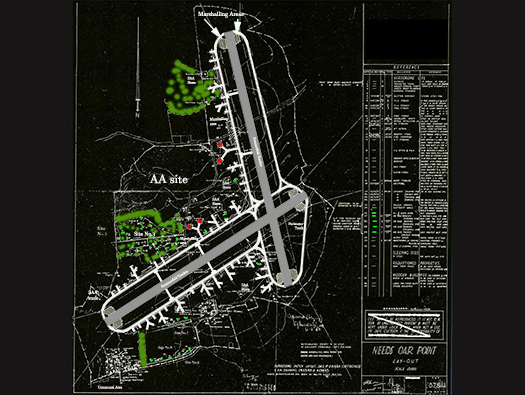
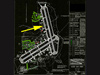
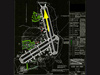
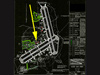
Plan of the airfield. Air Ministry site plan 578/44.
Grey - Sommerfeld Tracking runways.
White - perimeter tracks and aircraft dispersals
Green - air-raid trenches, larger are trees and woodland.
Air Ministry site plan 578/44

RAF Needs Oar Point ALG
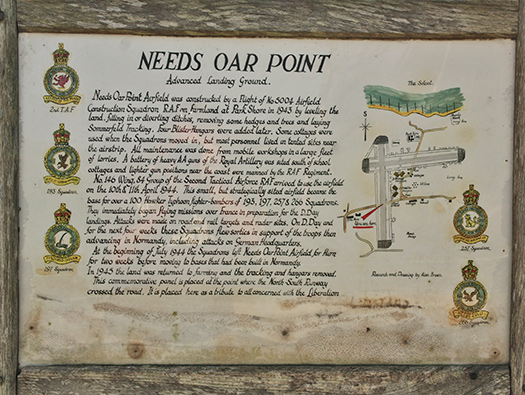
Needs Oar Point Airfield was constructed by a Flight of No.5004 Airfield Construction Squadron RAF on farm land at Park Shore in 1943 by leveling the land, filling in or diverting ditches, removing some hedges and trees and laying
Sommerfeld Tracking. Four Blister Hangars were added later. Some cottages were used when the Squadrons moved in, but most personnel lived in tented sites near the airstrip. All maintenance was done from mobile workshops in a large fleet of lorries. A battery of heavy AA guns of the Royal Artillery was sighted of school cottages and light gun positions near the coast were manned by the RAF Regiment.
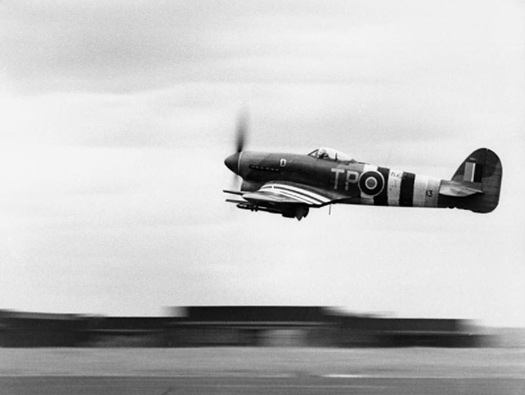
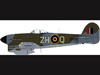
No.146 Wing, 84 Group of the Second Tactical Airforce RAF arrived to use the airfield on the 10th & 11th April 1944. This small but strategically sited airfield became the base for over 100 Hawker Typhoon fighter-bombers of 193, 197, 257 & 266 Squadrons.
They immediately began flying missions over France in preparations for the D-Day landings. Attacks were made on road and rail targets and radar sites. On D-Day and for the next four weeks these Squadrons flew sorties in support of the troops then advancing in Normandy, including attacks on German Headquarters.
At the beginning of July 1944 the Squadrons left Needs Oar Point Airfield for Hurn for two weeks before moving to bases that had been built in Normandy.
In 1945 the land was returned to farming and the tracking and hangars removed.
This commemorative panel is placed at the point where the Nord-South Runway
crossed the road. It is placed here a a tribute to all concerned with the Liberation.
27 March 2012

RAF Needs Oar Point ALG
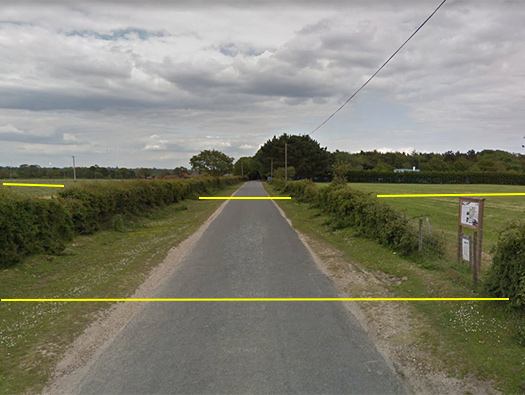
N/S runway
On the right is the board.
RAF Needs Oar Point ALG
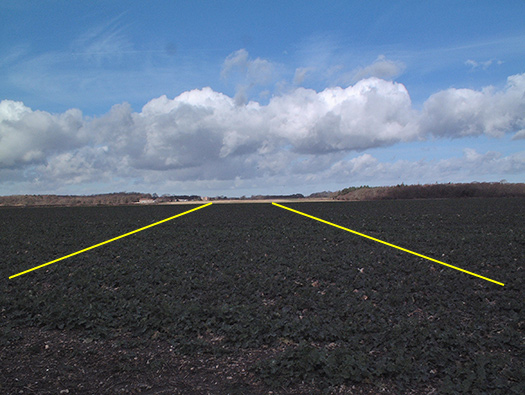
Runway
The view looking almost due north..
1944
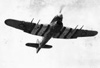
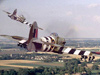
RAF Needs Oar Point ALG
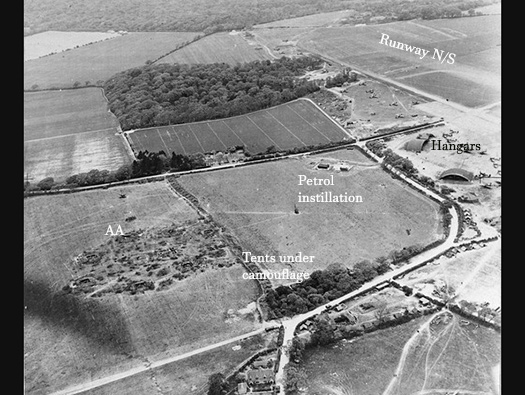
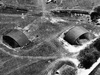
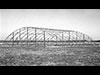
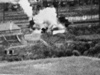
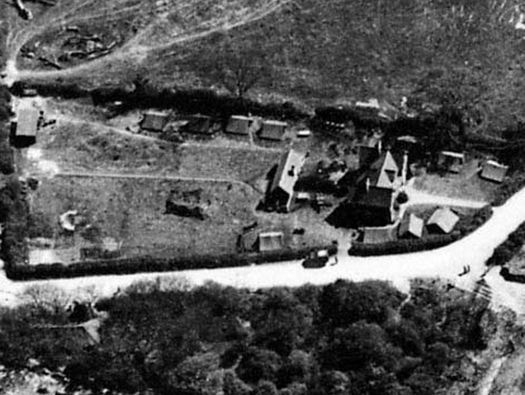
Air photo showing the AA site, fuel instillation and two Blister hangars.
1944
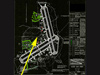
RAF Needs Oar Point ALG
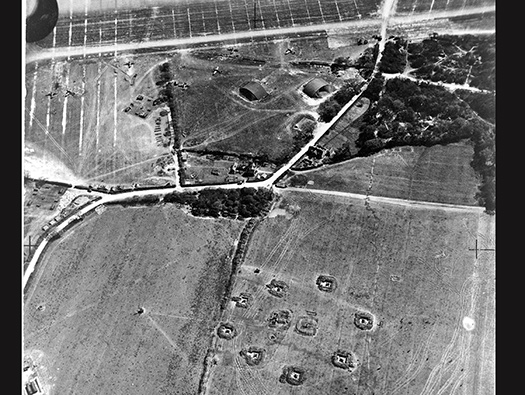
Another probably earlier photo showing the AA site and the two Blister hangars.
1944
RAF Needs Oar Point ALG
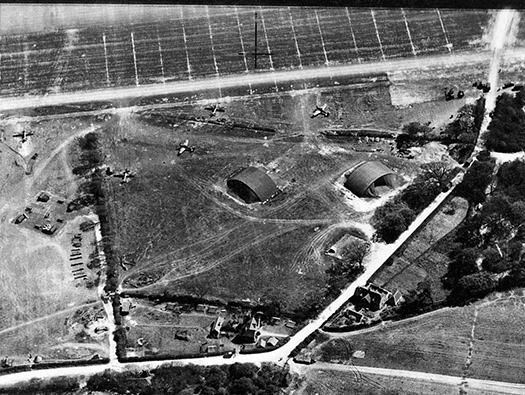
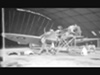
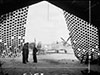
Blister hangars at dispersal.
1944
RAF Needs Oar Point ALG
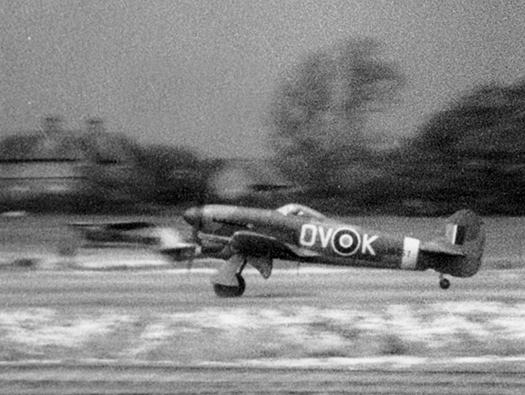
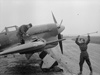
Typhoon taking off past one of the farm houses.
1944
RAF Needs Oar Point ALG
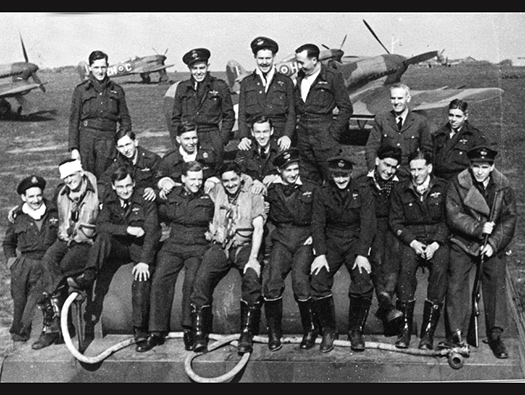
Members of 266 Sqn, May 1944. Formed 27 September 1918 at Mudros, Aegean Disbanded Rattlesden 30 June 1964.
No.266 'Rhodesia' Squadron was a fighter squadron that operated Spitfires during 1940 and 1941 before converting to the Hawker Typhoon at the start of 1942, using that aircraft with Second Tactical Air Force during the liberation of Western Europe. (Wiki)
1944 266 Sqn
RAF Needs Oar Point ALG
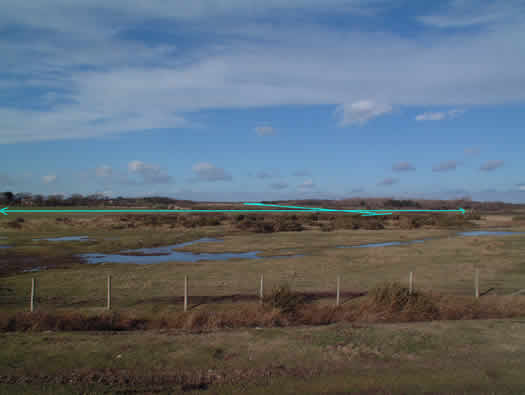
The layout of runways looking north from the beach. The runways were grass covered in Sommerfeld tracking and since the war, and the fields ploughed up. So there are very few remains to see.
03 February 2003
RAF Needs Oar Point ALG
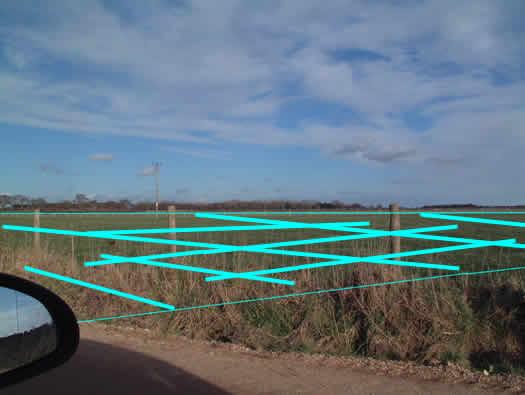
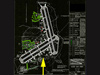
The runway running N/S across the road, which would have been closed at the time.
03 February 2003
RAF Needs Oar Point ALG
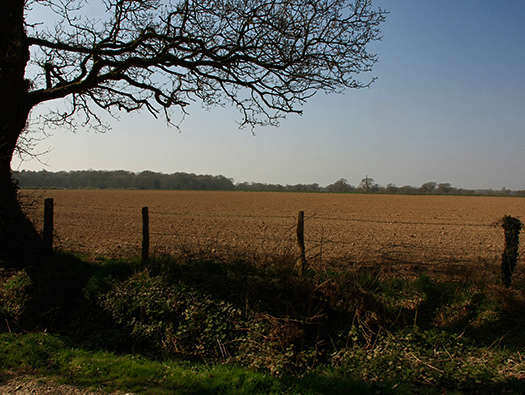
The runway would have run L to R.
27 March 2012
RAF Needs Oar Point ALG
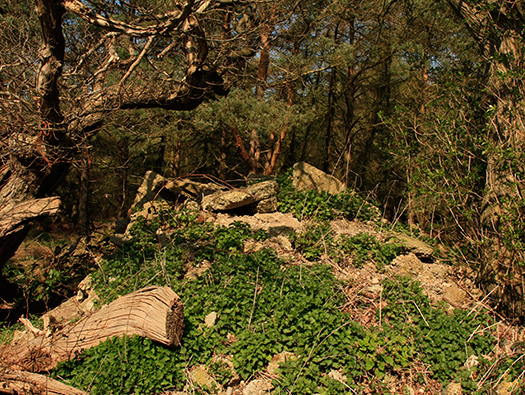
Remains in the farm of concrete used as hard stand and maybe road ways.
27 March 2012
RAF Needs Oar Point ALG
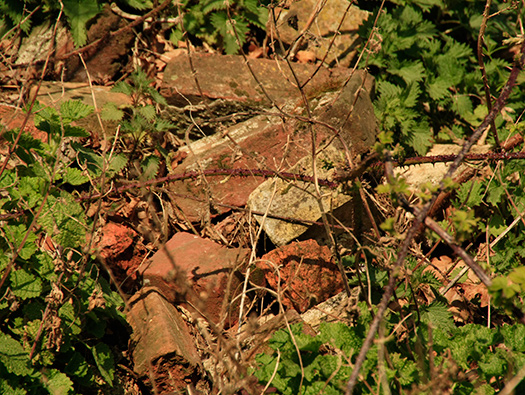
The odd bricks that were used in some buildings possibly the fuel pump house.
27 March 2012
RAF Needs Oar Point ALG
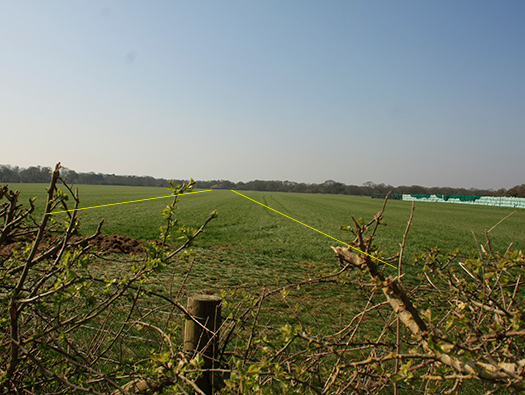
E/W runway.
27 March 2012
RAF Needs Oar Point ALG
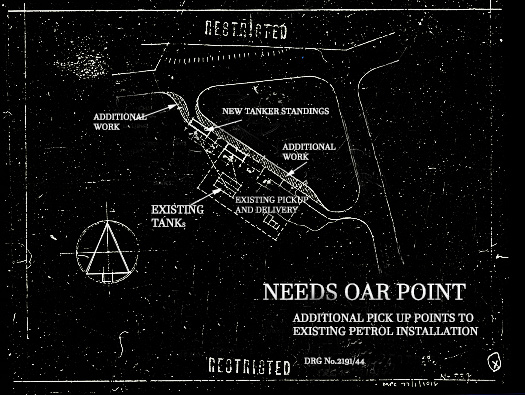
Bulk Fuel instillation
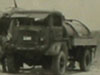
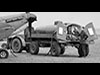
The Air Ministry plan of the extending of the fuel instillation to allow more vehicles to use it. It shows, that the amount of aircraft movements were greater than anticipated by the authorities when the airfield was designed. Tankers probably would arrive from the petrol refineries at Fawley, near Southampton Water, in Petrol POOL articulated road tankers and stored in large underground petrol tanks. Then pumped up into smaller RAF lorry fuel bowser´s to be delivered to the planes.
1943
RAF Needs Oar Point ALG
Bulk Fuel instillation
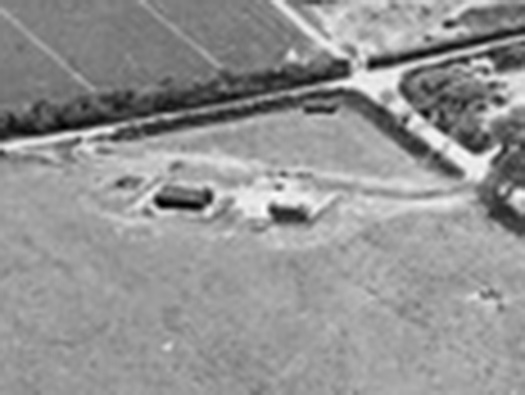
The fuel instillation with its roadway and possibly a brick pump house. RAF Lymington fuel instillation does have a brick pump house.
1944
RAF Needs Oar Point ALG
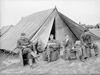
Sleeping
Everybody was under canvas, meaning tented accommodation. Tents were ridge or bell type. Here it looks like ridge tents and made of very heavy strong canvas and wooden poles & tent pegs. It would have been cold at night and in wet weather, very muddy.
1944

RAF Needs Oar Point ALG
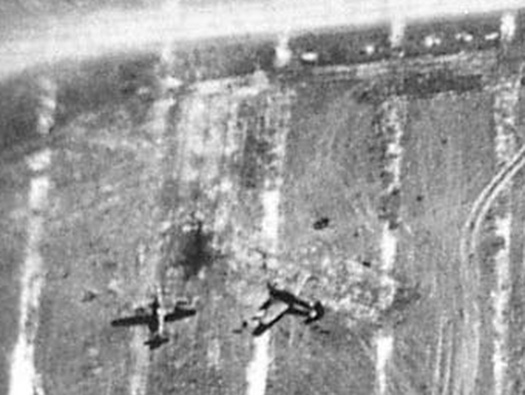
Aircraft dispersal
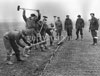
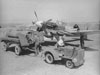
Short stubby dispersals were laid out with Sommerfeld Tracking to park aircraft, where they could be stored. Other areas were PSP planking, these were to re arm and re fuel and last PSP planking at the ends of runways for marshaling aircraft prior to take off. Remember there were over 100 fighters stationed here, so it would get very crowded at times.
1944
RAF Needs Oar Point ALG
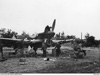
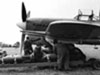
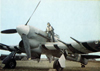
100 Squadron Typhoon taking off. (not stationed here).
Flight Sergeant Fraser Petherbridge No.100sqd.
RAF Needs Oar Point ALG
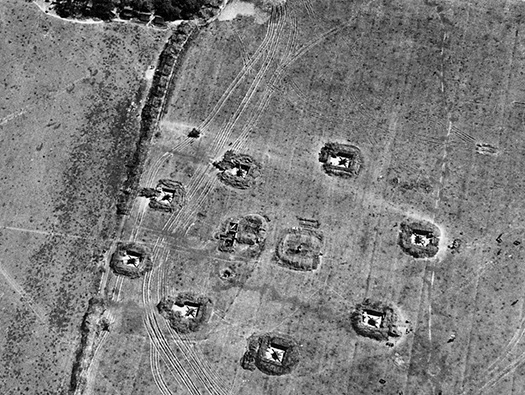
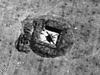
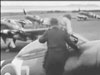
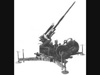
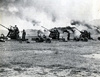
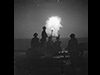
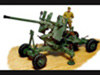
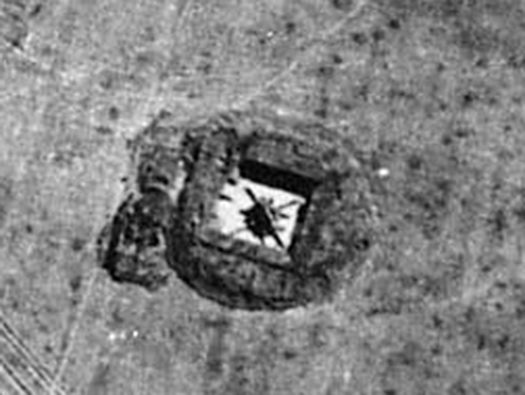
The anti-aircraft defence of RAF Needs Oar Point. Eight Vickers 3.7inch AA guns and in the centre the predictor/range finders. There were two types of mountings, one mobile as here and the other fixed as in proper anti-aircraft positions. When the aircraft left for France, these guns may have followed or were sent to the Dover area for anti Diver Operation against the V1 attacks.
00-00-00
RAF Needs Oar Point ALG
Airfield defence
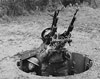
One of the mobile Vickers 3.7inch AA guns in its position. A solid raft was made for the gun to sit on using sometimes railway tracks and sleepers and even concreting them in.
1944
RAF Needs Oar Point ALG
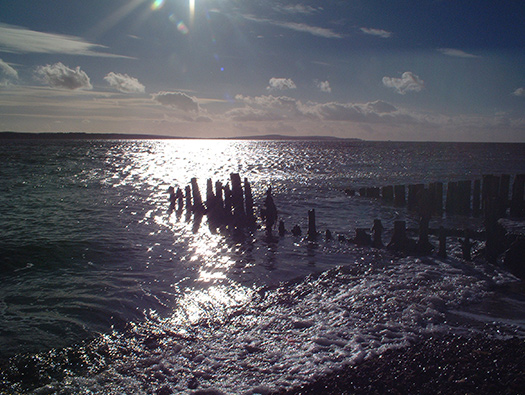
03 February 2003