Opened: 1937
Closed: 1945
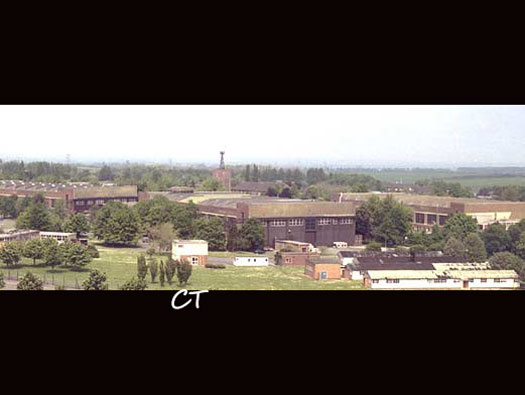
While Harwell became more famous post war as the UK’s centre for atomic energy research, the site was perhaps best known during WW2, and prior to the outbreak of hostilities, as the development site for the Royal Aircraft Establishment Mark III Catapult: a device intended to assist aircraft in take offs from shorter runways, allowing them to be loaded with more fuel. While technical issues saw the project abandoned in 1940, it did lead to the catapult technology that allowed Hawker Hurricanes to be placed on board cargo ships, the aircraft deployed if an attacking bomber was spotted.
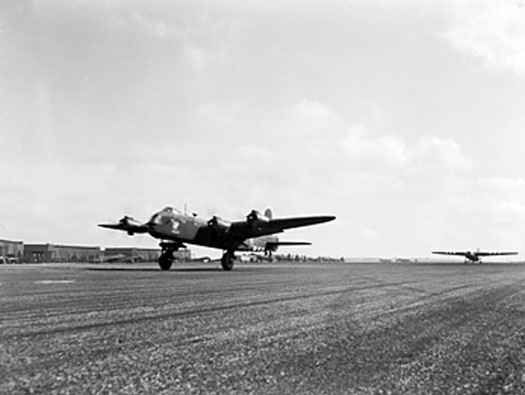
While aircraft activity at the site five miles south east of Wantage was recorded in the early 1930s and possibly even before that, it was 1937 when Harwell officially opened, various bomber squadrons stationed there before and during WW2, becoming part of No. 38 Group RAF. In the spring and summer of 1944, Airspeed Horsa troop-carrying gliders flew from the station, securing vital strategic positions in advance of the D-Day landings; a memorial to those killed in the operations has been created at the site.
Historically in Berkshire, it has been administered as part of Oxfordshire since the 1974 boundary changes.
RAF Harwell
RAF Harwell
Air Ministry Order A190/1934.
RAF Harwell was built under Scheme 'A' adopted by the British Government in 1934 and construction started in 1935.
(UK Airfields).
Hansard - The Royal Air Force (Expansion Scheme)
Volume 328: debated on Monday 1 November 1937.
Captain Harold Balfour asked the Prime Minister whether he can make any announcement on the rate of growth of Continental Air Forces during the past 18 months; whether he can give an assurance that, when the present Home Defence Force air expansion program is completed, we shall be in a position of parity in first-line aircraft with any country within striking distance of our shores; and, if not, whether any extension of the expansion scheme is under consideration by the Government?
Sir J. Simon His Majesty's Government keep under constant review the position of air forces in various countries. The program of His Majesty's Government is likewise kept under review, and the necessary steps are taken to give effect to the Government's declared policy. This policy has been plainly stated on several occasions. It is to create and maintain an Air Force which will form an effective deterrent and insurance of peace, and which in the unhappy event of war would be able to meet a potential enemy on equal terms.
Captain Balfour
Can the right hon. Gentleman say if that definition of our policy is translated into parity; or could it be interpreted as being fulfilled with something less than parity?
Sir J. Simon Parity, as I understand it, is a simple conception, but, as my hon. and gallant Friend knows, it involves many complicated technical factors. I wish to make it quite plain that the answer I have given is not going back on any declaration either of the Prime Minister or of his predecessors.
Mr. G. Griffiths
When the expansion is completed, shall we send for the Germans to come and see it?
Unknown date
Houses of Parliament 1934.
RAF Harwell
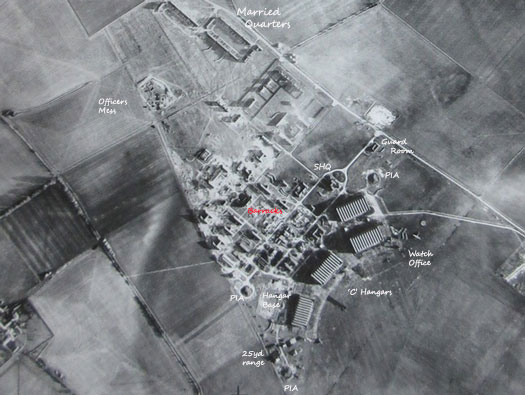
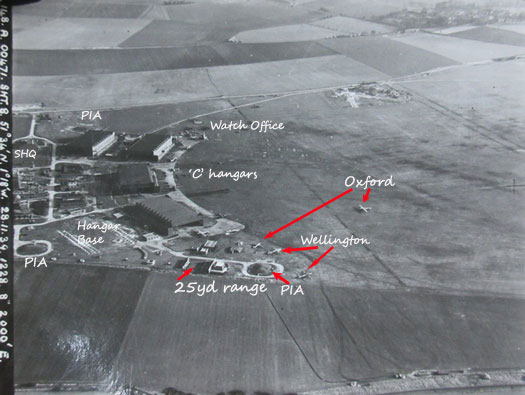
PIA - Petrol Instillation Aviation.
SHQ - Station Head Quarters.
RAF Harwell
PIA - Petrol Instillation Aviation.
SHQ - Station Head Quarters.
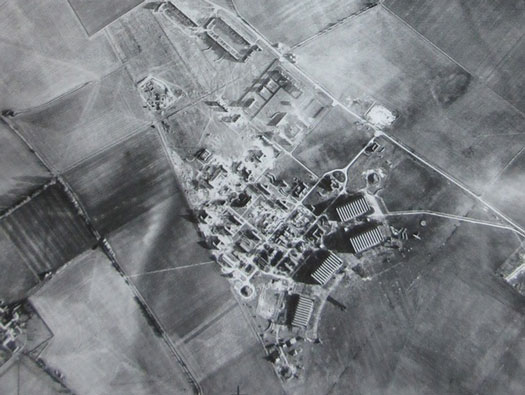
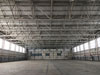
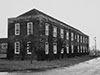
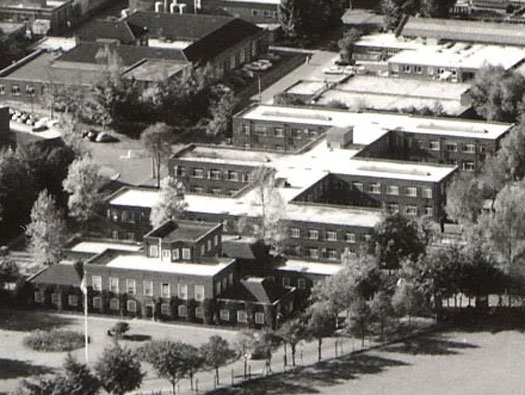
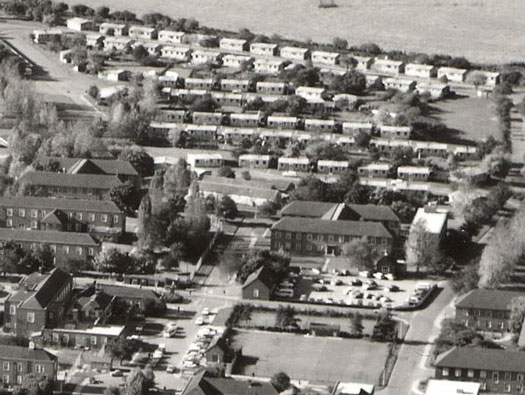
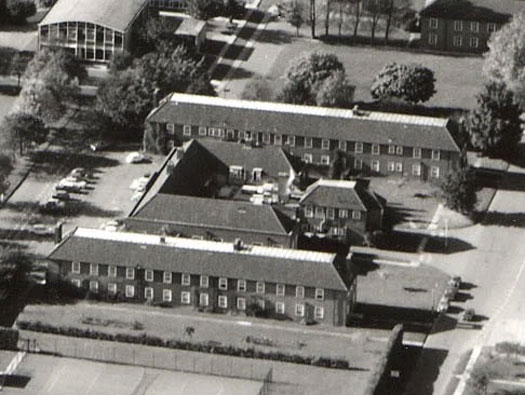
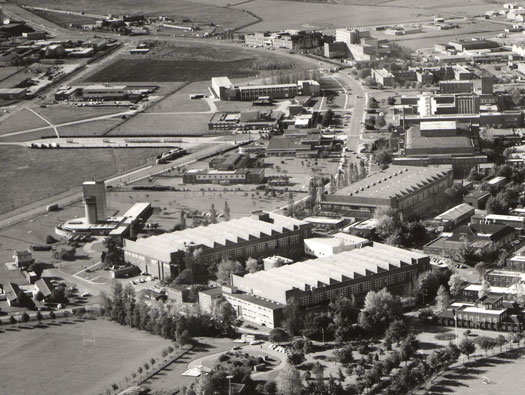
The layout of the expansion schemes were based loosely on the 1916 RFC Training Depot Stations, but updated with larger hangars, permanent buildings, and designed to look pleasing. The 'C' hangar was the mainstay of the type used and a set of four with a smaller 'C' type aircraft repair shed (hangar). A large Officers Mess's, Station HQ, Station Sick Bay, Gas Decontamination Block, Central Heating Plant, Full Barracks and Institute, Sergeants Mess, Married Quarters, sports facility, etc. All laid out on the side of a grass field which gently slopes, to allow good drainage. A Bomb Store and two Petrol Instillation Aviations. Self contained with enough stores to last a specific period in time of war.
Date unknown
'C' type hangar.RAF Officers Mess.Barracks
RAF Harwell
PIA - Petrol Instillation Aviation.
SHQ - Station Head Quarters.
RAF Harwell
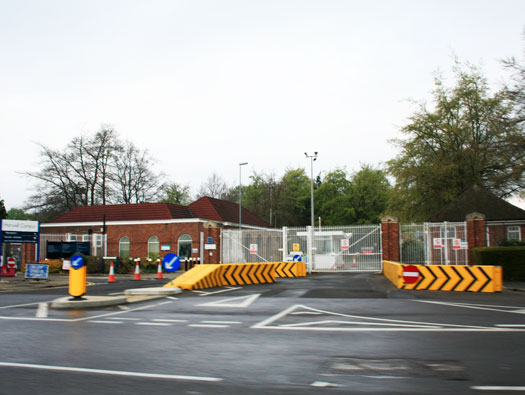
Main Gate.
25 April 2010
RAF Harwell
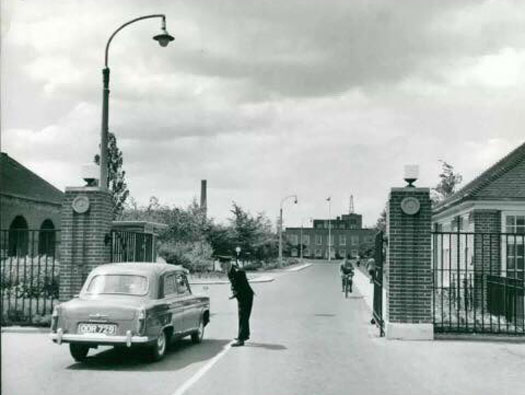
Main Gate 1960's.
RAF Harwell
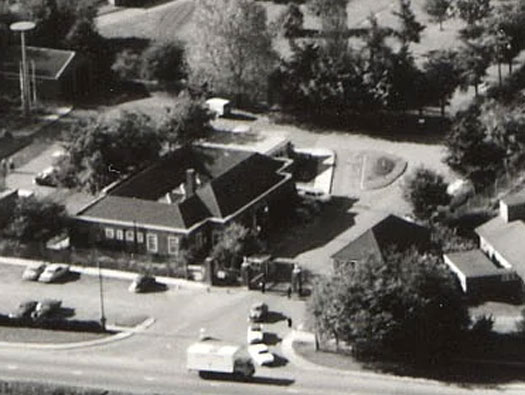
Main Gate.
1969
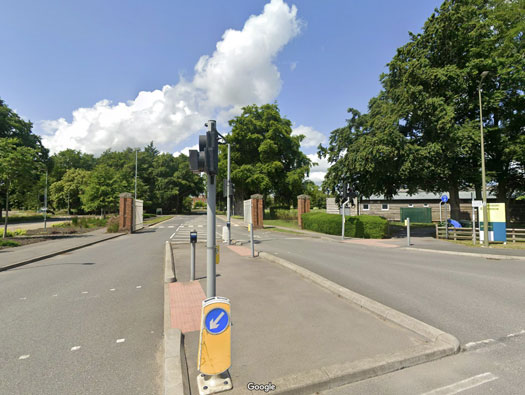
RAF Harwell
Google
RAF Harwell
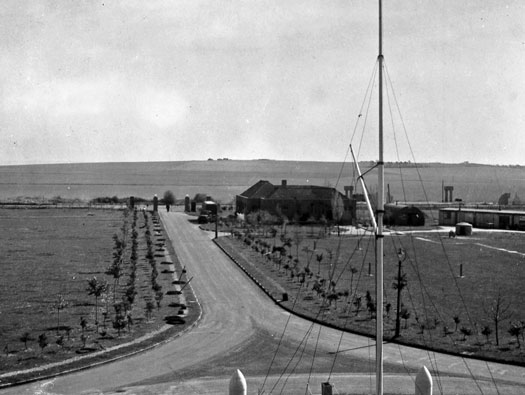
Main Gate from the Station HQ.
Note the young tree planting. The RAF had their own nursery to grow the trees for all its stations and now at stations like RAF Little Rissington, hangars and most building have been removed and replaced by modern housing, but all the trees had to be preserved.
25 April 2010
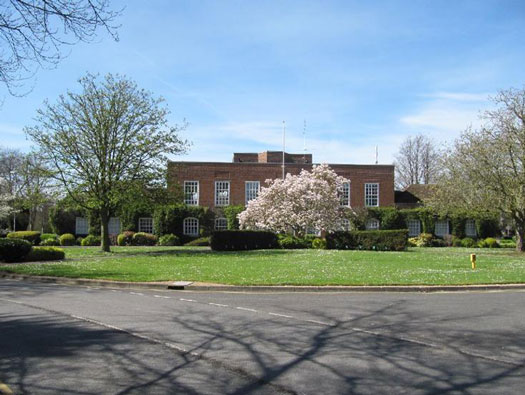
Station HQ with the trees now growing really well.Trees at RAF Little Rissington.
RAF Harwell
Station Head Quarters.
Bill Nicols
RAF Harwell
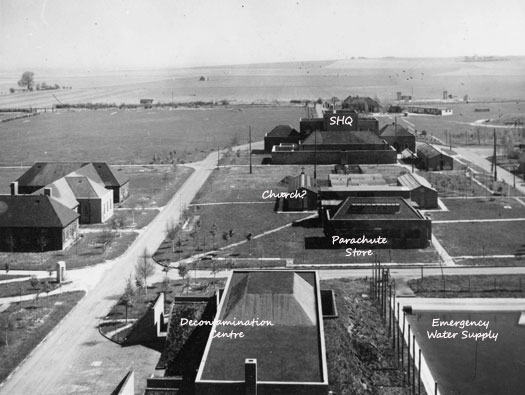
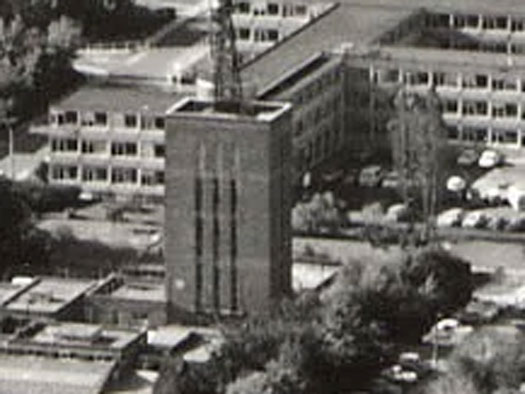
Photo from the top of the central heating plant water tower, looking at the rear of the Station Head Quarters.
The buildings named as I think they are.
Station HQ and by 1969 a large block has been built behind.
1969
RAF Harwell
Central Heating Plant water tower.
1969
Heating plant.Water tower, water level.
RAF Harwell
Prefabria
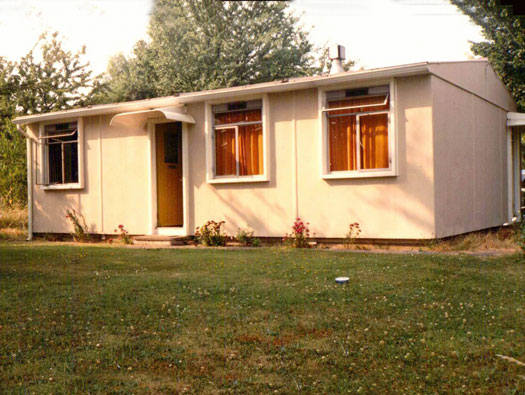
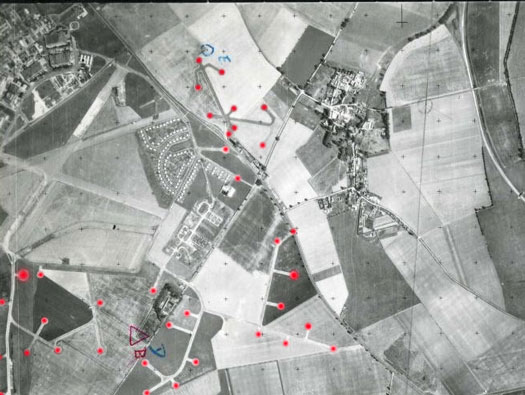
1 January 1946 RAF Harwell was transferred toe the Ministry of Supply who then passed it on to United Kingdom Atomic Energy Authority (UKAEA). The RAF housing stock was inherited and, augmented by the construction of 200 prefabricated bungalows on the south and west sides of the site, were let to employees of the new facility. The Aldfield and Chilton prefabs were Type B2 Aluminum Bungalows designed by the Aircraft Industries Research Organisation for Housing; itself charged with turning surplus aircraft manufacturing capacity over to address the urgent national housing shortage, as identified by the Housing Act of October 1944. The bungalows weighed nine tons each and were brought to the site by lorry in four pre-assembled sections, which were then lowered onto their concrete base by crane. A gang of German POW's assisted with the on-site assembly.
Northdrive a home on the downs
RAF Harwell
One of the pre-fabricated houses in Northdrive.
Northdrive a home on the downs
RAF Harwell
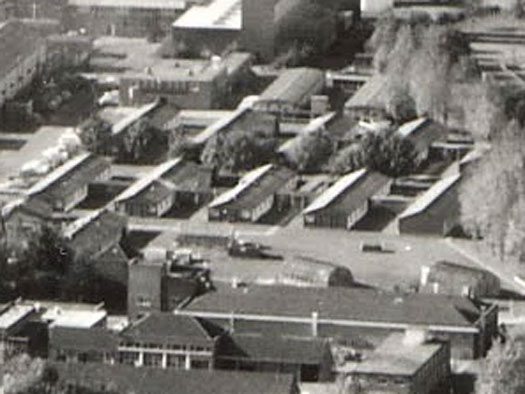
Barrack blocks.
1969
RAF Harwell
Nissen huts, wooden/or MOS concrete barrack blocks.
1969
Nissan hut.MOW hutting.
RAF Harwell
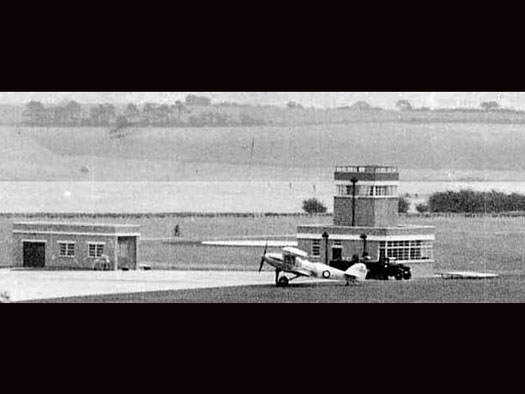
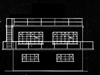
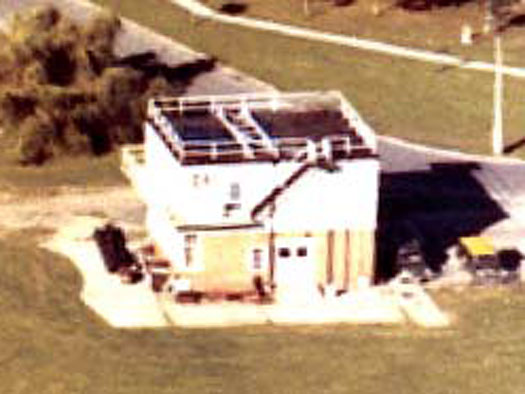
Watch Office with Tower (Fort Type) 1959/34.
Control Towers
Watch Office with Tower (Fort Type) 1959/34.
RAF Harwell
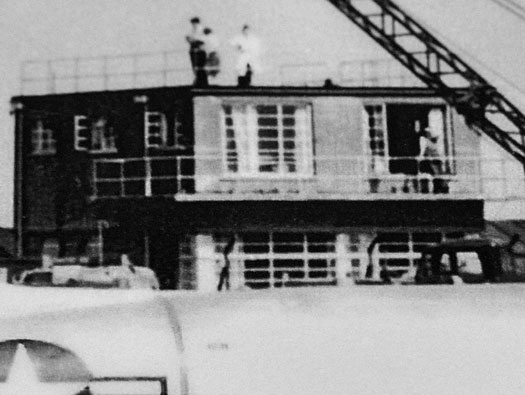
WW2 Control Tower.
Watch Office with Tower (Fort Type) 1959/34. The Tower was later removed and a new first floor control room built to size of ground floor 4698/43
Control Towers
RAF Harwell
4698/43 Control Tower.
Some of these pictures come from Robert Truman's excellent now de funked Control Towers website site.
Control Towers
Demolition.
RAF Harwell
Control Towers
RAF Harwell
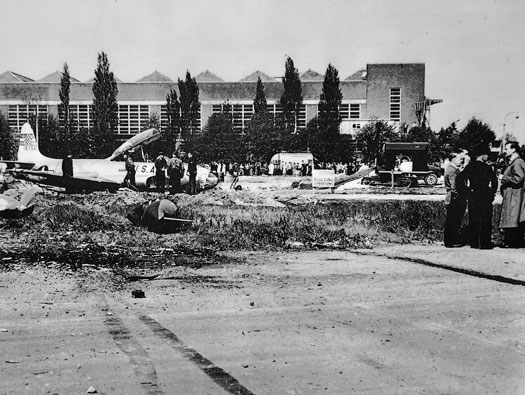
USAF Jet crashed with a 'C' hangar in the background.
During the 60s a USAF T33 mistook Harwell's disused runway for an active one, probably RAF Abingdon a few miles north of Harwell and landed. Once down he needed the assistance of RATO bottles to get airborne again, however as some of the bottles failed to ignite the aircraft left the runway and slid across the grass toward some of the establishments buildings.
Needless to say the incident and the possible out come had the aircraft hit a building containing sensitive material, worried the management to the extent they had the disused runway covered with earth and grassed over
RAF Harwell
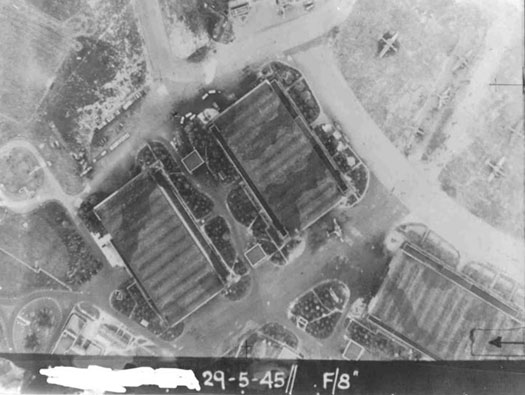
1969 and the four 'C' hangars, three look very like they did under the RAF and one was highly modified for scientific work.
1969
RAF Harwell
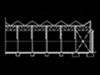
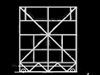
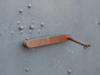
Dated May 45 showing three of the 'C' hangars still with their camouflage on the roof.
29 May 1945
Door arrangement.Door handle to open them.
RAF Harwell
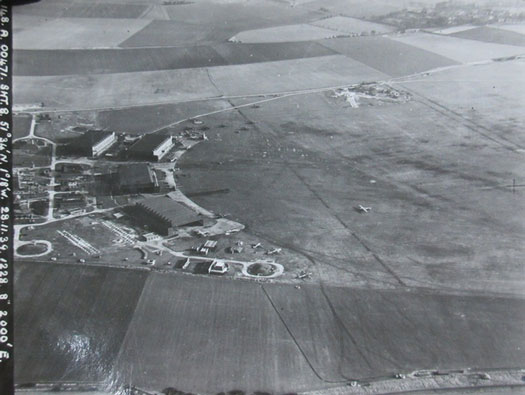
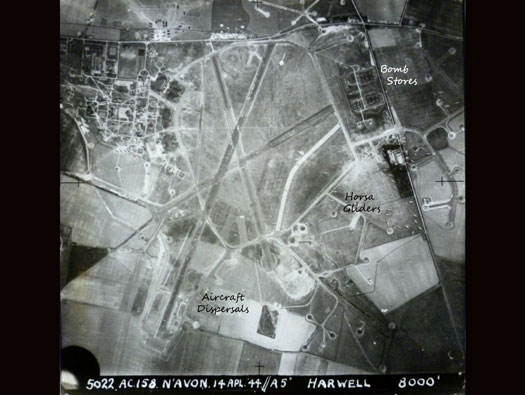
A grass airfield in the 1930's was a good idea and the RAF loved them, but as bombers became heavier and heavier, hard runways had to be laid. The RAF wanted three runways as tail dragging aircraft need to land into wind (or as near as they can). There was plenty of room here for one at 1300 yds, one by 1400yds and the main runway 2000 x 50yds and also in the picture are at least 29 Horsa gliders, ready for action in twenty two days time.
25 April 2010
Site of the catapult.
RAF Harwell
There were fifty circular aircraft dispersals, a full bomb store (early type).
25 April 2010
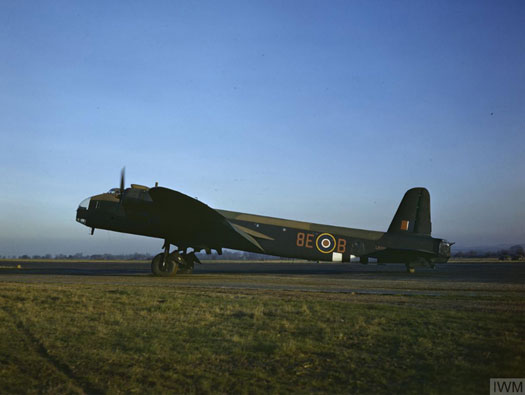
Types of dispersals.Circular (Frying pan) dispersal.Stirling on its dispersal.
RAF Harwell
Aircraft circular (Frying pan) dispersal.
25 April 2010
Circular (Frying pan) dispersal.Stirling on its dispersal.
RAF Harwell
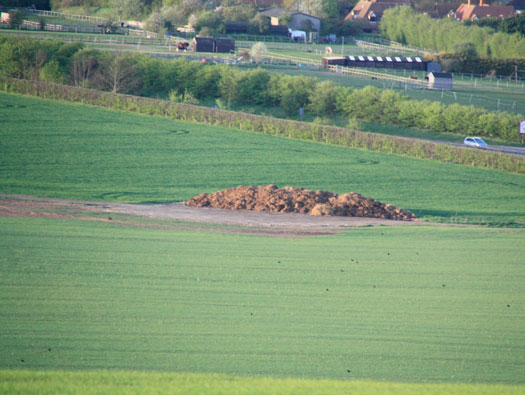
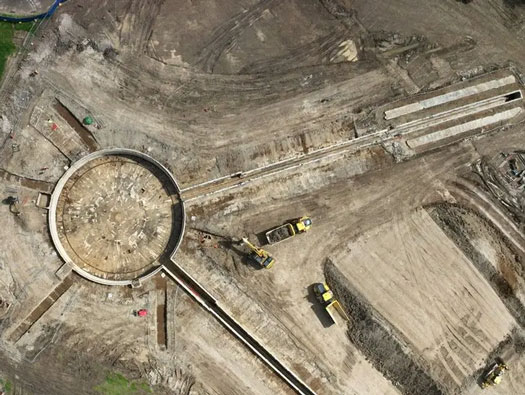
The RAF in their wisdom decided that it would be too expensive to build runways, so as bombers became heavier, they would catapult them off the ground. So RAF Harwell was chosen as the site for this immense structure. It was known as a Royal Aircraft Establishment Mark III Catapult. This would aid heavily laden bomber to get off the ground without the use of a runway. This experiment took place between 1938/1940.
First it had a turntable 98ft wide pit, to align with one of the concreted tracks which were 270ft long. Presumably the nearest into wind.
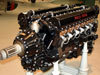
to launch an aircraft, it would be attached to an underground pneumatic ram using a hook. A dozen Rolls-Royce Kestrel engines, sitting beneath the turntable, compressed air to 2,000psi to drive the ram. This high-pressure air was then forced into the pneumatic ram, which rapidly expanded to the length of the guided track and pushed the aircraft into the sky.
It seems to have been used at least twice, once with a
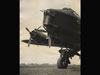
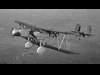
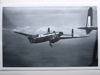
Handley Page Heyford which when launched, sailed into the sky, then a Manchester and three times heavier than the Heyford was tried. Luckily for all concerned the trials were abandoned and they all went home. To cap it all, (cap being the word), a runway was laid over the abandoned contraption and it was not found until recently.
BBC
Handley Page Heyford.Avro Manchester in flight.Rolls-Royce Kestrel XVI.
RAF Harwell
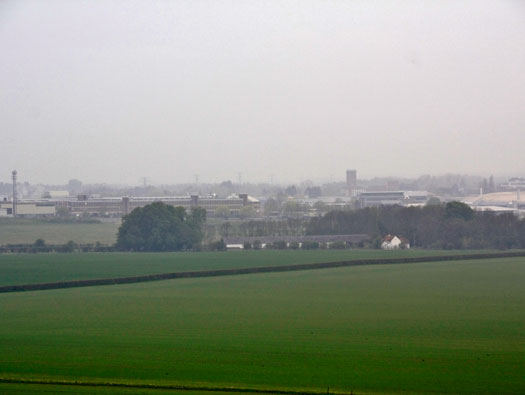
The view north from I think its called Ilsley Hill? Bury Lane, just off the A34.
25 April 2010
RAF Harwell
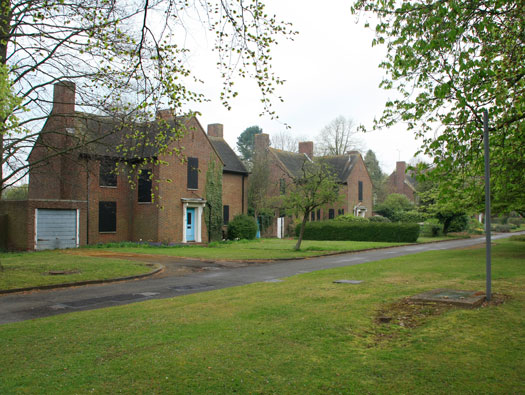
Married Quarters.
The RAF Station Commander's house and then Prof Cockcroft's, the first AERE Director. It's boarded up but I believe now its lived in.
25 April 2010
Sir John Douglas Cockcroft (27 May 1897 – 18 September 1967) was an English nuclear physicist who shared the 1951 Nobel Prize in Physics with Ernest Walton for their splitting of the atomic nucleus, which was instrumental in the development of nuclear power.
RAF Harwell
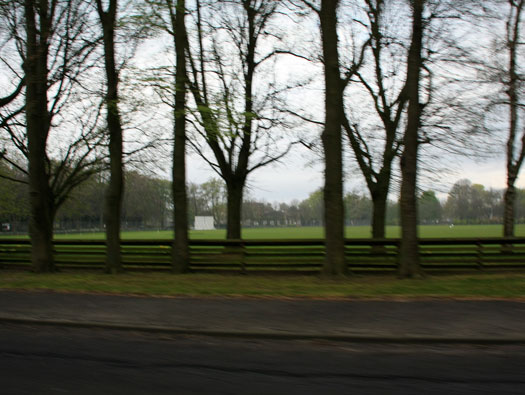
The cricket ground.
25 April 2010
RAF Harwell
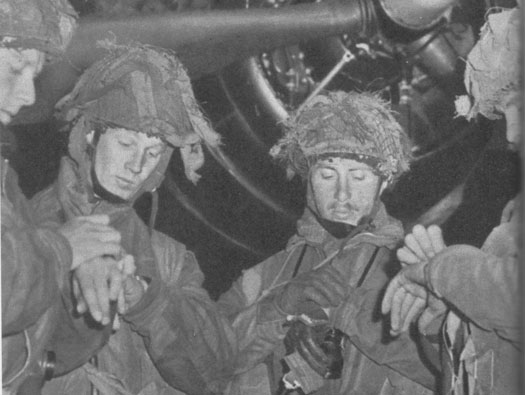
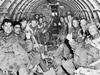
Lt Bobby De La Tour, Don Wells, John Vischer, and Bob Midwood, Pathfinders of the 22nd Intendant Parachute Company, prior to jumping into Normandy.
IWM
Pegasus Bridge.
RAF Harwell
The plane is an Armstrong Whitworth Albemarle which probably times this photo around midnight 5th June 1944 and the troops will be pathfinders.
Wn01 Merville Batterie, Wn13 Pont sur le Canal Pegasus Bridge.
IWM
RAF Harwell
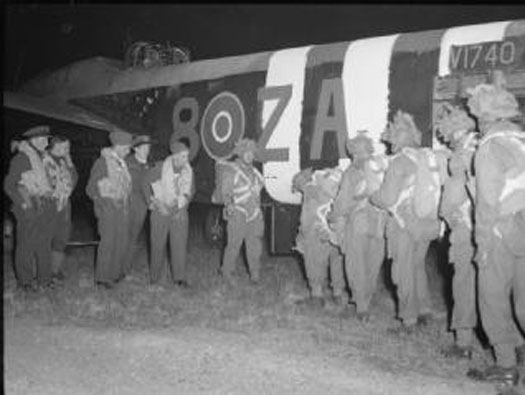
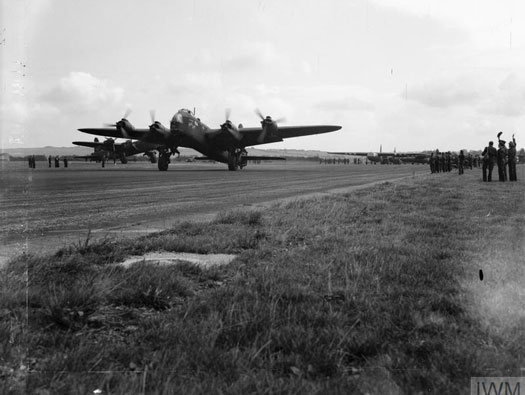
D-Day 06 June 1944 this is Stirling GT Mark IV, LK553 '8Z-P' of No. 295 Squadron RAF based at Harwell, Oxfordshire, taxiing at Mount Farm, Oxfordshire, during a glider towing exercise, 1944.
IWM
RAF Harwell
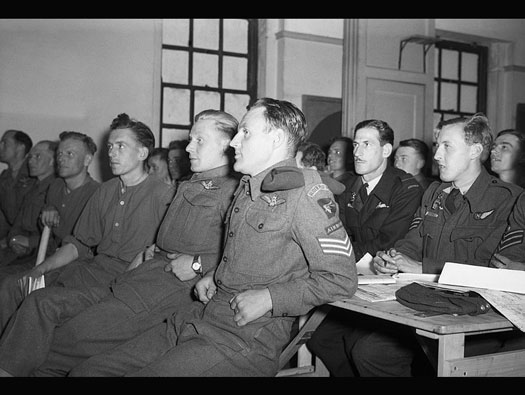
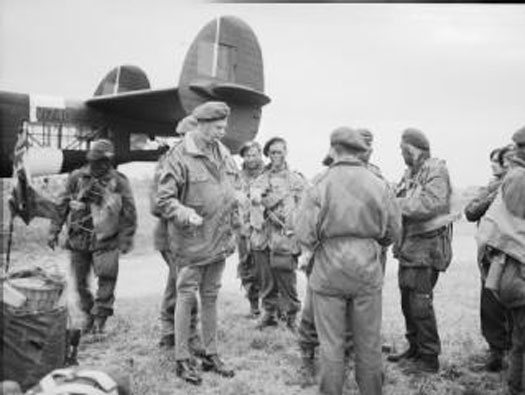
Glider pilots of 6th Airborne Division and RAF crews are briefed at RAF Harwell for the D-Day invasion 5 June 1944.
RAF Harwell
When the Boss turns up.
Major General Richard 'Windy' Gale.
IWM
Major General Richard Gale talking to his troops.
RAF Harwell
This is Market Garden in September, but its exactly like it would have been for D-Day.
IWM
Plan.
RAF Harwell
Short Stirling and behind an Airspeed Horsa glider.
IWM
Plan.
RAF Harwell
RAF Harwell
A full and better history of RAF Harwell is from:
'A personal history of Royal Air Force Station Harwell' by Jim Jones via chilton-computing.org.uk.
Harwell Hidden Heritage.
The BBC.
UKRI Science and Technology Facilities Council.
I have used several websites to pull together my research, I have tried to credit the original sources where I can.