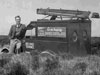
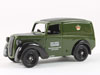
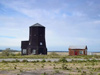
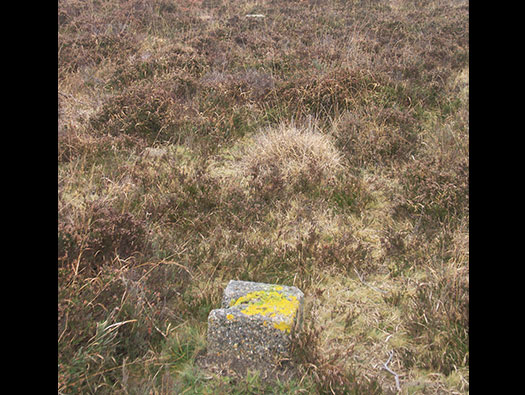
GPO general Post Office, a great loss when de nationalised. The GPO were world leaders in communications technology at the time, they started British radar, computing, code breaking and loads of other modern inventions. Their technicians were true individualists and worked in dusty small offices, labs. all through the 1930's and as war started to look imminent, a lot of their ideas were used. So when out on a walk in the middle of nowhere and you find a stone with GPO. You can bet it could be a telephone line laid to a secret instillation like this Huf /Duf building.
High-frequency direction finding.
Second World War Aircraft Direction Finding Part I – Background.
1941 Post Office van in Devon.Morris Post Office van.The Post Office Research Station Dollis Hill, London.Experimental station Orford Ness.Chandler Adcock HF/DF.HF/DF plotting table.
RAF Ibsley, Hampshire
HF/DF Site
RAF Ibsley, Hampshire
HF/DF Site
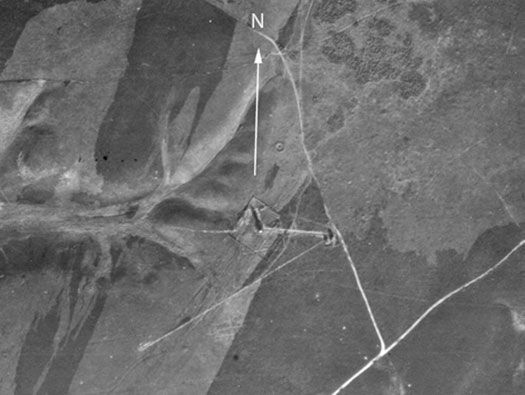
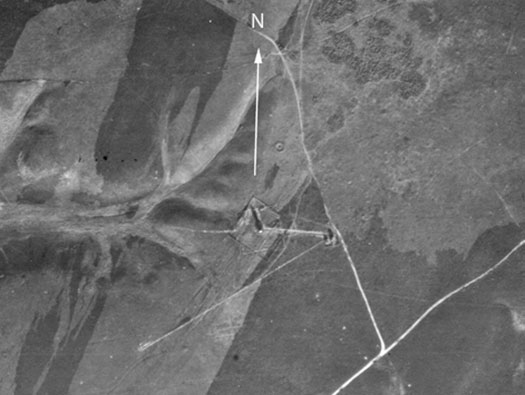
A 1946 air photo of the HF/DF site.
1946
RAF Ibsley, Hampshire
HF/DF Site
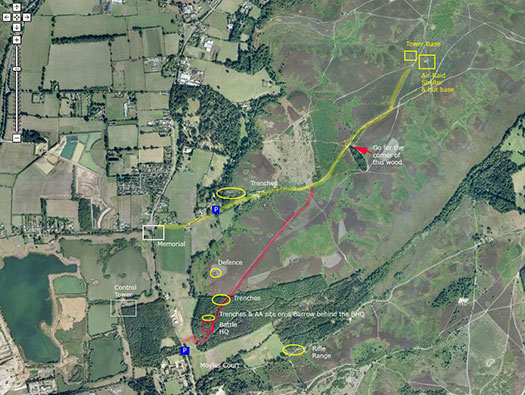
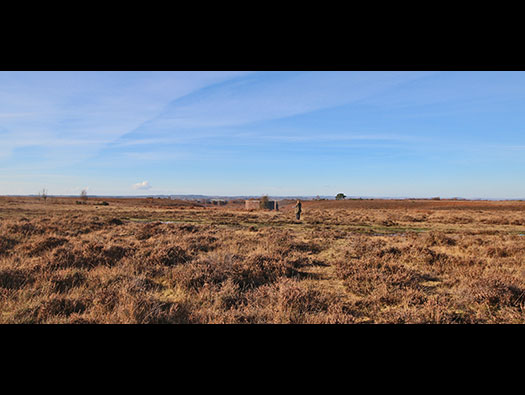
There are two routes from Ibsley to the site and where you can park.
Google
RAF Ibsley, Hampshire
HF/DF Site
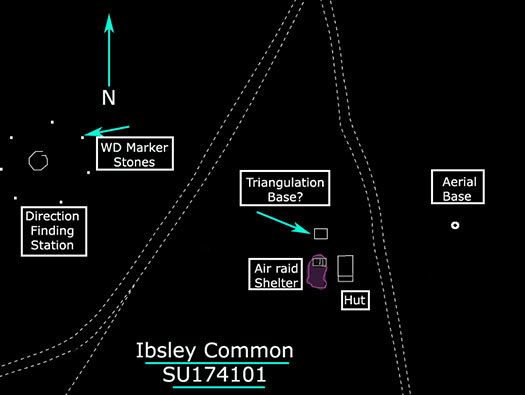
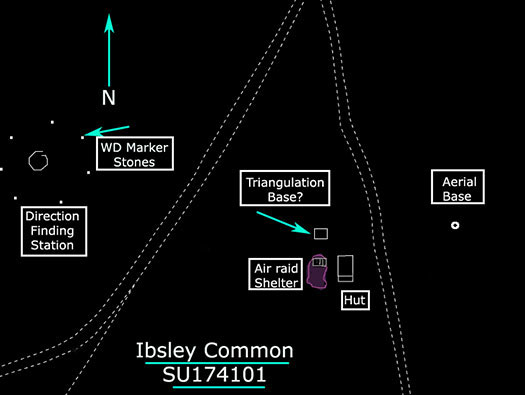
This is a plan of the
HF/DF site.
Plan
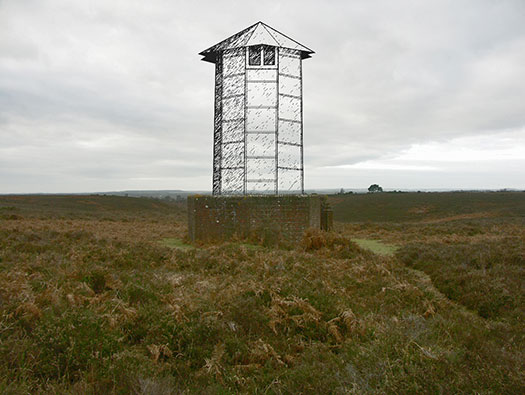
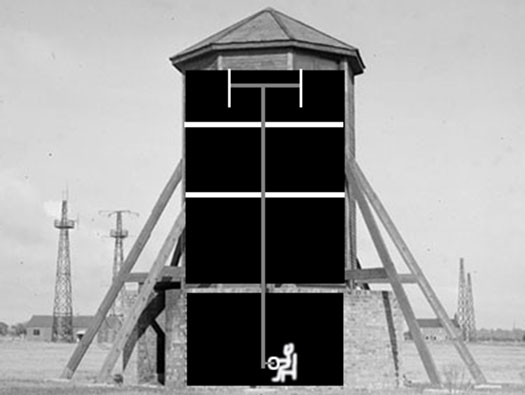
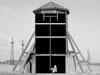
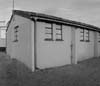
Tower.How the hut may have looked.
RAF Ibsley, Hampshire
HF/DF Site
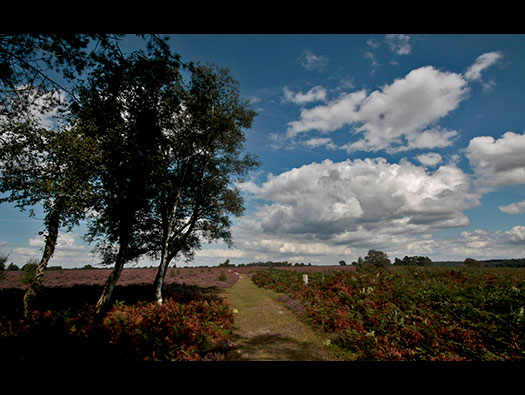
This is the southern route from Moyles Court, past the Battle HQ and out into the forest.
03 August 2013
RAF Ibsley, Hampshire
HF/DF Site
Taking measurements, the base of the tower looking due east.
03 August 2013
RAF Ibsley, Hampshire
HF/DF Site
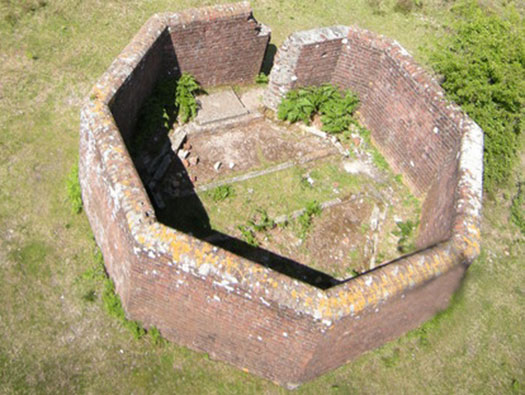
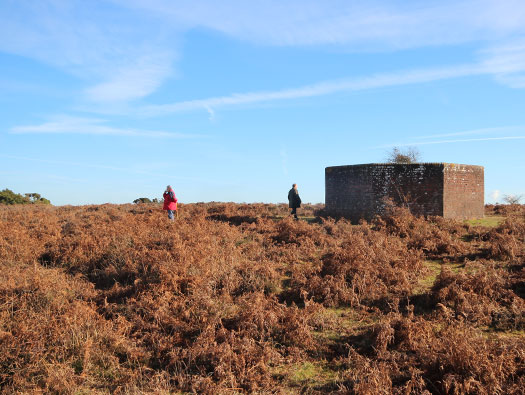
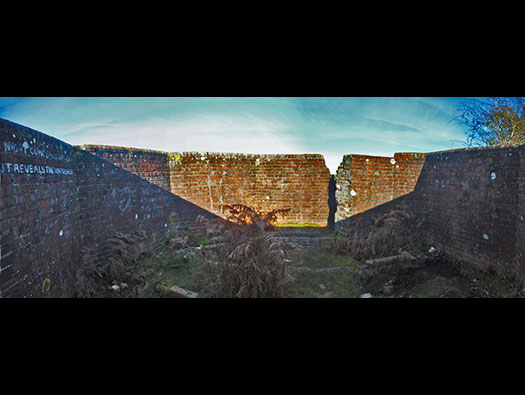
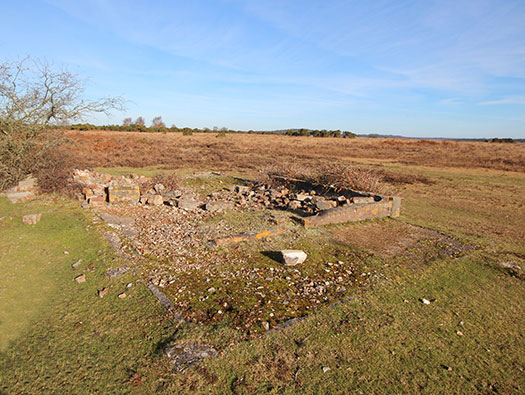
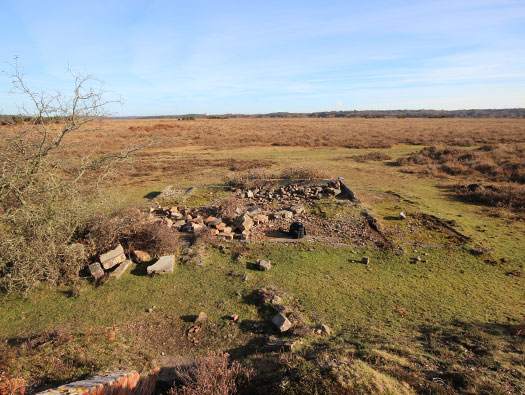
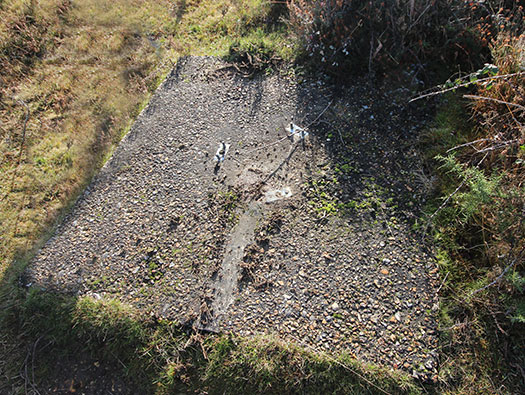
View of the towers protective blast wall and the foundations to the wooden tower.
RAF Ibsley, Hampshire
HF/DF Site
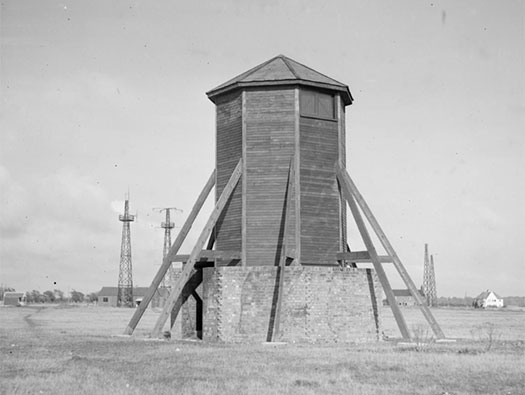
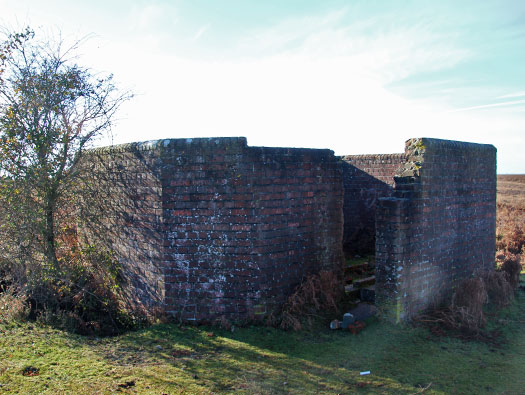
The HF/DF tower was made of wood, protected by the brick blast wall and covered probably in black Tar paint.
The octagonal blast wall on Ibsley Common surrounds a similarly shaped concrete foundation inside. They are the remains of a once top secret wartime direction finding station commonly referred to as HF/DF or "Huff Duff". The equipment and its operators were accommodated within the confines of an octagonal 3 story wooden antenna tower bolted to a concrete plinth. The antenna tower was 30 feet high and was constructed of wood to minimise both electrical and magnetic interference. It was topped by a fixed small aerial array of four vertical dipoles arranged in a square configuration. There is another building 100 yards away crew accommodation. Adjacent to this building is an air raid shelter.
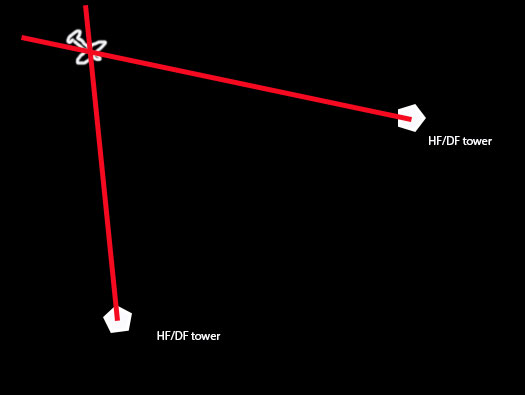
The key feature and main advantage of Huff Duff was its use of a cathode ray tube display and fixed aerial that would instantaneously reveal the direction of the transmission without the need to rotate the aerial. These small radio direction finding stations were the last link in the RAF fighter control system. Two or more stations 30 miles apart could by a system of triangulation, determine the direction and position of a squadron's lead aircraft from its r/t transmission, information that was then passed to the sector control. Once the coordinates were known, the squadron could then be guided to intercept the enemy aircraft that had been located by radar and observer posts. Each station was also equipped with a "Homer", a radio transmitter beacon to help Allied aircraft navigate their way home in bad weather. geograph
Matthew Drew
RAF Ibsley, Hampshire
HF/DF Site
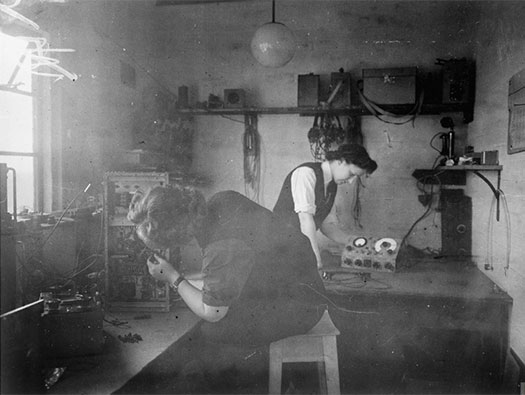
Royal Navy W/T Station at Southwold designed and built pre war in anticipation of hostilities. By 1944 technology had advanced to a great extent that made these redundant and they were all pulled down.
(Lt) E J Russell Admiralty official section IWM 24 October 1944
RAF Ibsley, Hampshire HF/DF Site
An aerial in the roof section that pivoted on a central support and turned by an operative sitting at a desk. He or she would turn the aerial to pick up the strongest signal from an aeroplanes radio transition. When the strongest signal is found a bearing is taken and matched with another station and the two matched together gives the exact position of the aeroplane.
(Lt) E J Russell Admiralty official section IWM 24 October 1944
Chandler Adcock HF/DF.
RAF Ibsley, Hampshire HF/DF Site
An aerial in the roof section that pivoted on a central support and turned by an operative sitting at a desk. He or she would turn the aerial to pick up the strongest signal from an aeroplanes radio transition. When the strongest signal is found a bearing is taken and matched with another station and the two matched together gives the exact position of the aeroplane.
Plan
RAF Ibsley, Hampshire
HF/DF Site
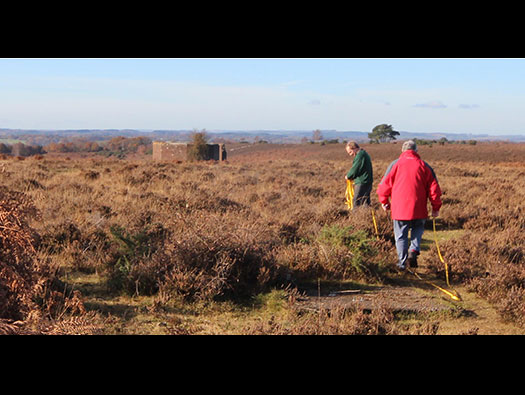
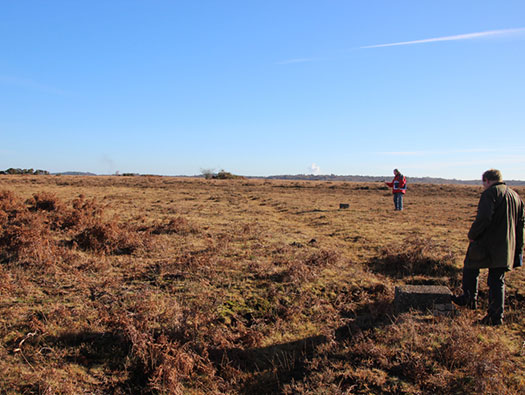
More measuring going on. Rolly and Terrance out recording the site.
18 November 2012
RAF Ibsley, Hampshire
HF/DF Site
18 November 2012
RAF Ibsley, Hampshire HF/DF Site
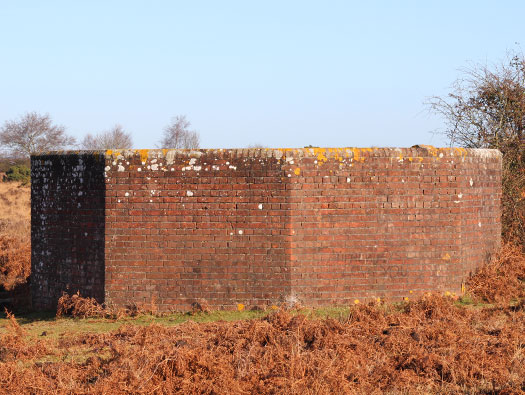
Pre war local brick wall, very well made and nicely finished off capping stones.
18 November 2012
RAF Ibsley, Hampshire
HF/DF Site
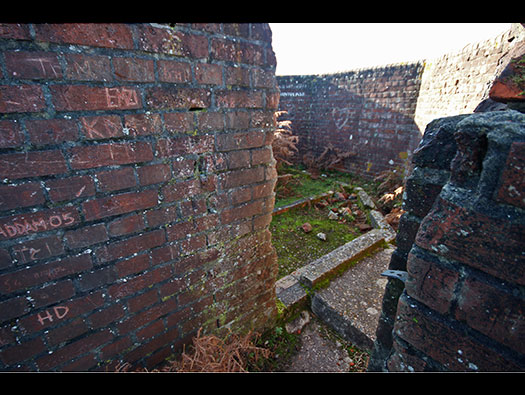
Staggered entrance.
18 November 2012
RAF Ibsley, Hampshire HF/DF Site
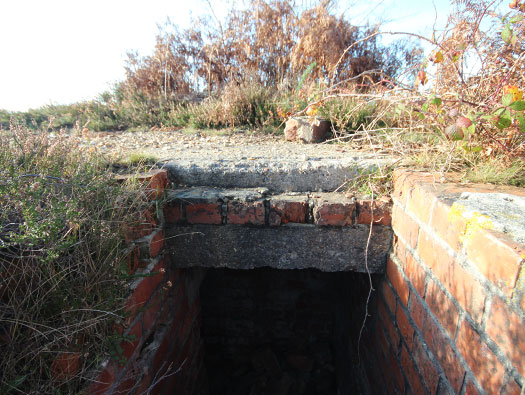
The entrance and a wooden door would have closed off the entrance.
18 November 2012
RAF Ibsley, Hampshire HF/DF Site
The inside with the concrete foundations still in place.
18 November 2012
RAF Ibsley, Hampshire HF/DF Site
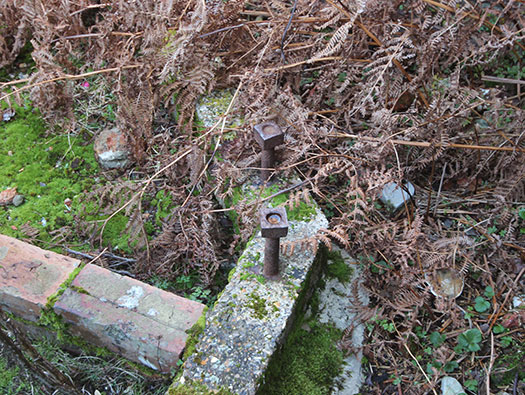
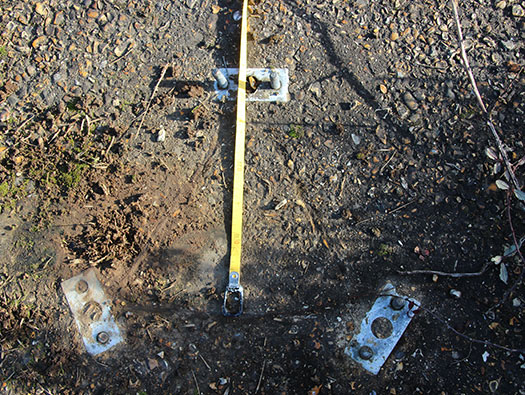
Foundations of the wooden tower still has a bolt with its nuts on the threads.
18 November 2012
RAF Ibsley, Hampshire
HF/DF Site
More bolts.
18 November 2012
Bolt.
RAF Ibsley, Hampshire
HF/DF Site
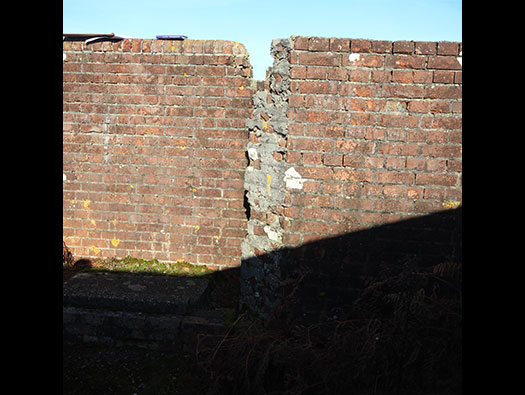
The corner of the brick wall has been chamfered off to fit in the tower.
18 November 2012
RAF Ibsley, Hampshire
HF/DF Site
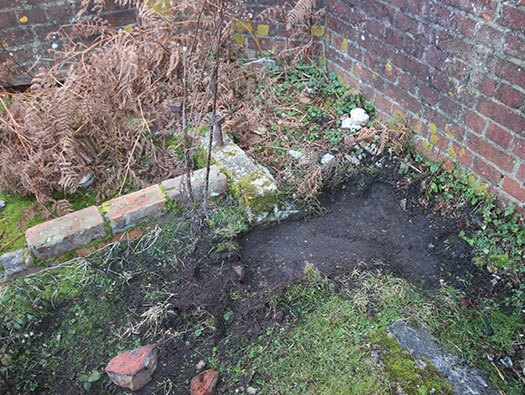
The boundary stones and the straight line part of the two squares laid out around the structure.
18 November 2012
The tower and its squares.
RAF Ibsley, Hampshire
HF/DF Site
More boundary Stones.
18 November 2012
RAF Ibsley, Hampshire
HF/DF Site
Now moving across to the hut and the air-raid shelter.
Plan
RAF Ibsley, Hampshire
HF/DF Site
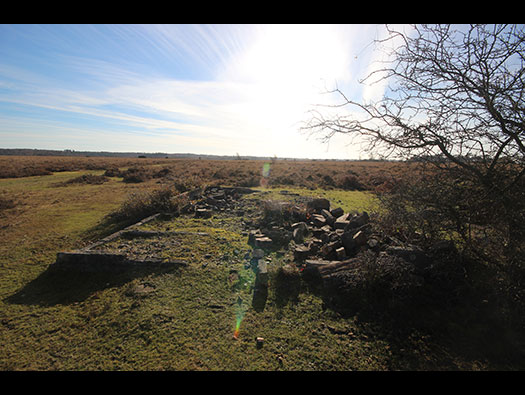
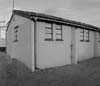
The hut.
18 November 2012
How the hut may have looked.
RAF Ibsley, Hampshire
HF/DF Site
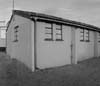
Royal Navy W/T Station at Southwold is very like the hut here would have looked inside.
(Lt) E J Russell Admiralty official section IWM 24 October 1944
Spitfire radio.
RAF Ibsley, Hampshire
HF/DF Site
The hut foundations.
18 November 2012
RAF Ibsley, Hampshire HF/DF Site
The hut.
18 November 2012
How it may have looked.
RAF Ibsley, Hampshire
HF/DF Site
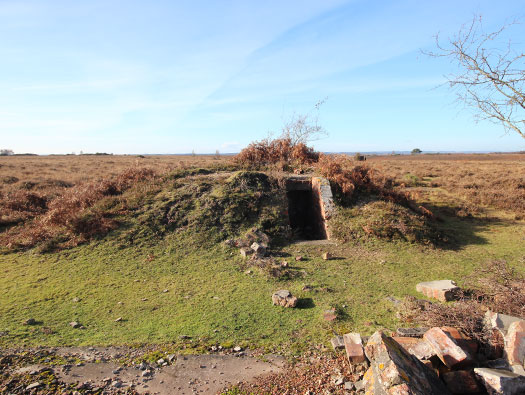
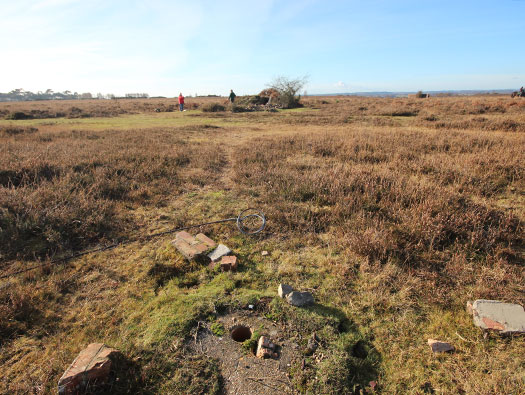
Air-raid shelter.
18 November 2012
Air-raid warning.
RAF Ibsley, Hampshire
HF/DF Site
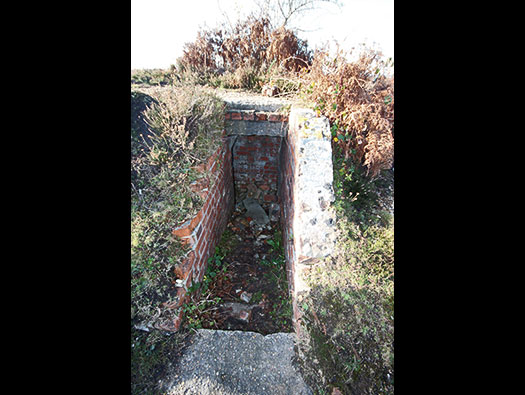
Air-raid shelter entrance.
18 November 2012
RAF Ibsley, Hampshire
HF/DF Site
Air-raid shelter the quite thick reinforced roof.
18 November 2012
RAF Ibsley, Hampshire
HF/DF Site
Air-raid shelter.
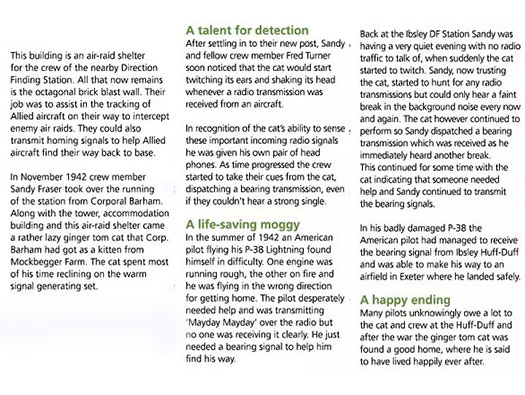
Information taken from the interpretation board now on the air-raid shelter entrance.
RAF Ibsley, Hampshire
HF/DF Site
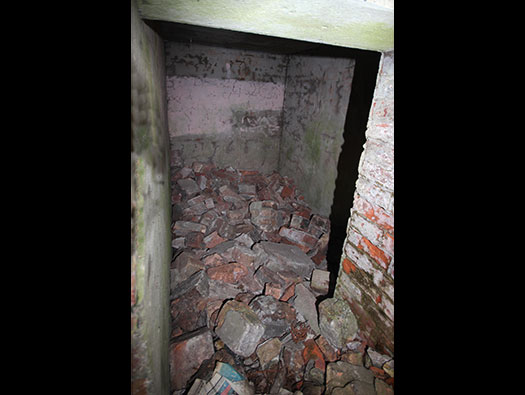
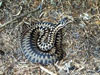
Air-raid shelter inside, be very careful entering as at some times of the year there are Adders nesting in here. We entered late summer and there were around ten inside.
18 November 2012
How you would see an Adder in the New Forest.Vipera berus, the common European Adder.