RAF Warmwell, Dorset Airfield Site USAAF No. 454
RAF · Dorset · England · United Kingdom

RAF Warmwell & USAAF Station 454 Airfield Site
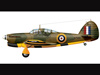
RAF Warmwell Airfield Site
Opened 1937 - Closed 1945.
RAF Officers 144. S.N.C.O.'s 160. O.R's. 1934. Total 2238.
WAAF Officers 8. S.N.C.O.´s 10. O.R's. 284. Total 302.
RAF Sqn´s. 19, 41, 118, 130, 152, 164, 174, 175, 181, 182, 184, 234, 245, 247, 257, 263, 266, 302, 312, 350, 401, 402, 403, 411, 438, 493, 440, 443, 609, 610.
USAAF Station 454. 474th Fighter group, 428, 429 & 430.
RAF Warmwell Airfield Site
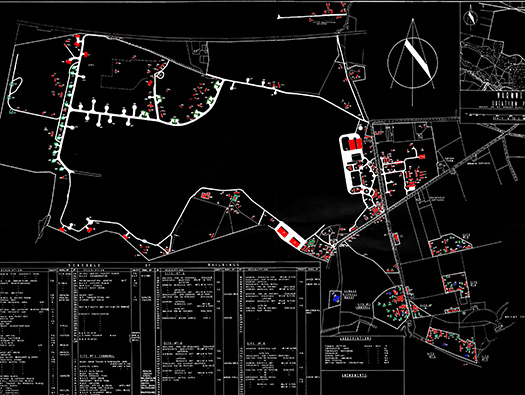
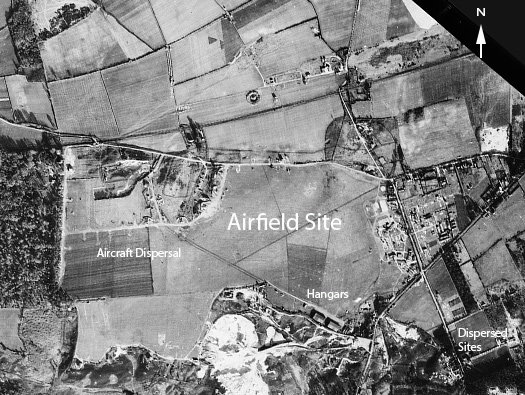
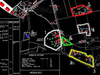
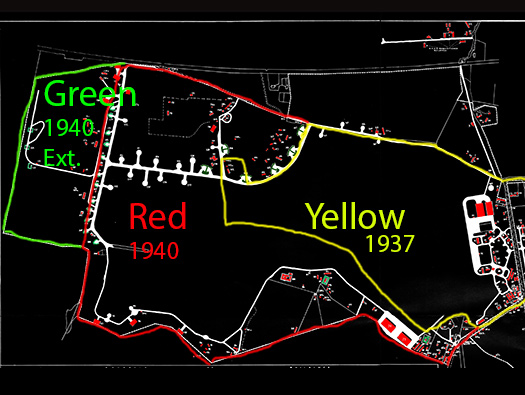
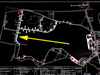
This is the official RAF Plan of RAF Warmwell Airfield Site made in 1946 showing every hut, building, hangar, roadway, sewage works, etc, of the airfield.
July 1938 and the RAF Woodsford was e named RAF Warmwell due to the fact there was another Woodsford in Cheshire.
D.g.of w. site plan 2382.46
RAF Warmwell Airfield Site
D.g.of w. site plan 2382.46
RAF Warmwell Airfield Site
RAF Warmwell Airfield Site
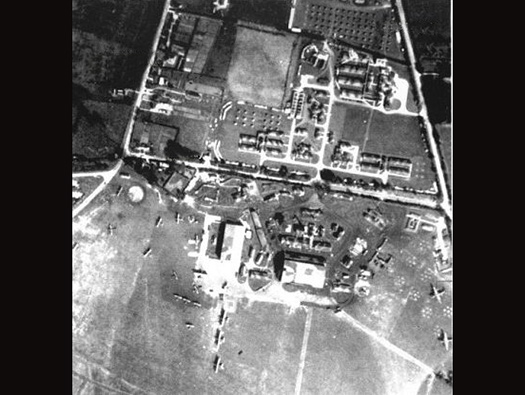
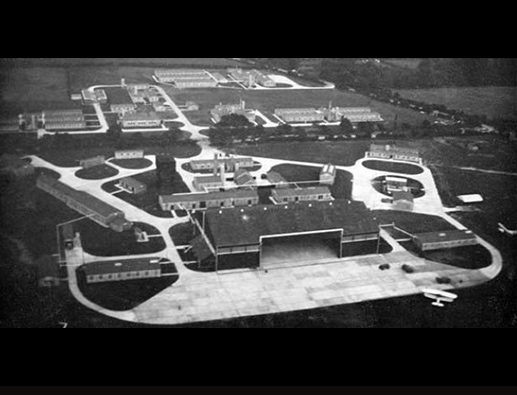
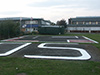
Main Camp, this is a 1937 air photo showing the living, quarters camp at the rear with mostly wooden hutting and in the front, the business end. An 'F' Shed aircraft hangar and a Bellman hangar. The round circle was the Compass platform to reset and test the aircraft compass. The little white spotty bits, are heavy aircraft tie downs.
RAF Warmwell Airfield Site
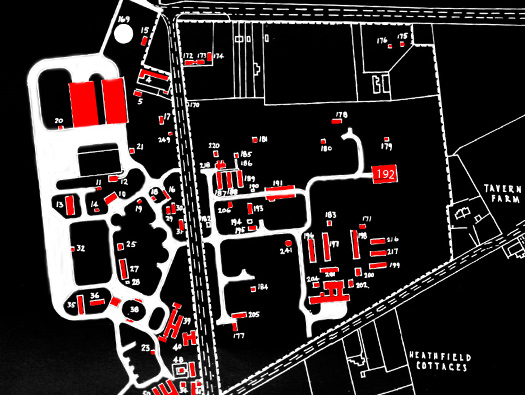
Main 1937 Camp Area
This is the layout of the camp plan drawn in 1946 so it will have some later additions and some missing due to enemy action. Some of the hangars were destroyed in 1941 in a bombing raid so are not on the plan: -
4 A.M.W.D. Stores and compound T & C.I. Air Ministry Works Department Stores in Timber & a yard made of Corrugated Iron.
5 A.M.W.D. Garage T. T.D.1259.
10 M.T. Shed (3 section only) T. 465/37.
11 N.F.E Store (part only 15'0'' long) T. 5717/36.
13 Squadron Office (North) T. 5718/36
15 Cycle maintenance Hut T.
16 Ambulance Garage & Mortuary T. 5717/36.
18 M.T. Petrol Inst. (5,000gal) 4666/38.
27 Armoury T. 3719/36.
28 Oil Store P.B.
29 Fire Pool P.B.
30 Fire Tender House T 8632/37
31 Gas Defence Centre T. 8632/37.
35 Squadron Office (South) T. 5718/36.
36 Crew Locker Room T. 12966/36.
37 Tanker Shed T. 465/37.
38 Bulk Fuel Inst. (24,000gal) R.C. 4029/36. (R.C is reinforced concrete).
39 Station Offices T. 5719/36.
48 Telephone exchange (Main Traverse) T. 5718/36.
169 Compass Platform.
170 L.T. Standby Set House P.B. (A Power house to be used in the event of a mains power failure, probably 1936 design).
195 Main Ration Store T. 464/37.
196 Officers Quarters (A.B.&C. Scales) T. 1395/36. Also 197 &198.
200 Squash Court P.B. 1420/37.
201 Officers Bath House and Batman´s Quarters t. 1395/36220 Medical Stores C.I.
205 Bath House 463/37.
D.g.of w. site plan 2382.46
RAF Warmwell Airfield Site
RAF Warmwell Airfield Site
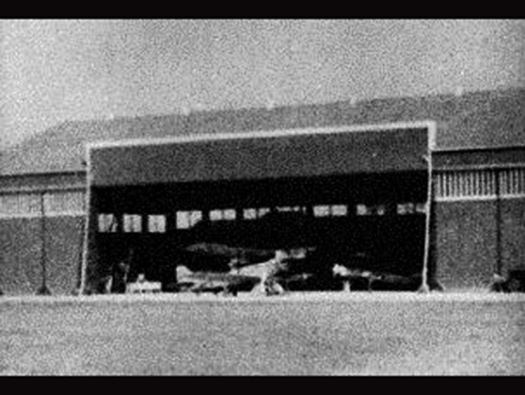
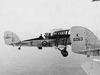
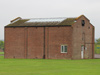
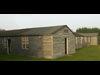
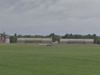
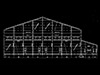
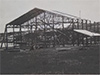
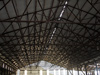
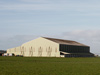
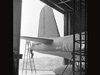
Airfield Site 'F' Shed This type of shed (Hangar is a Shed in early RAF parlance) is an Admiralty Seaplane Shed type 'F' 2722-4/36. About 200ft long x 110ft span by 28ft high. These sheds although designed for seaplanes were used on other land bases such as, RAF Cranwell and Rochester. RAF Cranwell and Rochester still have their Type 'F' sheds as does RAF Calshot. Calshot is a worth a visit to see hangars of this period.
RAF Warmwell Airfield Site
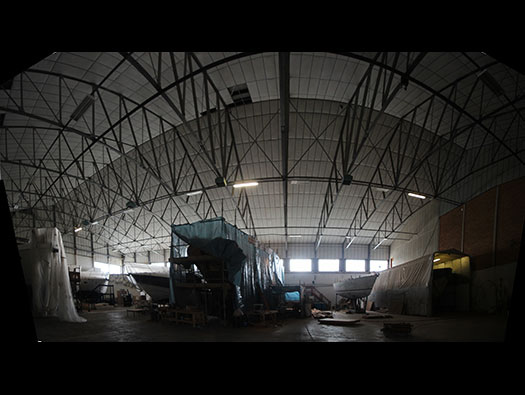
'F' Shed RAF Mount-Batten
This is inside RAF Mount Batten's F Shed..
20 September 2014
RAF Warmwell Airfield Site
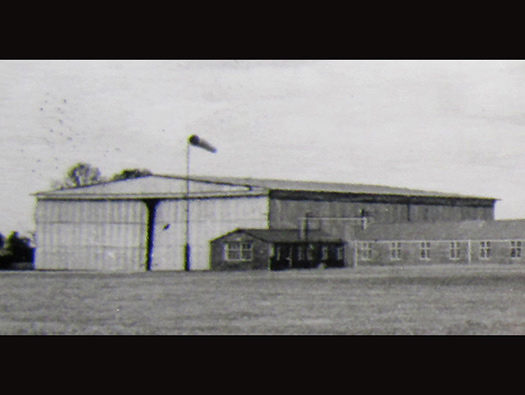
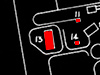
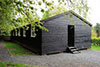
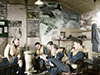
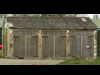
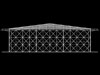
Bellman Hangar.
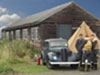
Bellman Hangar 949/34 very early design numbers. The wooden hut on the right could be a Squadron Office (North) T 5718/36. 'T' is timber hutting. The hangar was damaged in a German air-raid and was removed when the plan of the airfield was made in 1946.
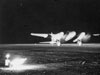
RAF Warmwell Airfield Site
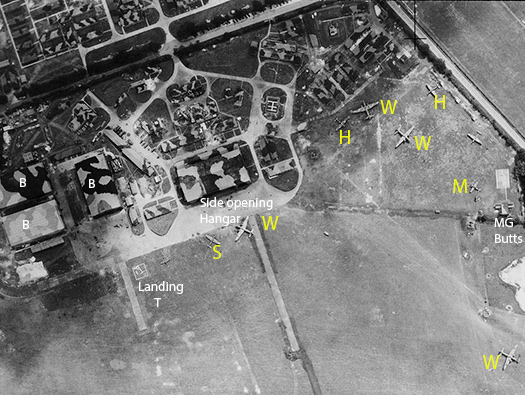
Airfield Site B -
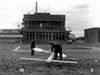
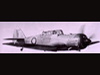
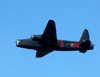
Bellman Hangars.
S - Spitfire.
W - Wellington.
H - Hurricane.
M - Miles Master.
RAF Warmwell Airfield Site
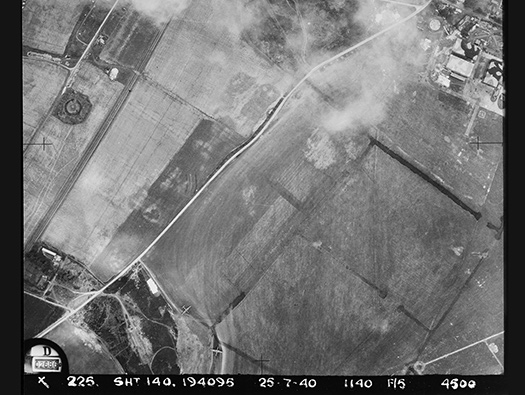
Airfield Site.
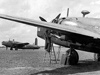
This picture taken further west and the fighter pens have not yet been built but two Wellington bombers are dispersed away from the hangars.
25 July 1940
RAF Warmwell Airfield Site
D.g.of w. site plan 2382.46
RAF Warmwell Airfield Site
Fleet Bombing & Air Firing Range
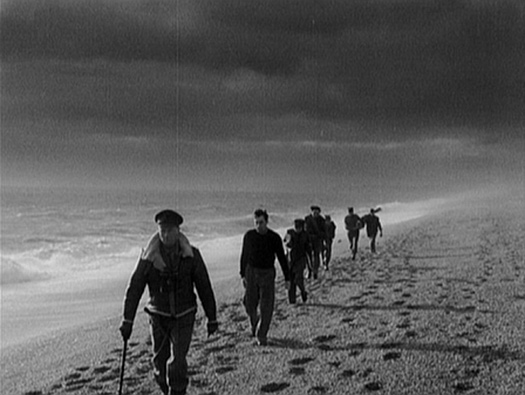
The Fleet was used by fighter planes as an air to air & ground practice firing range, also as a bombing range.
R.A.F. Personal staffed the Target Practice Range and were rowed across the Back Water by the Range Warden Mr F Randell from Chickerell. He also was responsible for putting up the red flags on the poles on the land side safety fence, before firing commenced. There were eight targets on the beach between Langton Hive and Moon Fleet House connected by a wooden plank walk with a command building in the middle.
Another R.A.F. activity was the flying of sleeve targets behind a plane and when finished were dropped on the emergency landing field to the east of Langton Cross. The firing practice used to go on day and night and later floating targets were anchored off Chickerell and New Barn.
Iris Burgin. WW2 Peoples War.
RAF Warmwell Airfield Site
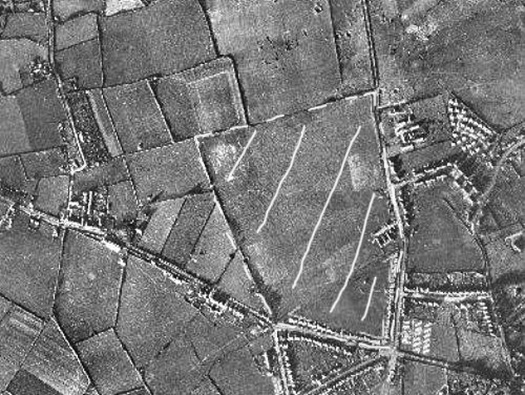
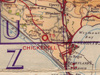
RAF Chickerell 1936.
RAF Chickerell landing ground used by RAF target towing planes from Warmwell to land and re fuel. It was not a airfield, just a small landing field with refueling capability. The target towing aircraft flew back to RAF Warmwell at the end of the flying day.
RAF Chickerell 1936

RAF Warmwell Airfield Site
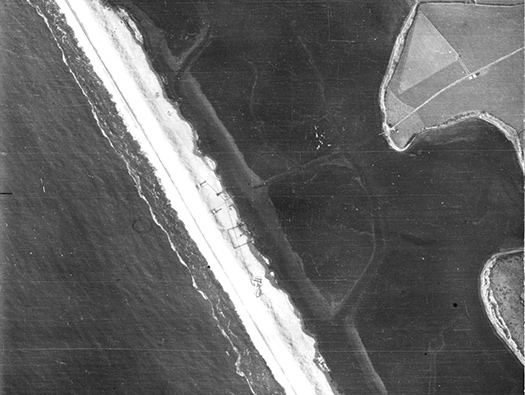
The Fleet bombing range In 1937, the RAF established a bombing and gunnery range along the Fleet Lagoon at Chesil Beach. In 1939, the range was extended further into Lyme Bay. The ranges were used by a variety of bombers and fighters throughout the war for their crews to improve their skills. The idea was a plane would take off from RAF Warmwell Airfield Site, fly out to the Fleet (Chesil Beach). Formate with a target towing aircraft from RAF Chickerell. The target aircraft would have a drogue target made of cloth and the attacking aircraft bullets were dipped in dye. When the attacker hit the drogue, the colours left on the drogue told who and how many hits.
1947
RAF Warmwell Airfield Site
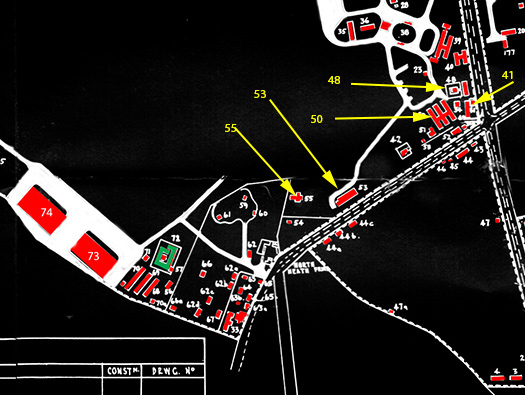
Airfield site South
This side held a mix of 1930's pre war and then in 1940's more buildings were added as for an expanding war need.
41 Signals Control Chamber P.B. W/350.
48 Telephone Exchange (Main Traverse) T. 5718/36.
50 Main Store T. 13186.39.
53 Decontamination Centre Type "G" P.B. 16690/39.
55 Machine Gun Test Butt R.C. 4019-20/37.
D.g.of w. site plan 2382.46
RAF Warmwell Airfield Site
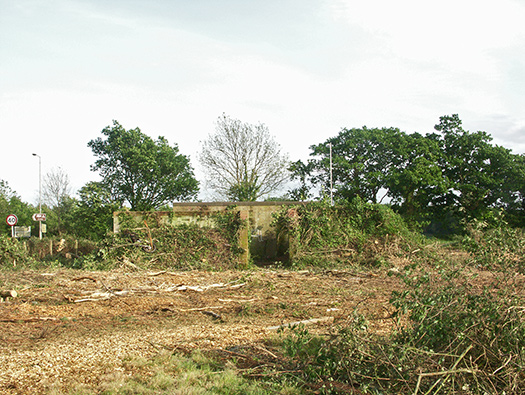
Airfield site.
41 - Signals Control Chamber - P.B. - W/350. It used to sit quite close to the road.
15 May 2007

RAF Warmwell Airfield Site
Airfield site.
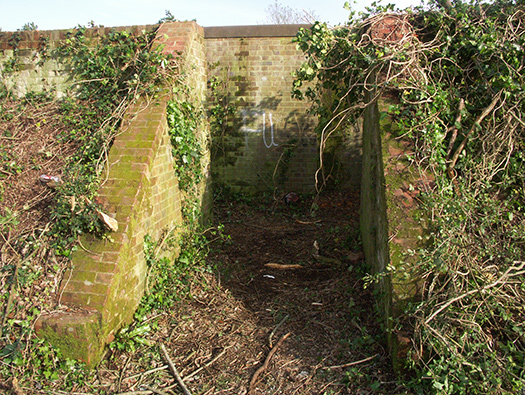
41 Signals Control Chamber P.B. W/350. It has a blast wall with an earth travers (earth piled up around the wall to help with blast from a near miss).
15 May 2007
RAF Warmwell Airfield Site
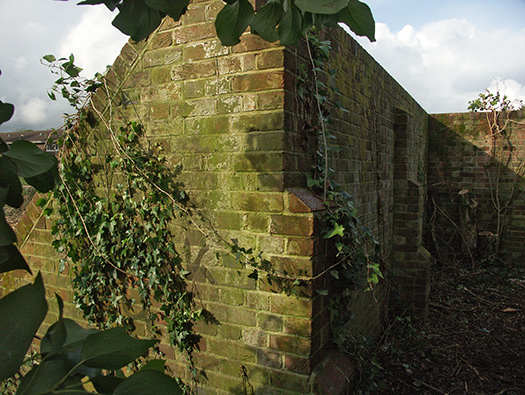
Airfield site 41.
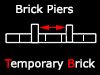
Signals Control Chamber P.B. W/350. The reinforced Permanent Brick wall with strengthening piers.
15 May 2007
RAF Warmwell Airfield Site
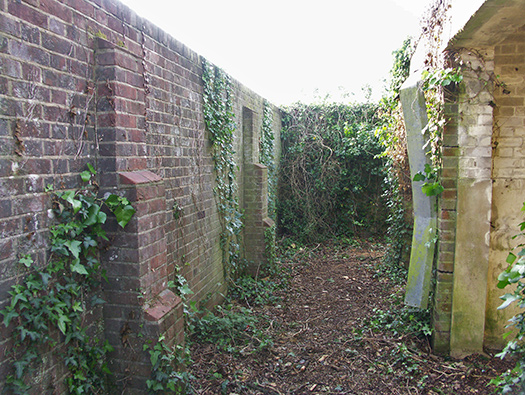
Airfield site.
41 Signals Control Chamber P.B. W/350. Inside the wall.
15 May 2007
RAF Warmwell Airfield Site
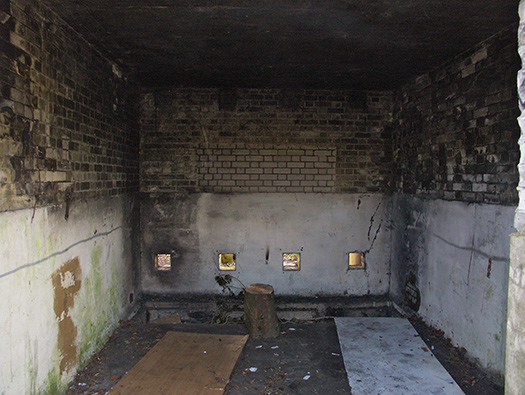
Airfield site
41 Signals Control Chamber P.B. W/350. Control Chamber large..
15 May 2007

RAF Warmwell Airfield Site
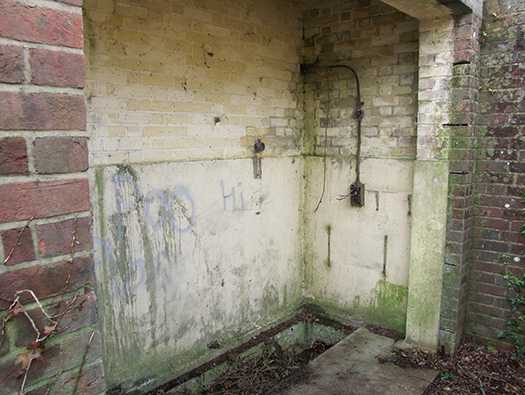
Airfield site.
41 Signals Control Chamber P.B. W/350. Control Chamber small. Light switch was still on the wall.
15 May 2007
RAF Warmwell Airfield Site
Airfield site.
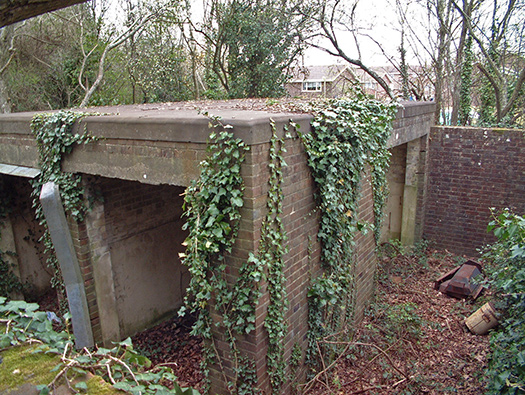
41 Signals Control Chamber P.B. W/350. Looking down from the wall.
15 May 2007
RAF Warmwell Airfield Site
Airfield site.
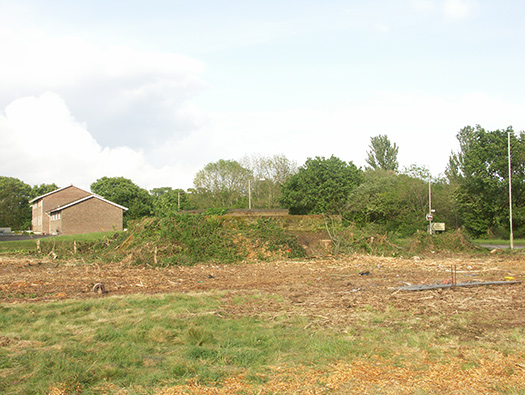
41 Signals Control Chamber P.B. W/350. The view looking from the west.
15 May 2007
RAF Warmwell Airfield Site
Airfield Site.
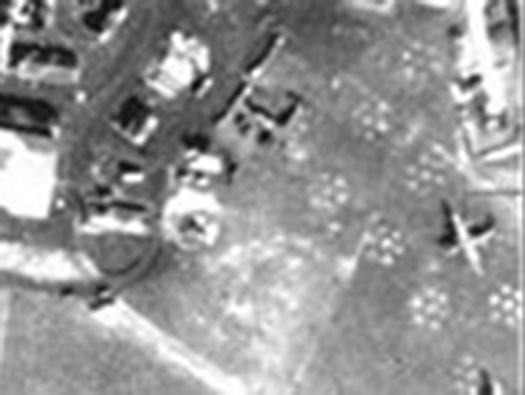
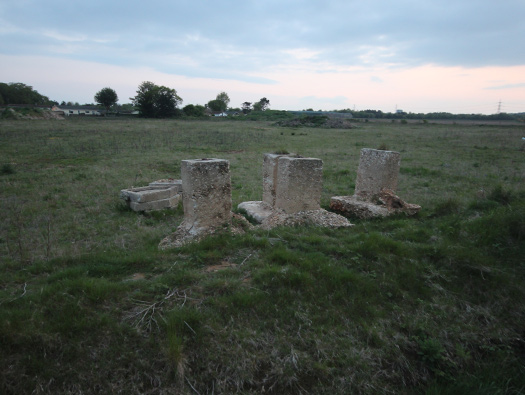
Aircraft tie downs I was asked what the white spots were on the grass and looking into it I realised that they were aircraft tie downs to hold an aircraft down in strong winds. These you will see set into the concrete dispersed hard stands of later era airfields. But here we have them on a grass area with sunken concrete and large D steel tie.

RAF Warmwell Airfield Site
Airfield Site.
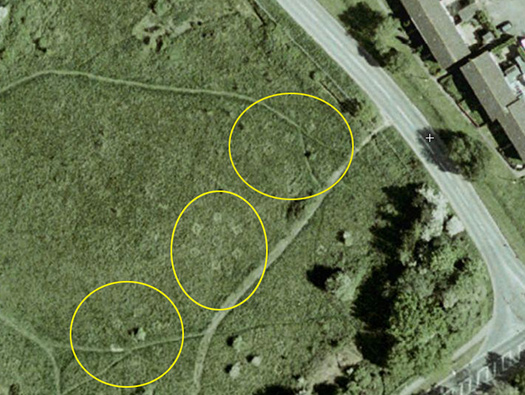
Aircraft tie downs Here they are showing up on Google, seven ties to a set and at least three left.
RAF Warmwell Airfield Site
Airfield Site.
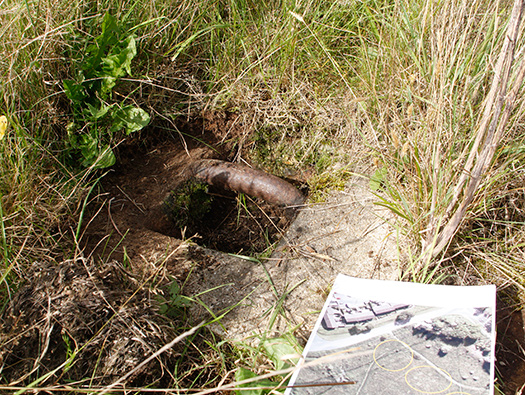
Aircraft tie downs Here the tie down is set into the grass when I found them in 2009.
29 August 2009
RAF Warmwell Airfield Site
Airfield Site.
Aircraft tie downs And here they are now dug out of the ground by the developer.a
20 May 2013
RAF Warmwell Airfield Site
Airfield Site.
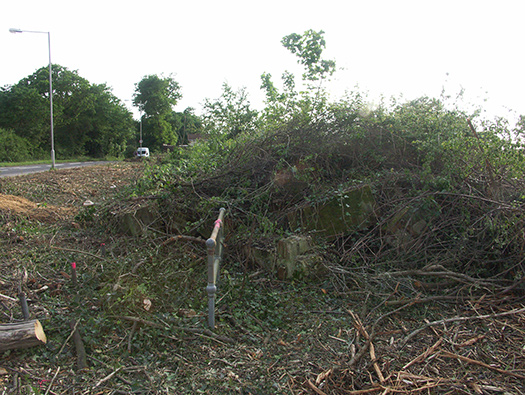
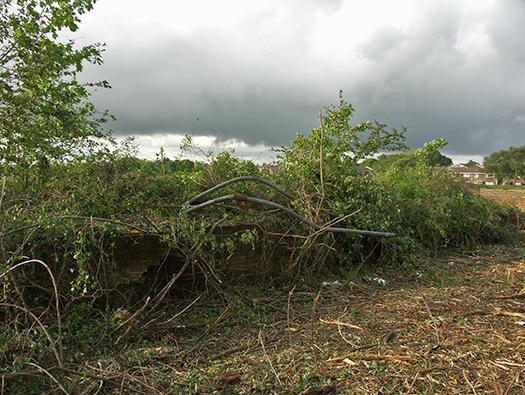
53 - Decontamination Centre Type "G" - P.B. - 16690/41.
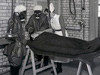
The railings were for gas victims who were blinded by gas to hang onto and follow into the decontamination building, where they would be stripped, washed and any wounds tidied up and fresh cloths put on. Not a nice experience.
15 May 2007
RAF Warmwell Airfield Site
Airfield Site.
53 - Decontamination Centre Type "G" - P.B. - 16690/41.
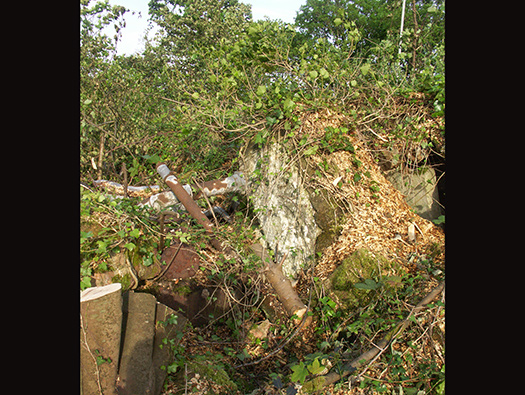
A bit of spaghetti pipe work remaining in 2007.
15 May 2007
RAF Warmwell Airfield Site
Airfield Site.
53 - Decontamination Centre Type "G" - P.B. - 16690/41.
More pipes, asbestos and concrete.
15 May 2007
RAF Warmwell Airfield Site
Airfield Site.
53 - Decontamination Centre Type "G" - P.B. - 16690/41.
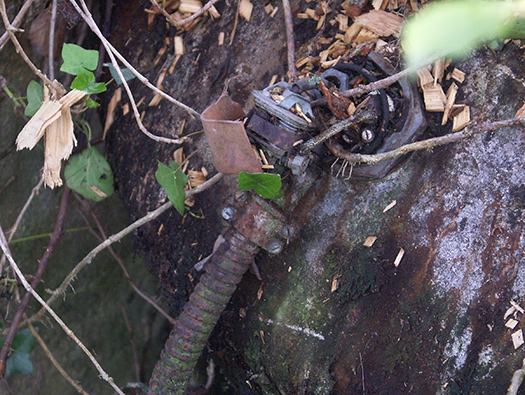
Remains of the hot water tank.
15 May 2007
RAF Warmwell Airfield Site
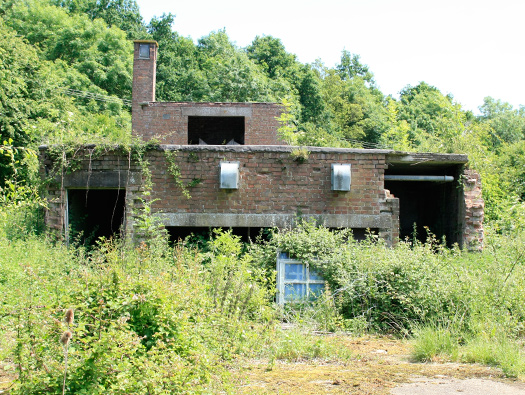
Airfield Site.
53 - Decontamination Centre Type "G" - P.B. - 16690/41.
This is the RAF Stratford Decontamination Centre which looks the same as the one here.
RAF Stratford 20 July 2010
RAF Warmwell Airfield Site
Airfield Site.
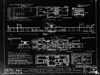
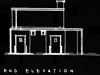
53 - Decontamination Centre Type "G" - P.B. - 16690/41.
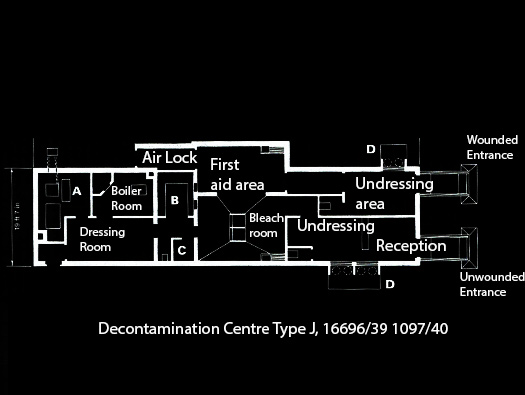
Casualties would enter via the two entrances on the right and work their way through the building until released through the air lock door at the top. Wounded would use the right entrance and unwounded the left entrance.
RAF Warmwell Airfield Site
Airfield Site.
53 - Decontamination Centre Type "G" - P.B. - 16690/41.
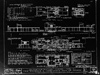
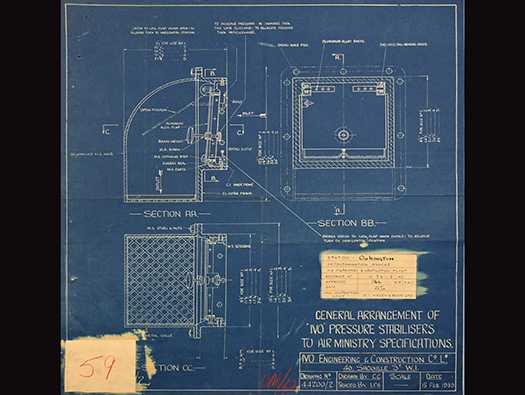
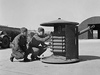
'IVO' Pressure Stabilisers to Air Ministry Spec. plan. The decontamination centre was over pressured by a large air conditioning plant. There were pressure stabilisers like this one to stabilise when a close explosions outside.
16690/41.
RAF Warmwell Airfield Site
Airfield Site.
53 - Decontamination Centre Type "G" - P.B. - 16690/41.
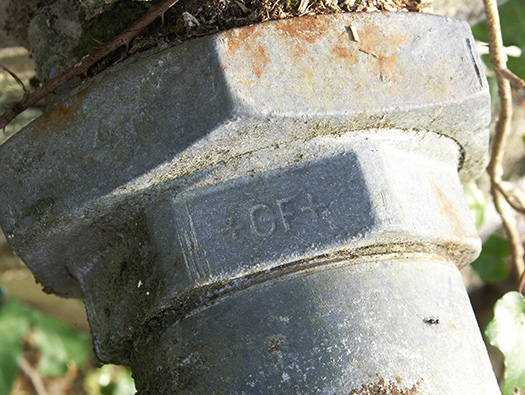
Pipe fitting.
RAF Warmwell Airfield Site
Airfield Site.
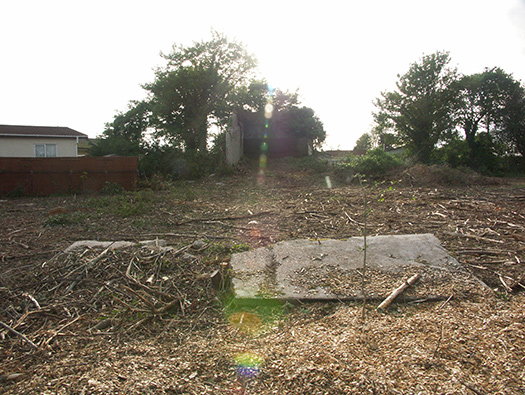
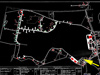
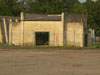
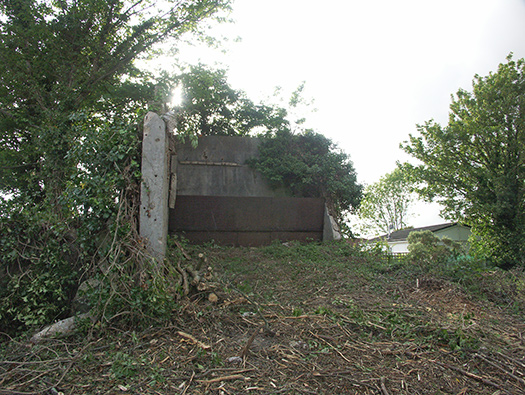
55 - Machine Gun Test Butt - R.C. - 4019-20/37.
Machine gun test butt, airplanes of the era of the 1930's only carried machine guns and so only needed a small butt to accept the planes one or two machine guns. Usually carried around the nose of the plane.
R.C. - Reinforced concrete.
15 May 2007
RAF Warmwell Airfield Site
Airfield Site.
55 - Machine Gun Test Butt - R.C. - 4019-20/37.
The left wall and sand butt.
RAF Warmwell Airfield Site
Airfield Site.
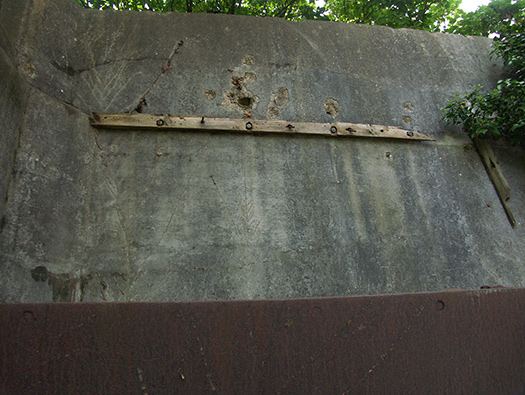
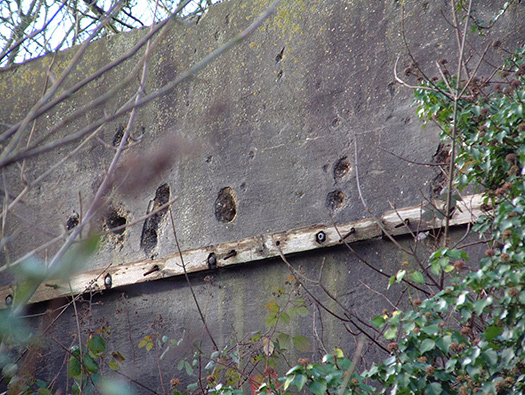
55 - Machine Gun Test Butt - R.C. - 4019-20/37.
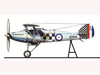
Spitfires & Hurricanes would not probably have used these Butts as their guns were on the wings, this type would have been for the older bi-planes, where their machine guns were sat along the top or side of the engine.
15 May 2007
RAF Warmwell Airfield Site
Airfield Site.
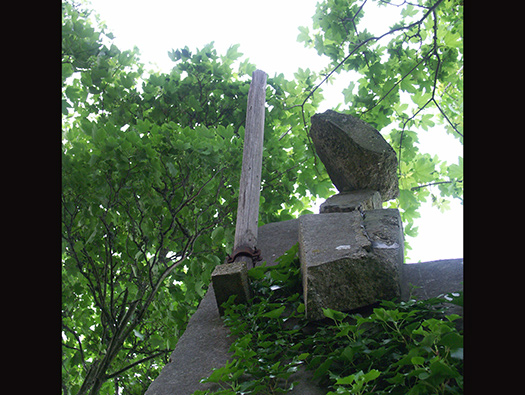
55 - Machine Gun Test Butt - R.C. - 4019-20/37.
Danger red flag pole.

RAF Warmwell Airfield Site
Airfield Site.
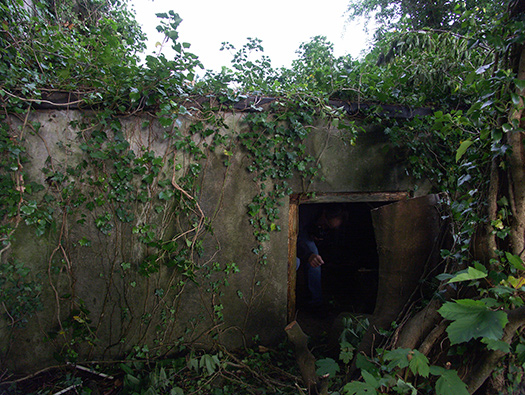
55 - Machine Gun Test Butt - R.C. - 4019-20/37.
The small room on the side.
15 May 2007
RAF Warmwell Airfield Site
Airfield Site
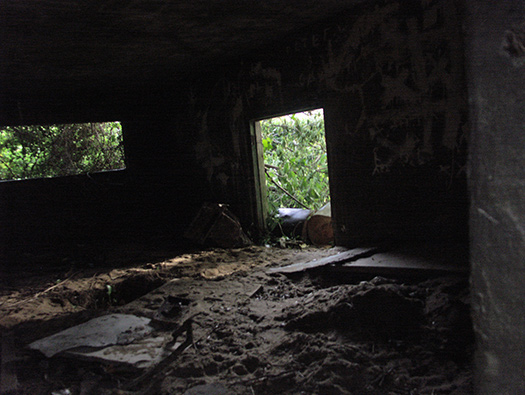
55 - Machine Gun Test Butt - R.C. - 4019-20/37.
Inside it was full of the sand from the butt. Targets and pieces of wood to make them, nails, glue, etc. would have been stored here.
15 May 2007
RAF Warmwell Airfield Site
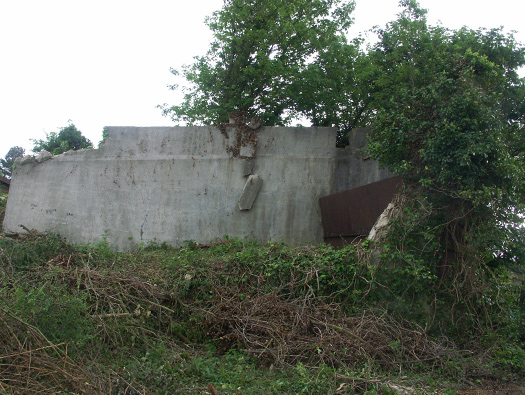
15 May 2007
RAF Warmwell Airfield Site
Airfield Site.
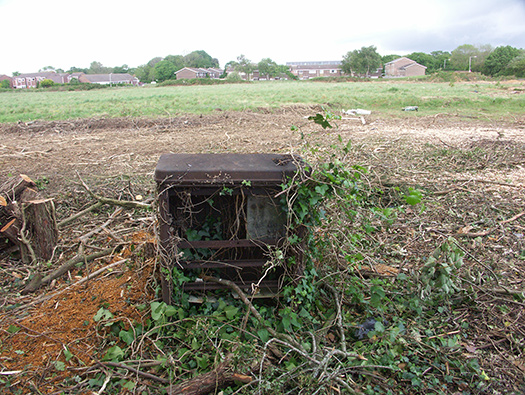
54- Speech Broadcasting House - P.B. - 10786/41.
This is probably the M&E plinth to power the Speech Broadcasting House.
M&E plinths were (Mechanical & Electrical) laid out around an airfield so that if mains ever failed, a generator would kick in and send power around an armoured cable that was linked to the M&E plinths. The power then would be distributed out to buildings that were important enough to use the lower power/quantity electricity.
15 May 2007
RAF Warmwell Airfield Site
Airfield.
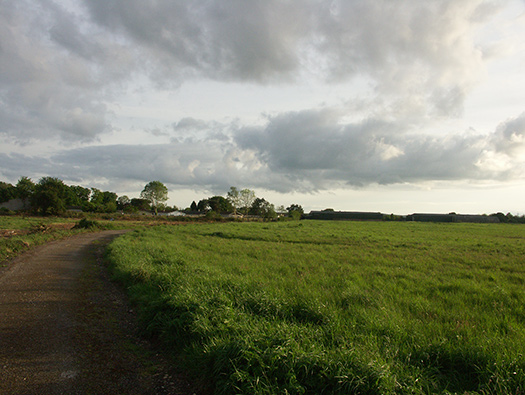
Perimeter track from the main Airfield site across to the dispersed hangar site. Perimeter tracks on older RAF airfields were just road ways to take motor transport around the airfield and they usually followed the perimeter of the actual grass area. On later 'A' type airfields they were mainly used for the movement of aircraft from dispersed sites to the runways and were usually 50ft wide.
15 May 2007
RAF Warmwell Airfield Site
Airfield.
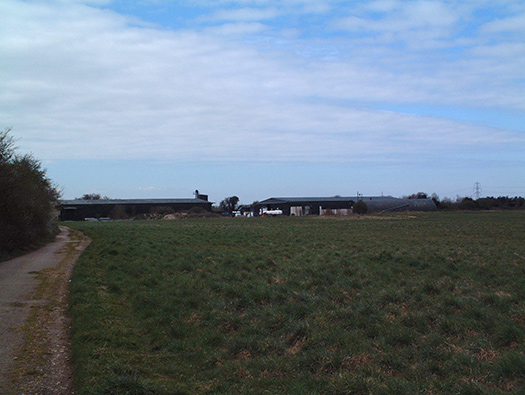
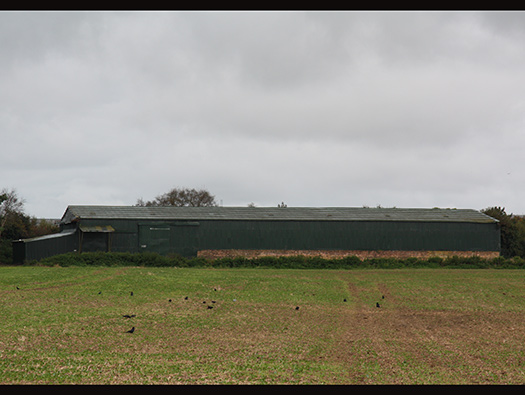
There are/were two Bellman hangars remaining on the south side with a Romney hut. These hangars would be ideal for the type of aircraft used here. A Wellington would fit easily into one and the smaller fighters.
09 April 2003
RAF Warmwell Airfield Site
14 October 2008
RAF Warmwell Airfield Site
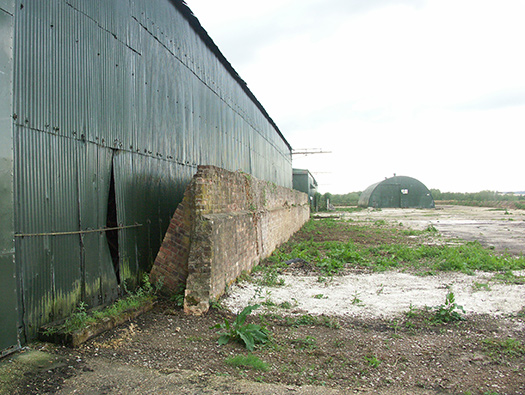
Airfield Bellman 73 949/34.
Blast wall down the side.
15 May 2007
RAF Warmwell Airfield Site
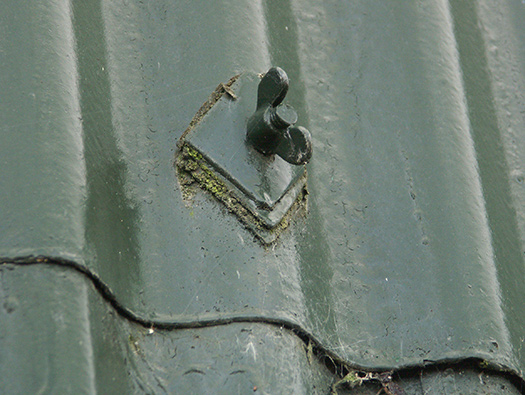
Airfield Bellman 73 949/34.
Corrugated iron sheeting held on with wing nuts to hold it on. Made as a transportable hangar, meaning it could be assembled and dis-assembled and moved very easily. The use of wing nuts, would have allowed the sheeting to be removed and replaced easily.
15 May 2007
RAF Warmwell Airfield Site
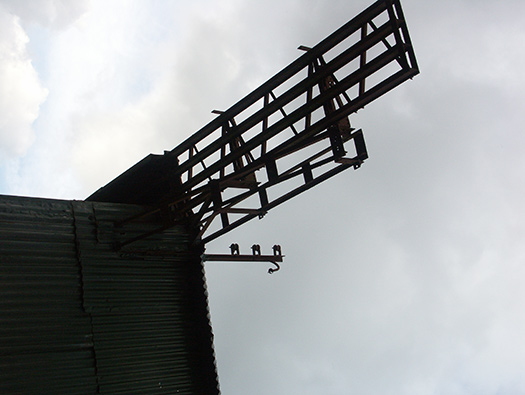
Airfield Bellman 73 949/34.
The door gear slowing the four doors, two each side to open and allow a fully open entrance.
15 May 2007
RAF Warmwell Airfield Site
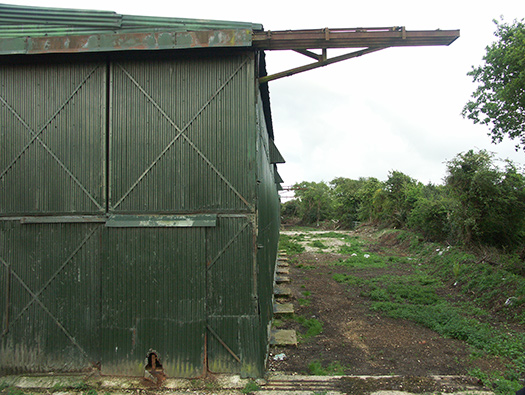
Airfield Bellman 73 949/34.
The other side of the hangar showing the concrete bases for the steel frame uprights. The door coming in six doors of four sections and can open to the full width.
15 May 2007

RAF Warmwell Airfield Site
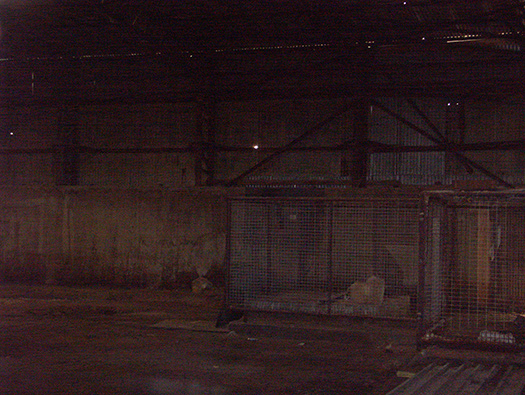
Airfield Bellman 73 949/34.
The view I managed inside showing the framework, the concrete walls are added by the farmer and would not have been there.
15 May 2007
RAF Warmwell Airfield Site
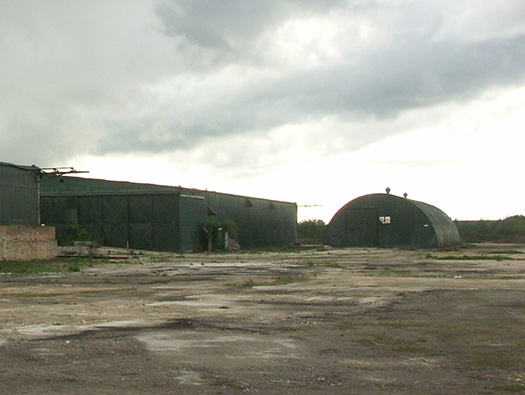
Airfield Bellman 74 949/34.
The second Bellman hangar 74 and a Romney hut. The Romney hut is not on the 1946 original plan and may have been placed there by the farmer post war. I believe talking to him many years ago and he said he had bought them in from another camp.
15 May 2007

RAF Warmwell Airfield Site
Airfield site.
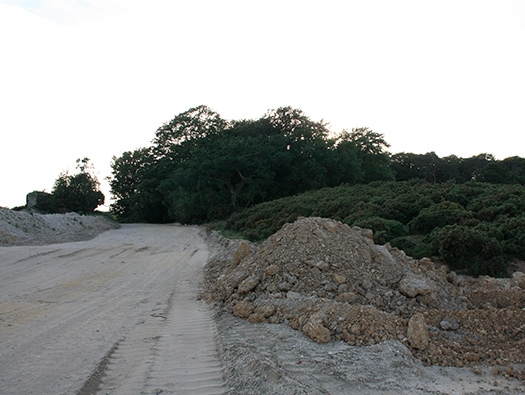
100 Cannon Test Butt PB (no plan number) In the distance on the left.
We have now arrived at the western end of the airfield.
RAF Warmwell Airfield Site
Airfield site.
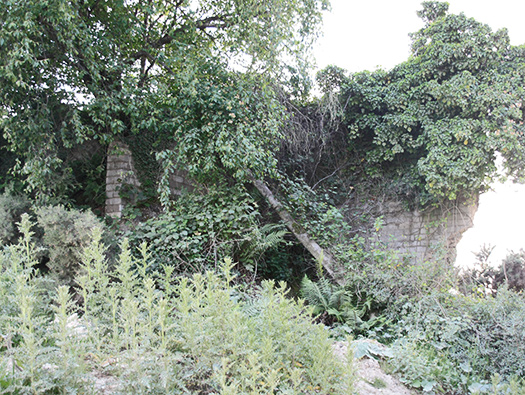
100 Cannon Test Butt PB (no plan number).
Unlike the machine gun butt shown earlier this cannon butt was much larger to accommodate guns in the wings of aircraft. Also it was much stronger to accept heavy cannon shells.
01 June 2011
RAF Warmwell Airfield Site
Airfield site.
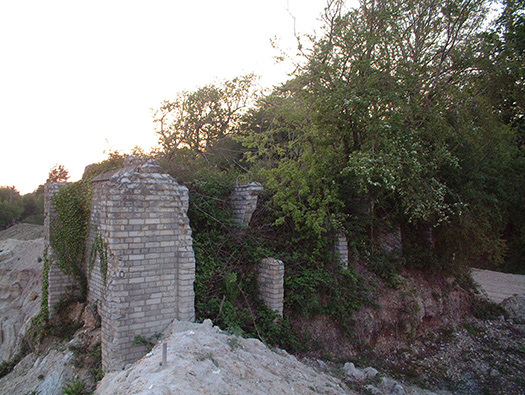
100 Cannon Test Butt PB (no plan number) Looking into the front of the butt with the left wall and the individual walls that strengthens the back wall and were filled with sand to take the bullets & shells.
01 June 2011
RAF Warmwell Airfield Site
Airfield site.
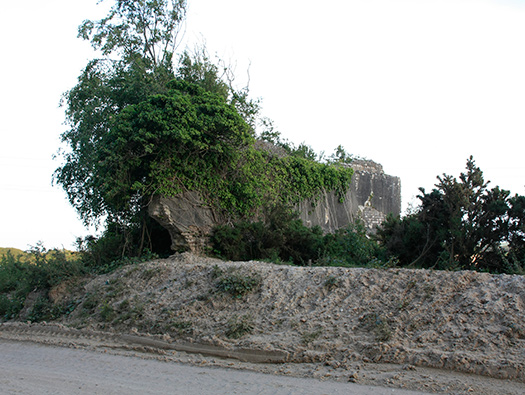
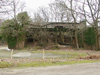
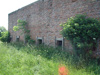
100 Cannon Test Butt PB (no plan number) The view from behind, its very hard to see what it looked like. Open at the front with protruding side walls with a rear wall with a sand butt to catch the cannon/machine gun fired ammunition and may also have a roof over to keep the sand dry..
01 June 2011
RAF Warmwell Airfield Site
Airfield Site
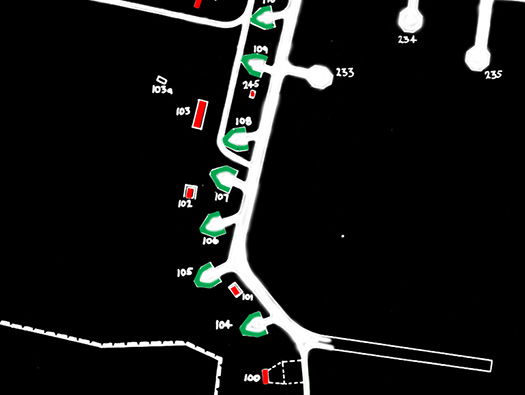
RAF Warmwell Airfield Site Site Plan 2382/46
This is the western side and Knighton Heath Wood
100 - Cannon Test Butt - P.B.
101 - Smith Gun & Defence Ammunition Store - P.B.
102 - S.A.A. Store - P.B.
103 - Dispersal Hut - P.B. - 6370/40.
104 - 110 Fighter type Aircraft Pens.
245 M&E Plinth.
234 - 235 Aircraft Hard-standing.
The life of a standard RAF Station of the old order suddenly changed with the retreat from Dunkirk. Then all hell was let loose with The Battle of Britain.
D.g.of w. site plan 2382.46D.g.of w. site plan 2382.46
RAF Warmwell Airfield Site
Airfield Site.
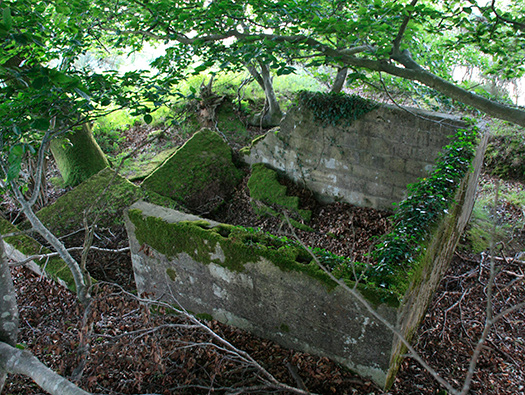
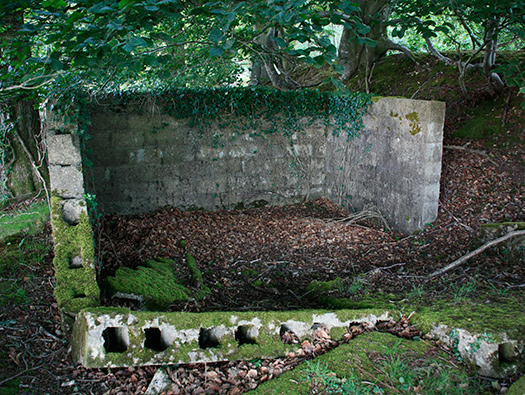
101 - Smith Gun & Defence Ammunition Store - P.B.
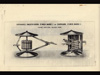
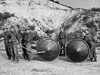
The Smith Gun was invented by the chief engineer of the Trianco Engineering Company. It was developed as a private venture in 1940 and offered to the British Army as an emergency gun for issue to the Home Guard. At first the gun was refused by the Ordnance Board but it appears to have got into Home Guard service by some back-door route and was on issue by June 1941. It fired a modified mortar round. Here it would have been used by the defence troop to stop a parachute/glider attack on the airfield.
01 June 2011
RAF Warmwell Airfield Site
Airfield Site.
101 - Smith Gun & Defence Ammunition Store - P.B.
Made of a local breeze block.
The Battle of Britain brought squadrons on Spitfires to an aerodrome not prepared for war footing. So much so that when the fighter pilots took off and fought the German hordes and landed, they went to get some food. The Group Captain in charge of the Central Gunnery School had closed the canteen on time and refused them food.They should not keep to RAF time. Well I am not sure how long that lasted or him for that matter. As I said times were changing and the battles above Warmwell and the south coast went on for the rest of the year with Spitfire Squadrons coming and going and massive battles taking place.
01 June 2011

RAF Warmwell Airfield Site
Airfield Site.
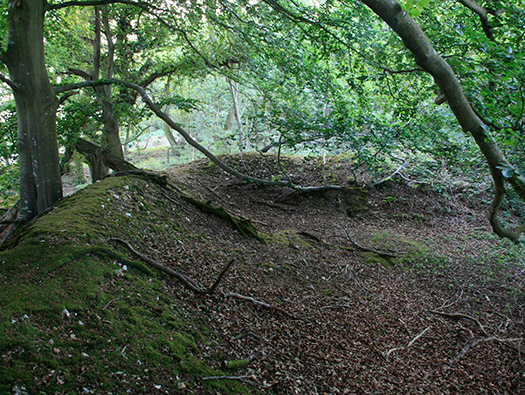
105 - Fighter type Aircraft Pen.
The RAF designed some very sophisticated fighter pens earlier in the war, but due to the expansion of fighter aircraft the plans went out of the window and these U shaped pens for an individual fighter were built. Here there are several left. There are no earlier Fighter Pen 11070/41 extant.
01 June 2011

RAF Warmwell Airfield Site
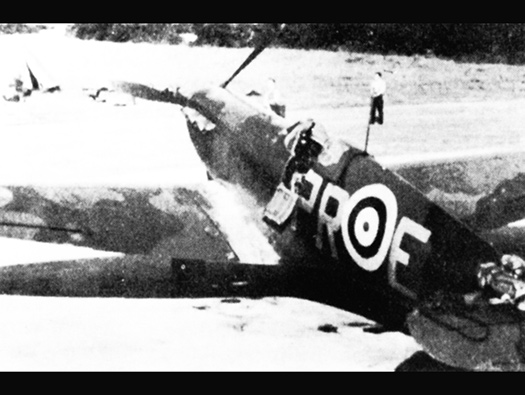
Airfield Site Readiness.
The airfield was still just grass runways, no fighter pens, no real infrastructure, the planes flew in from RAF Middle Wallop, landed and were immediately re fueled. Then when called for to scramble, the planes would roar off across the dry grass into action. At night they would fly back to Middle Wallop, leaving a skeleton ground crew to live in tents until a proper infrastructure could be arranged.
RAF Warmwell Airfield Site
Airfield Site.
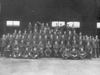
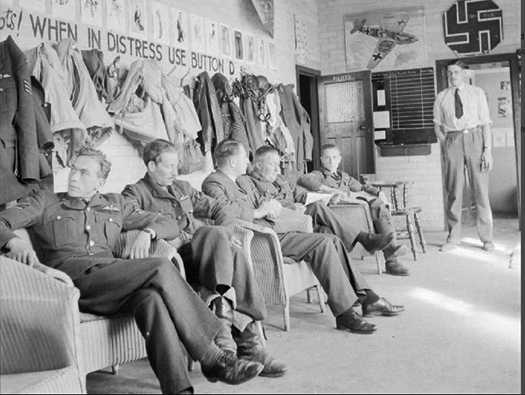
Squadron dispersal hut.
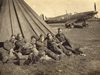
When hutting followed a proper Squadron based hut was built. Another Spitfire Squadron that used Warmwell was No.152. No. 152 (Hyderabad) Squadron RAF. April 1941 the airfield was attacked by three He111's killing ten airmen and a lot of damage.
RAF Warmwell Airfield Site dispersal hut (IWM)
RAF Warmwell Airfield Site
Airfield Site.
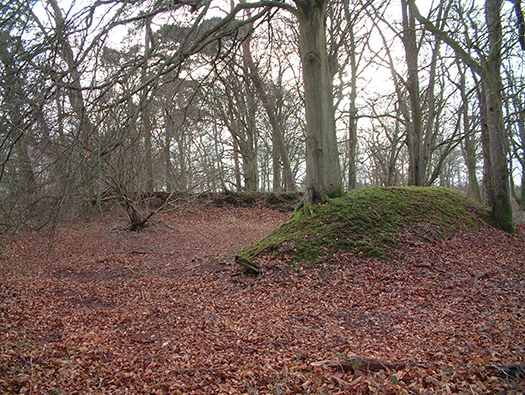
Fighter type Aircraft Pen.
Another further along.
10 January 2004
RAF Warmwell Airfield Site
Airfield Site.
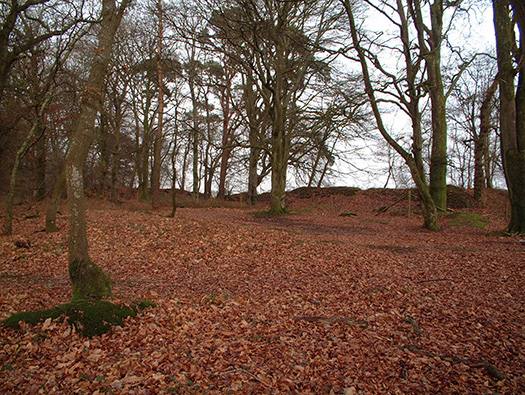
Fighter type Aircraft Pen.
A row of fighter pens in the front of the woodland.
10 January 2004
RAF Warmwell Airfield Site
Airfield Site.
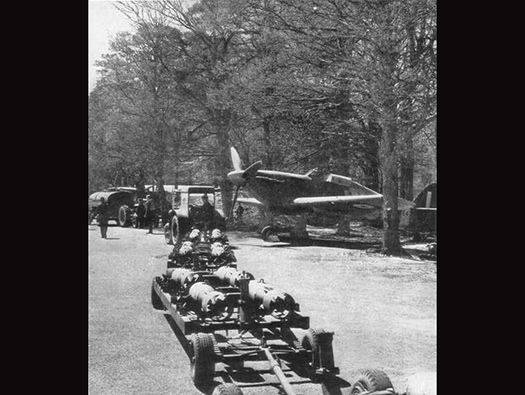
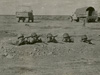
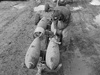
Members of No.302 Squadron Polish Air Force with Hurribombers.
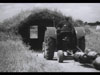
A bomb train pulled b a tractor and in front a fuel bowser, refueling aircraft.
Hurribombers
RAF Warmwell Airfield Site
Airfield Site.
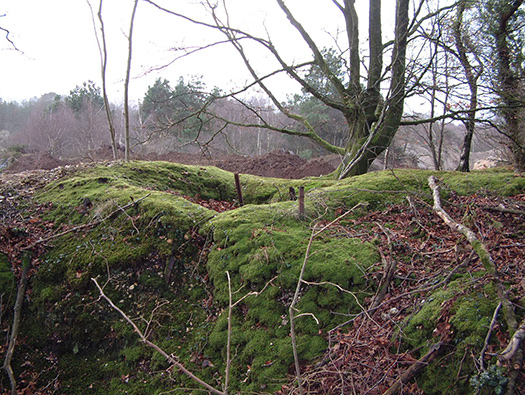
This is very unusual and you hardly ever see this on any ex RAF/USAAF airfield so many sets of slit trenches and small underground bunkers still existing. Also picket posts and corrugated iron sheets can be seen as trench supports. Just wonder around an you will find many. RAF Ibsley also has a few like this. Probably because it was an early war airfield as was Ibsley.
10 January 2004
RAF Warmwell Airfield Site
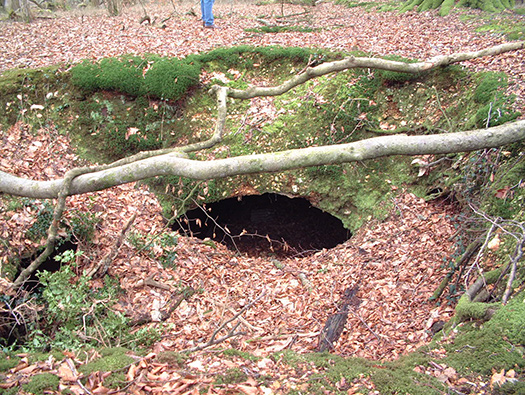
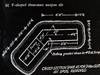
Knighton Wood a covered trench/air raid shelter made with corrugated iron.
10 January 2004
RAF Warmwell Airfield Site
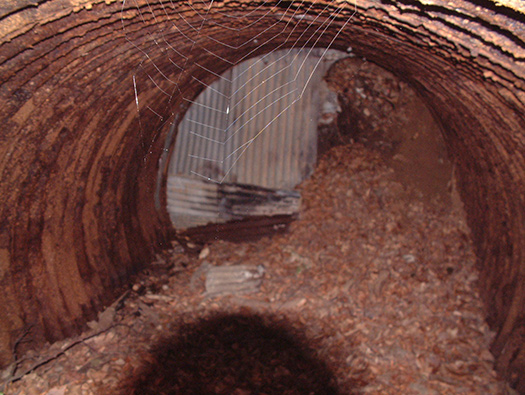
Knighton Wood a covered trench/shelter made with corrugated iron inside.
10 January 2004
RAF Warmwell Airfield Site
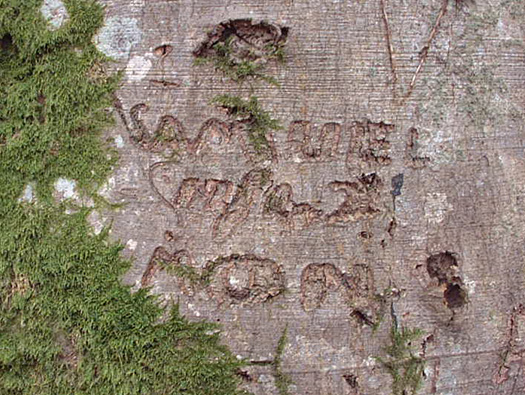
Knighton Wood many of threes have carvings on them.
10 January 2004
RAF Warmwell Airfield Site
Knighton Wood.
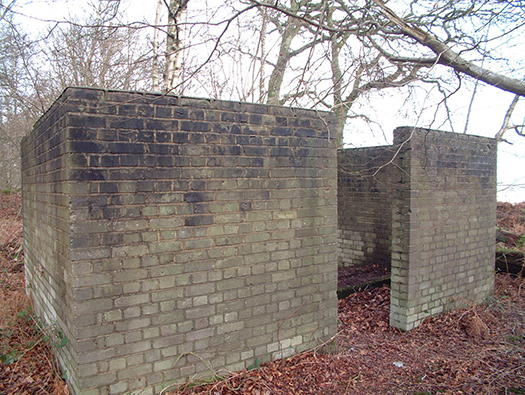
245 - M&E Plinth.
M&E Plinth to distribute electricity around the airfield and transformers of some type would be inside them.
RAF Warmwell Airfield Site
Knighton Wood.
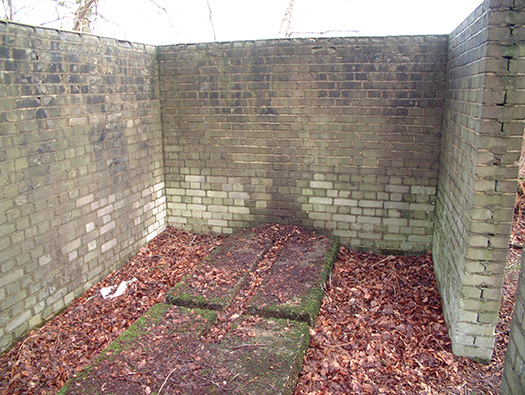
245 M&E Plinth M&E.
Plinth to distribute electricity around the airfield and transformer inside with a hard base for a transformer to stand on.
10 January 2004
RAF Warmwell Airfield Site
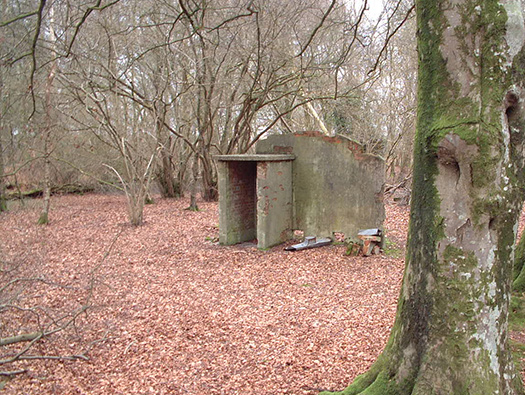
Knighton Wood.
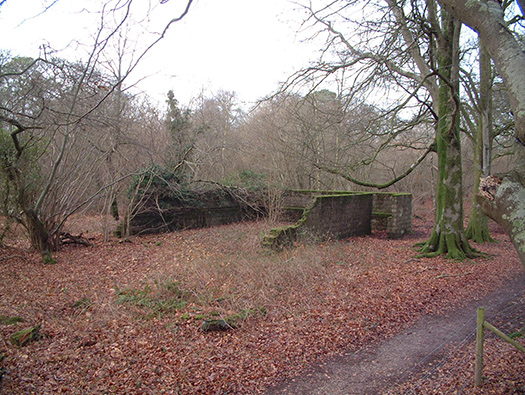
102 - S.A.A. Store P.B.
Small Arms Ammunition Store, inside the outer blast wall may have been a hut or the ammunition was stored in the open??.
Note the blast wall is thicker lower down and a staggered entrance.
10 January 2004
RAF Warmwell Airfield Site
Knighton Wood.
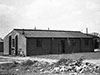
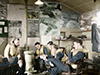
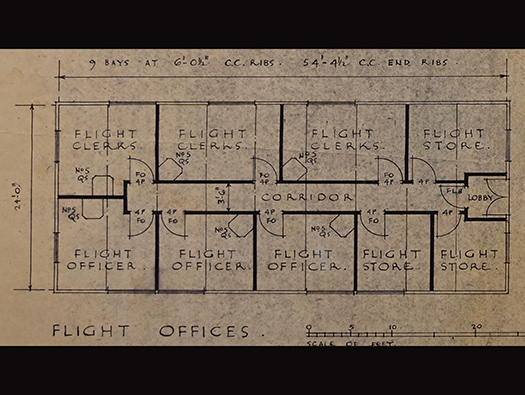
103 - Dispersal Hut - TB - 6370/40.
Dispersal hut for the fighter crews in the area.
10 January 2004
RAF Warmwell Airfield Site
103 - Dispersal Hut - TB - 6370/40.
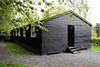
Dispersal hut for the fighter crews in the area. A 1941 type flight office.
ARG Archive
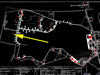
RAF Warmwell Airfield Site
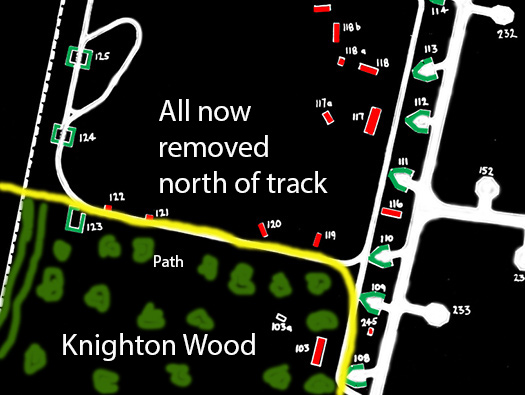
Knighton Wood Site Plan 2382/46.
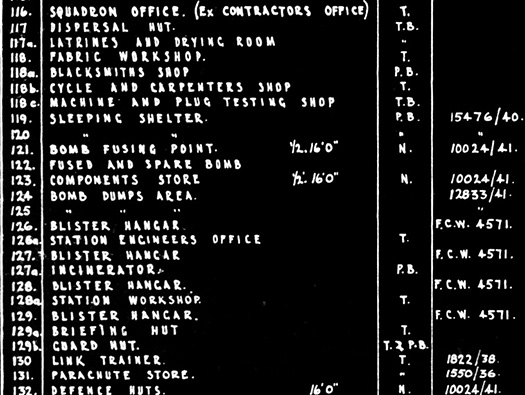
116 - Squadron Office - T.
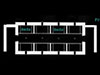
119 - 120 Sleeping Shelter - P.B. - 15476/40.
121 - Bomb Fusing Point N. - 10024/41.
122 - Fused and Spare Bomb.
123 Component Store 10024/41.
124 - 125 Bomb Dump Area 12833/41.
D.g.of w. site plan 2382.46
RAF Warmwell Airfield Site
Knighton Wood.
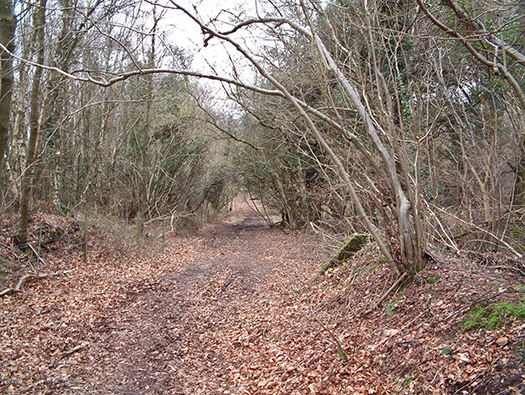
123 - Component Store - 10024/41.
This view has now changed as the woodland and earth has all been removed on the left side. On the right is the component store still can be seen.
10 January 2004
RAF Warmwell Airfield Site
Knighton Wood.
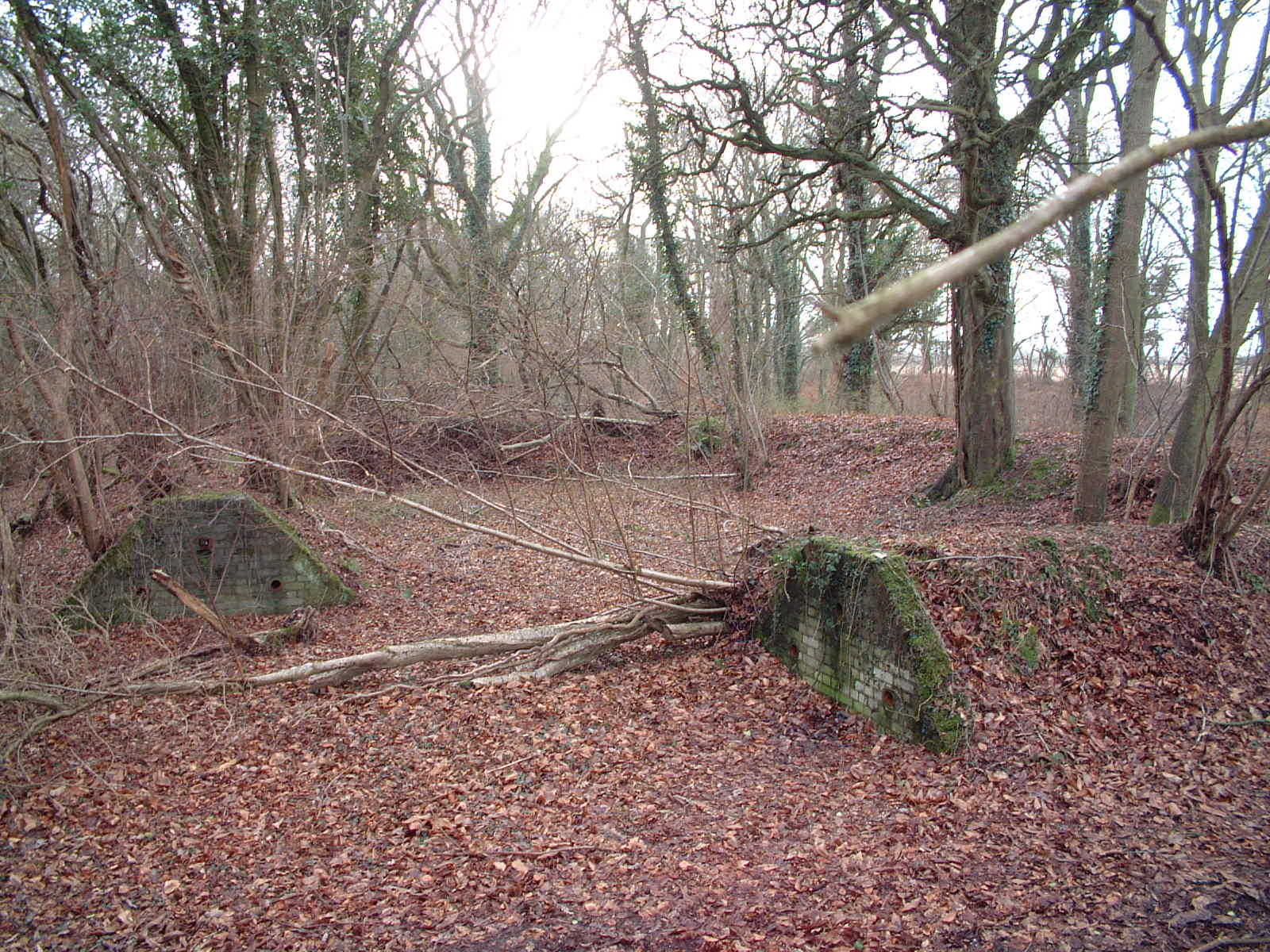
123 - Component Store - 10024/41.
Component store for bombs. As the airfield underwent a change from a small training aerodrome to having a large fighter element encroaching on it. The landing ground was extended and the fighter pens added and then a small bomb storage area for under wing bombs as fighters became fighter bombers and needed small bombs.
10 January 2004
RAF Warmwell Airfield Site
Knighton Wood.
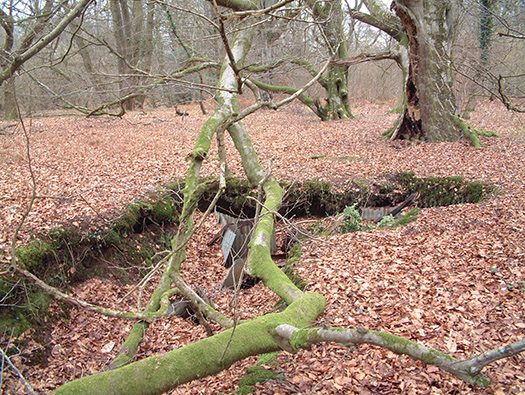
Another slit trench, one of many to be found here.
10 January 2004
RAF Warmwell Airfield Site
Knighton Wood.
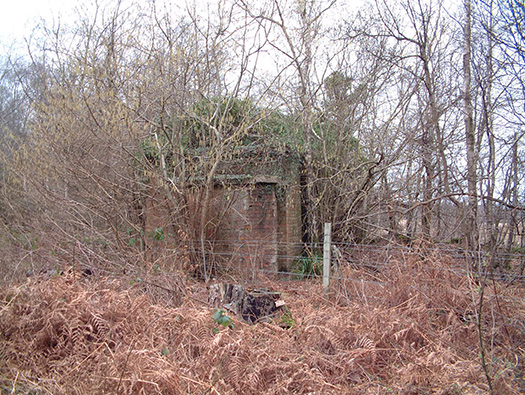
120 - Sleeping Shelter - P.B. - 15476/40.
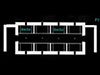
There were two sleaping shelters here designed to hold 32men in relative comfort as a protected building. Ground crew could sleep out here over night. I managed to get these photos before the whole site to the north of the track was dug up by the owners.
10 January 2004
RAF Warmwell Airfield Site
Knighton Wood.
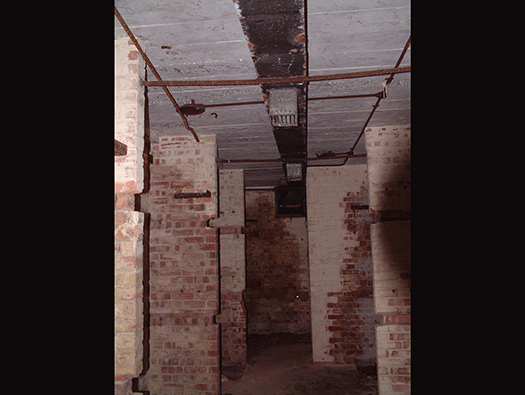
120 - Sleeping Shelter - P.B. - 15476/40.
Inside were eight bays with four tiers of bunks for 32men. They had electric lighting, and a sort of air conditioning, with electric fans in both ends.
10 January 2004
RAF Warmwell Airfield Site
Knighton Wood.
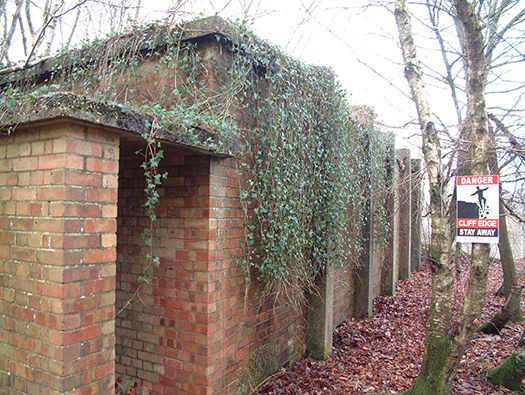
119 - Sleeping Shelter - P.B. - 15476/40.
The second pleasing shelter.
10 January 2004
RAF Warmwell Airfield Site
Knighton Wood.
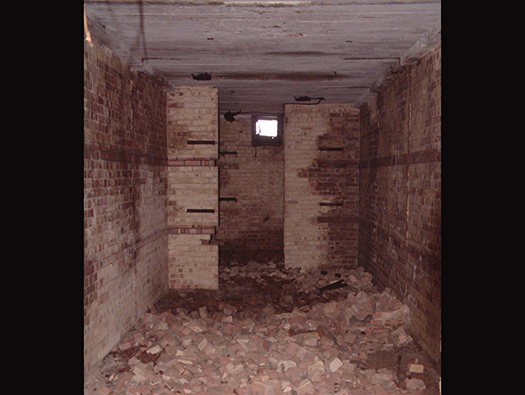
119 - Sleeping Shelter - P.B. - 15476/40.
This one was more damaged inside.
10 January 2004
RAF Warmwell Airfield Site
Knighton Wood.
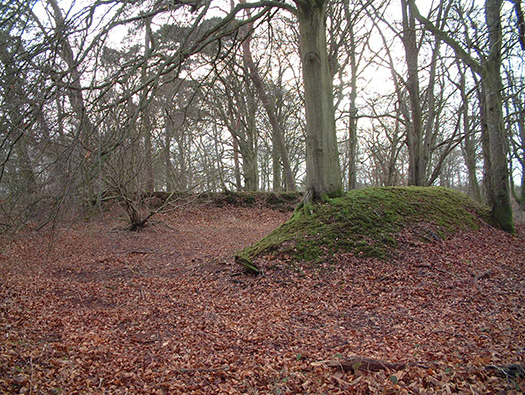
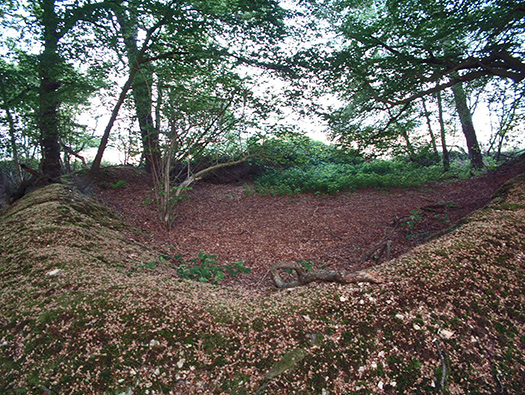
Fighter Pens.
Fighter pens still extant in Knighton Wood, about eight of them. Which is really good to still have these. They were made by stacking sand bags in a shallow U shape, where a fighter style aircraft could be pushed into and it gave them some safety from a local explosion.
10 January 2004
RAF Warmwell Airfield Site
Airfield Site.
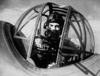
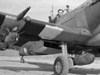
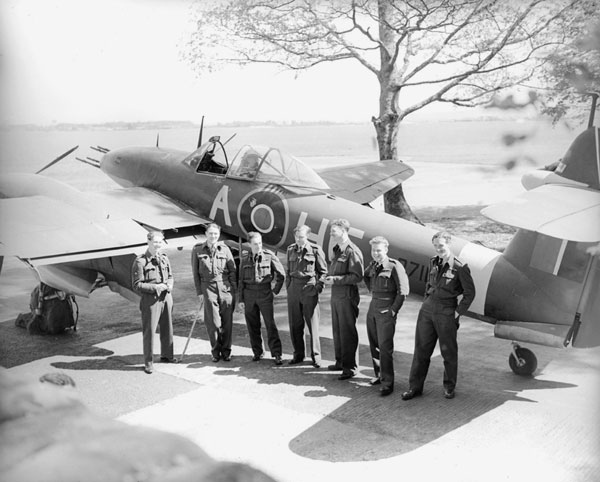
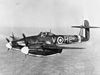
Fighter type Aircraft Pen a Westland Whirlwind in one of the fighter pens in Knighton Wood. No.263 Squadron. Not a very impressive airplane, with different engines, well maybe.
RAF Warmwell Airfield Site
Knighton Wood.
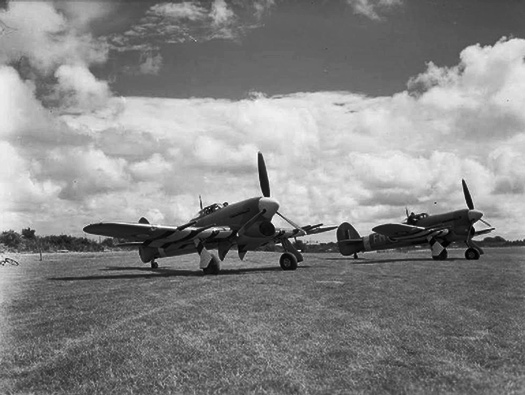
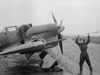
Two Typhoons of 257 Sqn RAF sitting at readiness on the grass. These planes went out on many a flight across to France and bombed/cannoned and then later with rockets. German radars, V1 sites, road convoys, bunkers on the Atlantikwall.
RAF Warmwell Airfield Site
Knighton Wood.
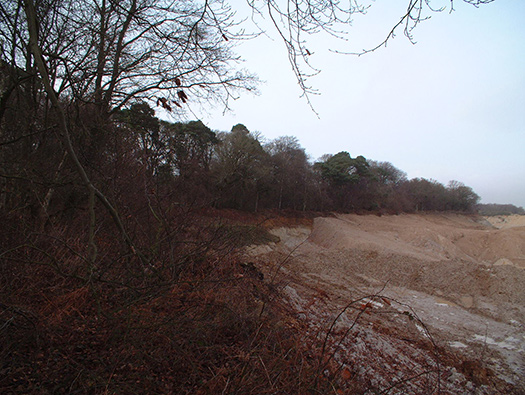
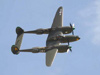
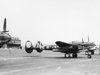
The perimeter track ran around the front of the wood and at least seven fighter pens, back in the trees. Planes would be backed into the pens and bomb tractors and fuel bowser´s, could use the track to deliver fuel and ordnance. September 1943 the 4th fighter Group USAAF turned up with three squadrons of P-38 Lightening´s. No's 428, 429 & 430 Sqdn's. In June just after D-Day they all left for Normandy and ALG A-11. Air Landing Grounds had two names 'A' American and 'B' British and then numbered. A-11 was situated south of Isigny-sur-Mer. Aérodrome ALG A-11 Saint-Lambert, Basse Normandie, France.

RAF Warmwell Airfield Site
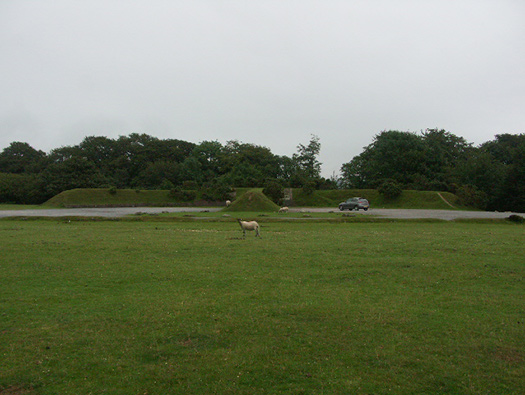
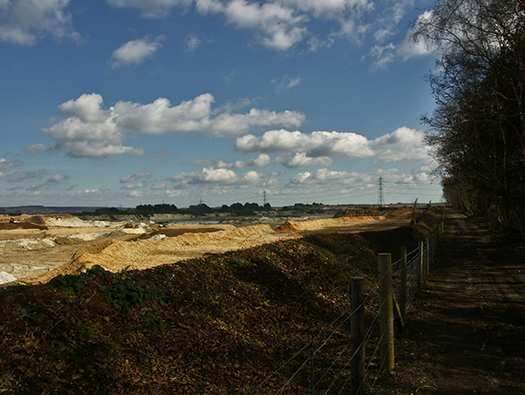
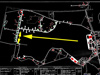
RAF Harrowbeer Devon An 11070/41 plan of 104 to 110 six standard RAF fighter pens that would have sat out on the norths side of the airfield.
Now completely removed.

RAF Warmwell Airfield Site
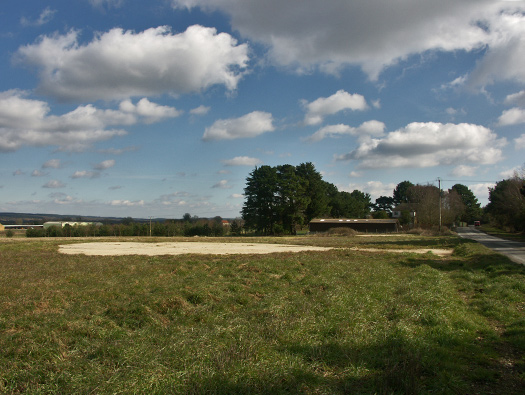
165 & 166 aircraft hard stand fighter dispersal, there are two remaining of 13 that were here on this side of the road.
06 March 2006
RAF Warmwell Airfield Site
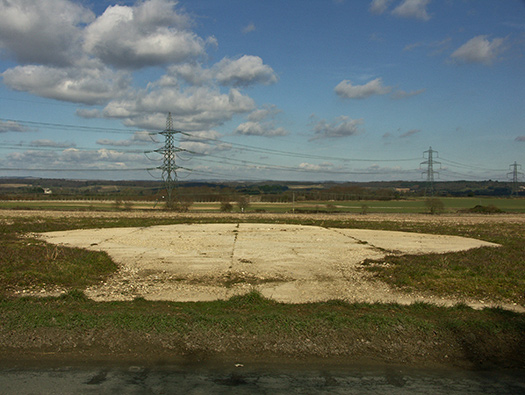
165 & 166 aircraft hard stand fighter dispersal.
06 March 2006
RAF Warmwell Airfield Site
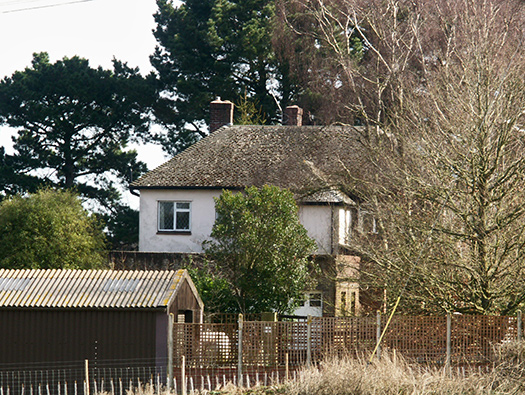
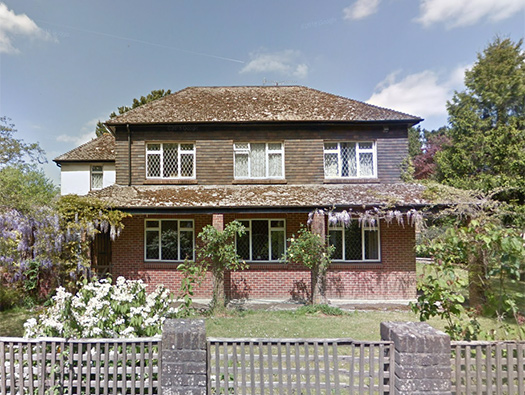
168 - Watch Office - P.B. - 12779/41.
Now a house, was the Watch Office P.B. 12779/41 that controlled the flying and was probably built around 1942.
06 March 2006

RAF Warmwell Airfield Site
168 - Watch Office - P.B. - 12779/41.
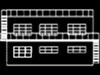
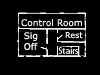
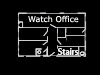
RAF Warmwell Airfield RAF Warmwell Airfield Site
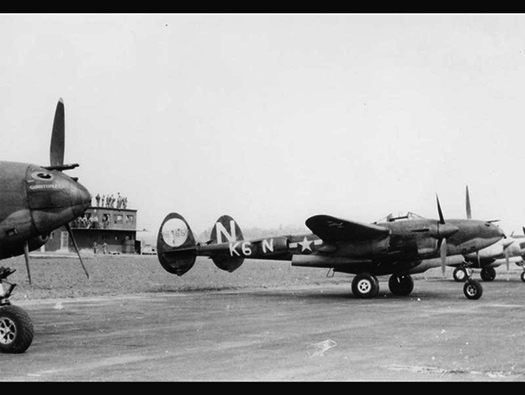
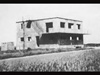
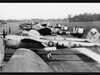
168 - Watch Office - P.B. - 12779/41 with P-38 Lightening of the 430th Fighter Squadron at Warmwell before leaving for ALG A-11 Saint-Lambert, Calvados Normandie.
RAF Warmwell Airfield Site