RAF Andover, Hampshire USAAF No.406
RAF · Hampshire · England · United Kingdom

RAF Lasham
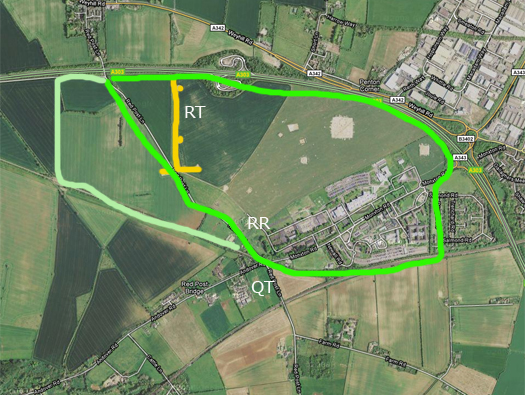
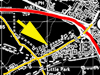
Dark Green line : is the airfield boundary
Light Green line : WW2 extension.
Yellow : Perimeter track.
RT: Radio transmitter hut?
QT : Quetta hut.
RR : 25yd rifle range.
RAF Lasham
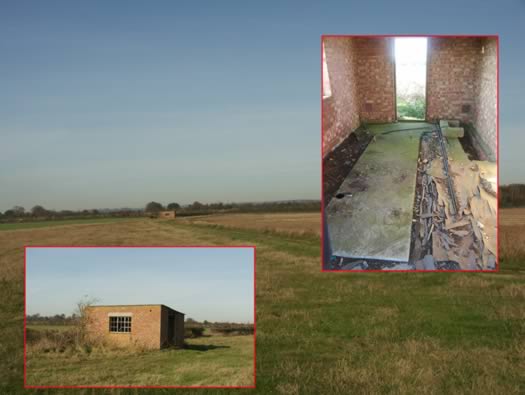
Could this have been a Radio transmitter hut?? It looks post WW2.
History:
RAF Andover was initially used to train bomber crews for the first world war using bombing ranges on Salisbury Plain. 207 and 215 squadrons RAF converted from Handley Page 0/100 to 0/400.
20 November 2005
RAF Lasham
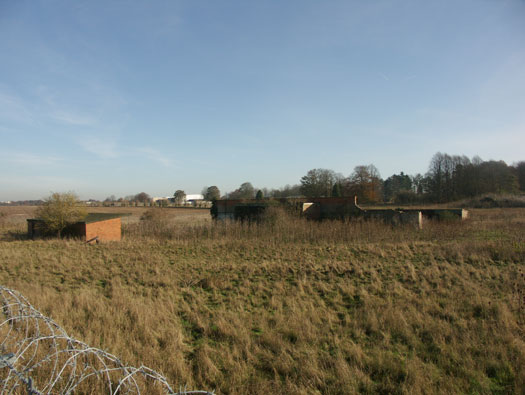
25yd range.
20 November 2005
RAF Lasham
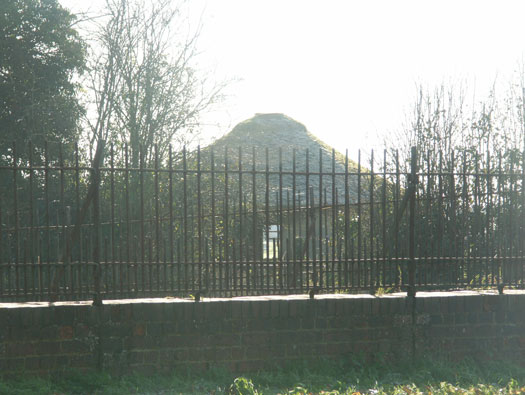
Just over the railway bridge we found a Quetta Hut. To find one is amazing but as we did that day find two more at RAF Middle Wallop.
History:
1922 the Pilotage School was disbanded with the usual post war cuts. Then No.7 Group Army Cooperation was formed here and also the RAF Staff College. 1926 The Wessex Bombing Area took over from No.7 Group.
20 November 2005
RAF Lasham
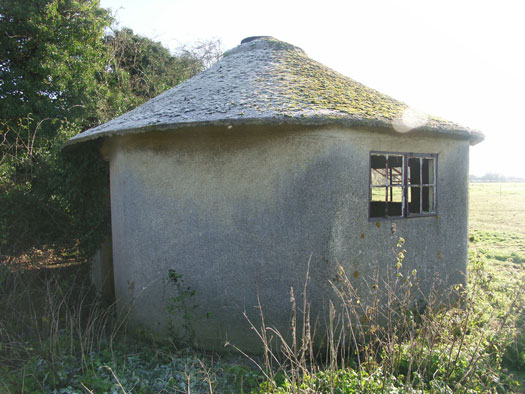
Designed by Major JH De W Waller in 1936 and often used as airfield defence accommodation. The huts were made of Jute stretched over poles and rendered with cement. As these huts have been empty for 60 odd years they are in better condition than many other types of wartime hutting. Say's a lot for the type.
History : No.3 Group (Bomber) Command came and went and so did No.2 Group. With the Munich Crisis No.76 Bomber Wing was formed.
20 November 2005
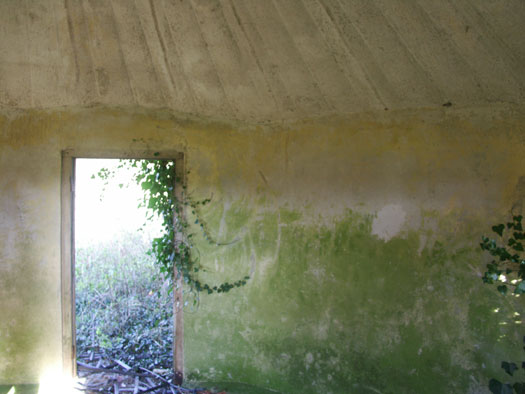
Inside the hut showing its construction and also its very good condition as the glass was remove a long time ago. A small iron stove would have been placed in the middle with its chimney exiting the roof in the center.
History:
Bomber Command left and Fighter Command arrived with No.22 Group Army Co-operation.
20 November 2005
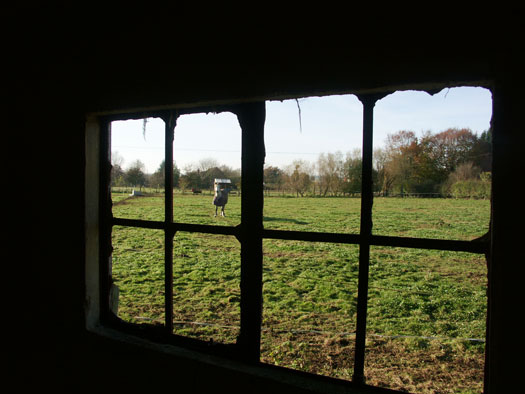
20 November 2005,
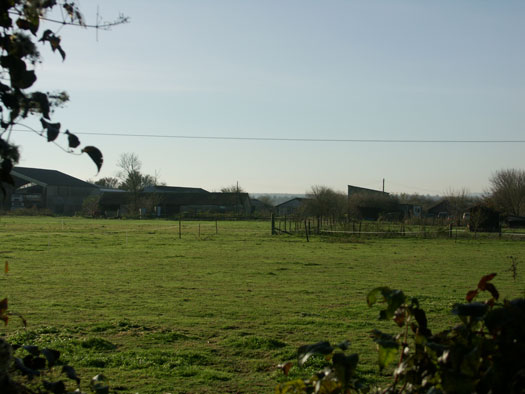
Looking out of the Quetta Hut at what looks like a dispersed camp. Possibly a small dispersed camp from WW2.
History:
We now come to Andover's wartime use. No.2 School of Army Co-operation was formed with Bristol Blenheim's and Avro Anson's.
20 November 2005
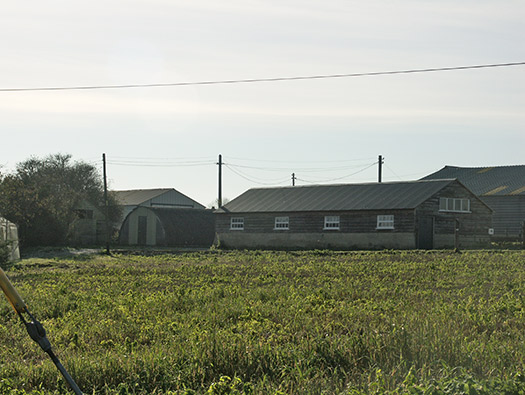
Dispersed site, certainly a Nissan hut and possibly a wooden hut.
This is due south of the airfield about a mile and to us it looked like part of a dispersed camp and farm?
History:
1941 No.2 S of AC became No.42 OTU converting from Lysanders to Blenhiems.
AC - Army Co-operation.
OTU - Operational Training Unit.
20 November 2005,
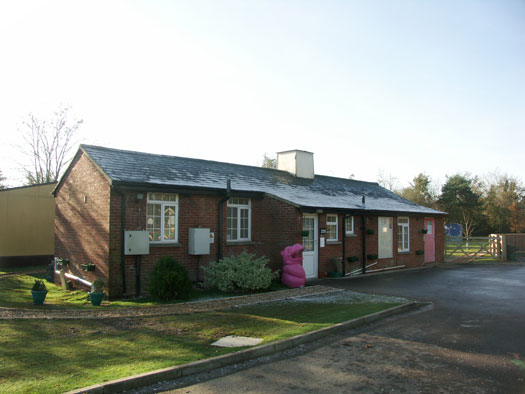
Now we are heading towards the main OLD part of the camp. Here on the east side of the road is what looks like a 1920's Guard House/Room and it may have had a bell or a clock on the roof in the center.
History:
Units as they did came and went mostly with training aircraft or obsolete and no use to the bomber offensive and redundant fighters. Andover from 1917 was always a training station until the yanks came.
20 November 2005
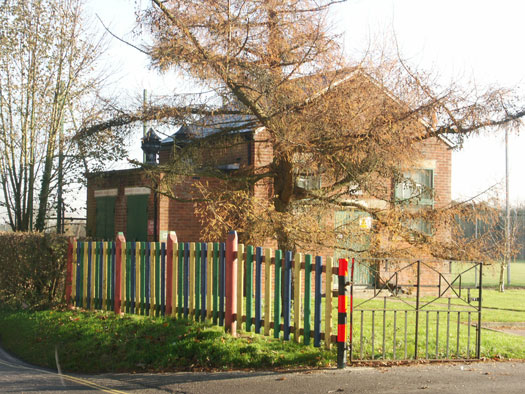
With the ending of WW1 and the running down of the RAF, most of the Training Depot Stations like Andover were closed down, but Andover managed to survive. The expansion schemes started in 1933 with 'A' and continued with 'L' 1938.
The last was 'M' November 1938 and it was not completed until May 1942.
As usual this was very political and money was tight. Schemes started and wound down or substituted later. So the above Power House could be dated from 1927 to 1933.
History:
The RAF Staff College was founded here on 1 April 1922, to provide staff training to selected officers, and eventually moved to Bracknell in 1970.

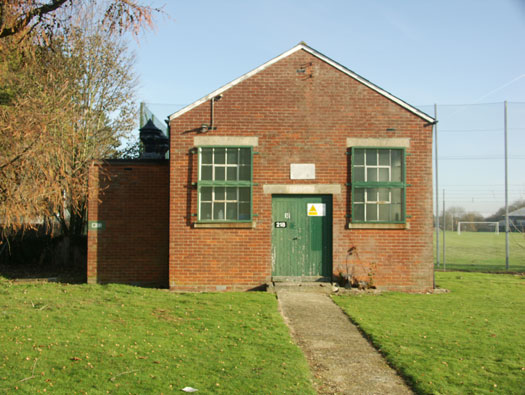
20 November 2005
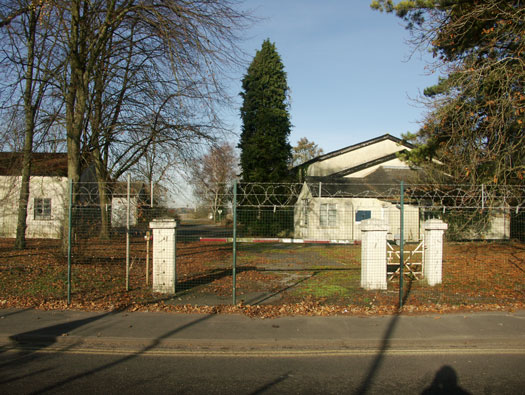
A small gated entrance to this part of the technical site with many large buildings still here from 1918 before the expansion period. There would have been the start of a row of 3 double and one single Belfast Truss hangars going off to the right at the far end of this camp road.
History:
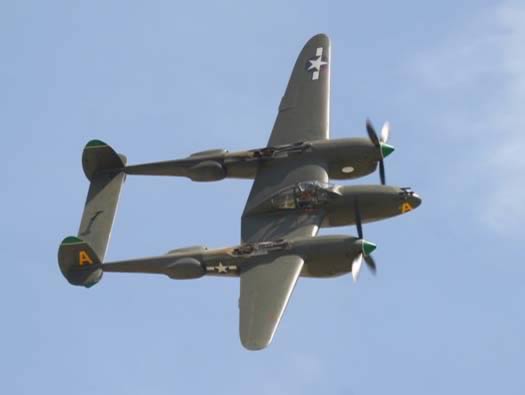
P-38s of the 71st FW attacked V1 rocket sites in France, covered the D-day landings and by the 20th July moved over to the Cotentin to continue the war.
20 November 2005
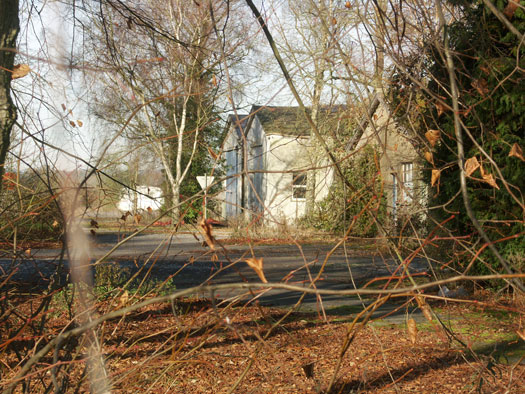
Could have been the main type store.
History:
With the Americans now gone Andover moved back gently into its training role with No43 OTU from RAF Oatlands on Salisbury Plain. You can imagine their luck at arriving from a bleak windswept hill top to arrive at a pre-war station with all the luxuries of good brick barracks and lovely large hangars for their aircraft.
20 November 2005
History:
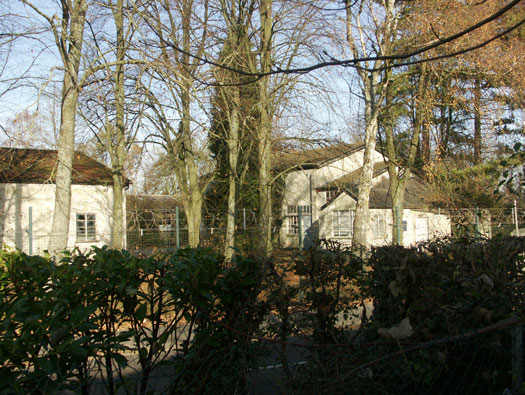
With the demise of so many wartime airfields Andover managed to stay on and by late 40's the RAF Staff College returned. A communications Squadron arrived, things are looking up. 1969 Staff college leaves and Air Support Command is formed here. March 1976 Andover is closed.
1977 the army take over with HQ Army Logistics Executive. (Big words for big boys).
20 November 2005
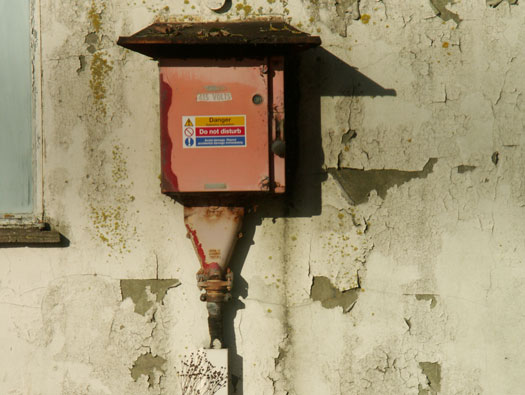
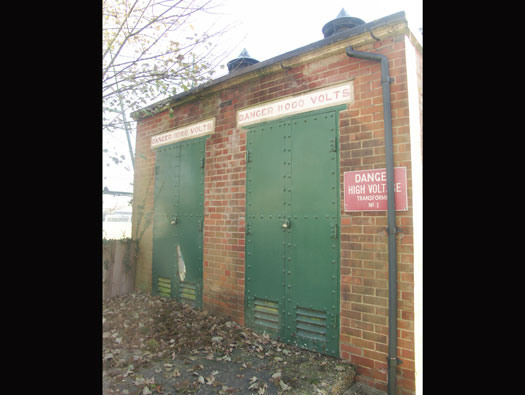
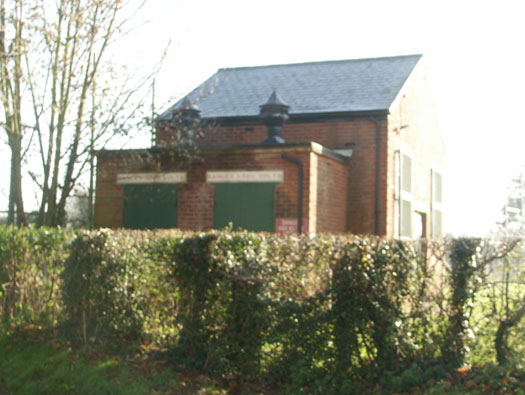
Electrical input to a building.
20 November 2005
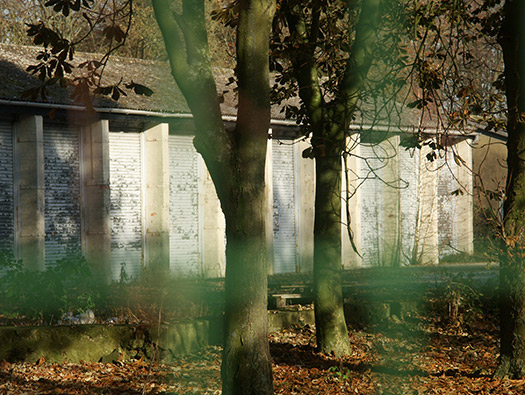
Motor transport garages, originally in 1918, they would have had no doors, now roller shutter doors have been fitted.
History:
All the hangars are now removed a large perimeter fence has been erected around an ultra modern office/factory style buildings. Only the few building we managed to photograph and possibly some more within the security fence we have not. That was 20 November 2005, what its like now I don't know.
20 November 2005
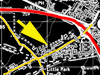
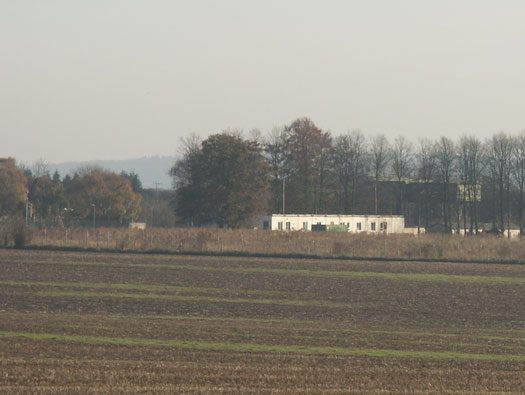
A long shot back towards the camp and the Braithwaite water towers.
Now most has been removed and there is a new Army facility and on the airfield, a load of factories.
20 November 2005
<iframe src="https://www.facebook.com/plugins/video.php?height=314&href=https%3A%2F%2Fwww.facebook.com%2Freel%2F1408155861196543%2F&show_text=false&width=560&t=0" width="560" height="314" style="border:none;overflow:hidden" scrolling="no" frameborder="0" allowfullscreen="true" allow="autoplay; clipboard-write; encrypted-media; picture-in-picture; web-share" allowFullScreen="true"></iframe>