Hameau de Troy0on WW1 1914
Aisne · WW1 · France

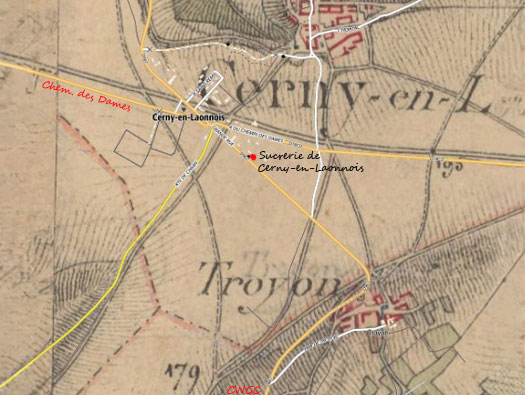
The French 1866 map of the area, showing Cerny as a large village over the top of the Chem. des Dames road. Troyon as a bustling village. The Sucrerie, sugar refinery was I think around the red dot. The British had advanced from the south and here, pushed the German army up and over the Chem des Dames road.
Ignf 1866
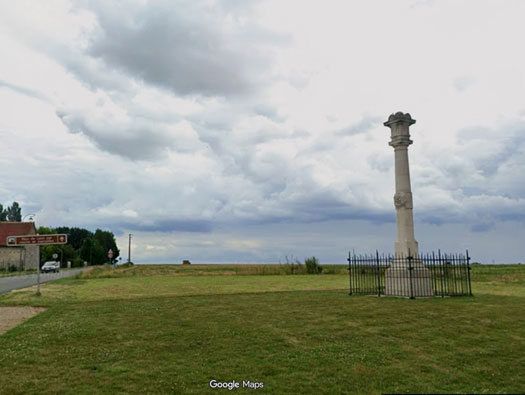
Also known as the Colonne des Britanniques, this monument was erected not far from the former Cerny-en-Laonnois sugar refinery (“such a trying place for the combatants”, according to Nicolas Offenstadt), where the first battle of the Chemin des Dames took place in 1914. Blocked there in September, British soldiers had to dig trenches and were gradually replaced by the Freech, so they could move to the Somme and bitter fighting ensued until early 1915, when this sector fell to the Germans. Many British soldiers are now buried in the Vendresse-Beaulne cemetery, built below, in the direction of Bourg-et-Comin.
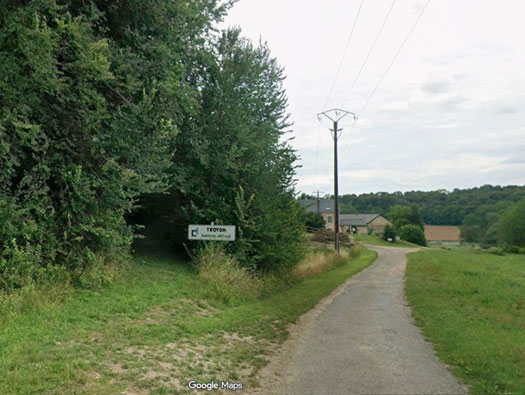
What is left of the Hameau de Troyon today.
Walking up the track on the left brings you to the old church yard.
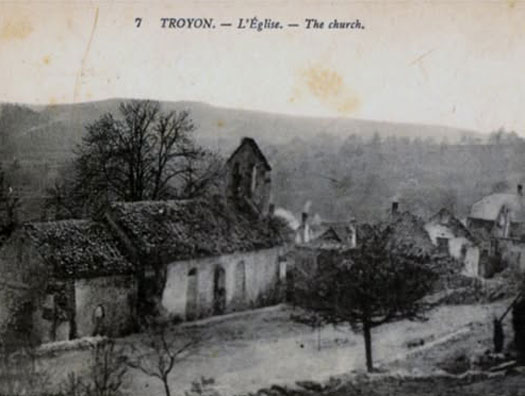
L'Église as it looked pre WW1
around 1912
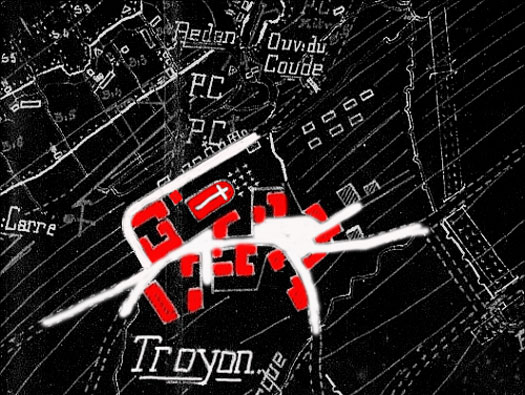
Village centre.
Troyon was a small settlement on the southern slope of the Chemin des Dames ridge in France's Aisne department, between Vendresse and Cerny-en-Laonnois, which saw intense fighting in September 1914 and was never rebuilt.
It had around 50 residents in 1911, consisting of roughly four farms and 30 cottages along with a church dedicated to Saint-Éloi.
plan
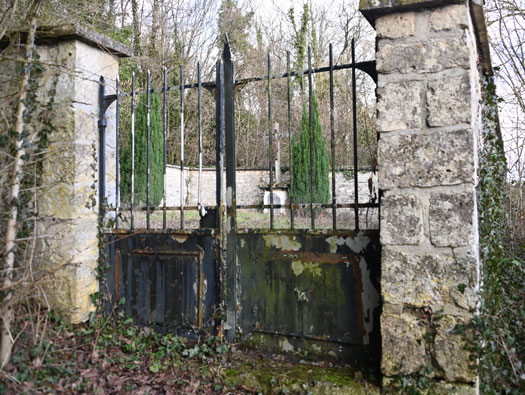
The cemetery.
31 January 2025
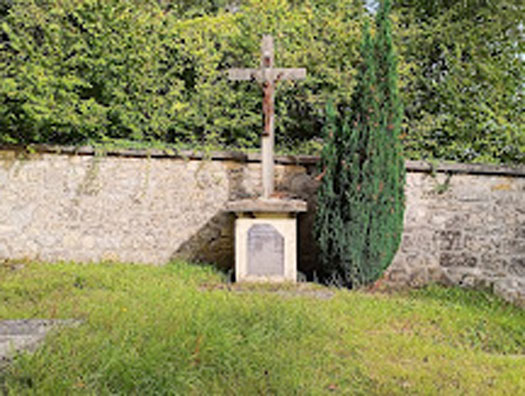
Memorial to the church.
31 January 2025
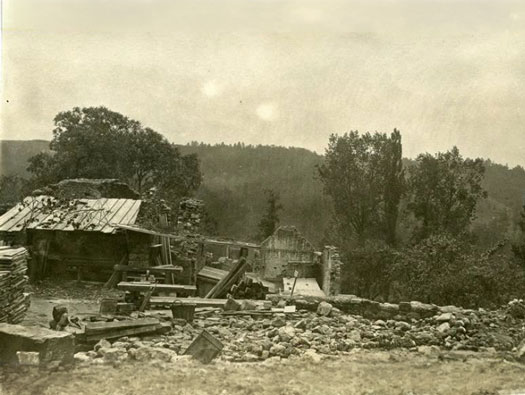
The village through the battles.
unknown date
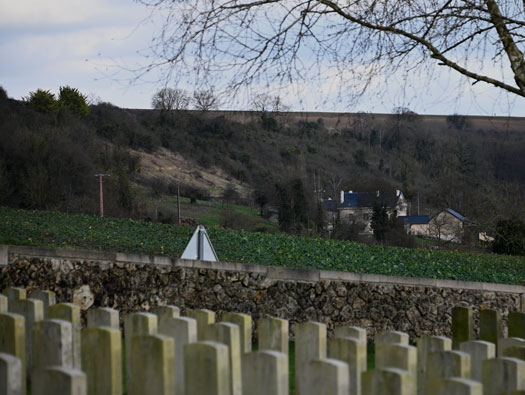
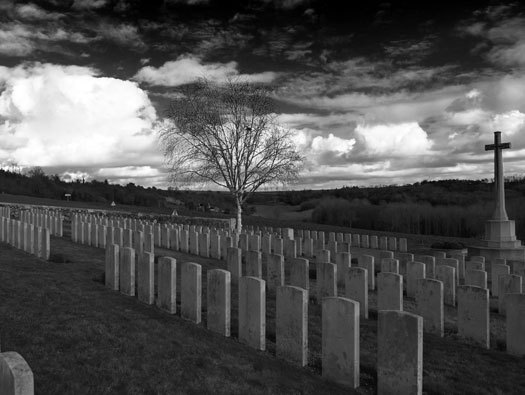
View from the CWGC cemetery towards the old village.
31 January 2025
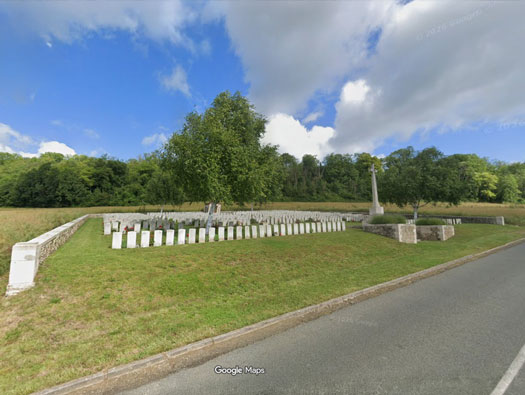
Entered the fighting zone in September 1914 as the British Expeditionary Force (BEF) pursued withdrawing German forces after the Battle of the Marne.
Units of the BEF's 1st Division—including the 2nd Battalion, Royal Sussex Regiment and the 2nd King's Royal Rifle Corps (2/KRRC)—used the hamlet for shelter, headquarters, and as a starting point for attacks toward the plateau, a sugar factory near Cerny, and the Chemin des Dames.
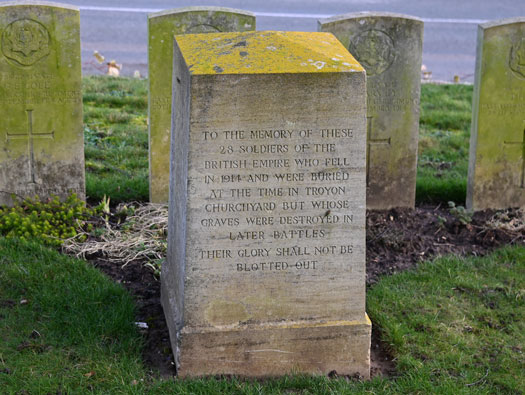
Troyon's church served as a first aid post during the fighting, and 28 British soldiers buried in the churchyard in 1914 had their graves destroyed by later shellfire; they are commemorated at Vendresse British Cemetery.
31 January 2025
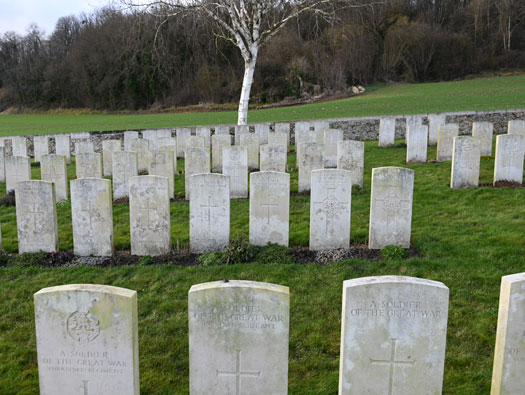
https://www.ww1-yorkshires.org.uk/html-files/vendresse-british-cemetery.htm
Details of all the men buried here.
31 January 2025
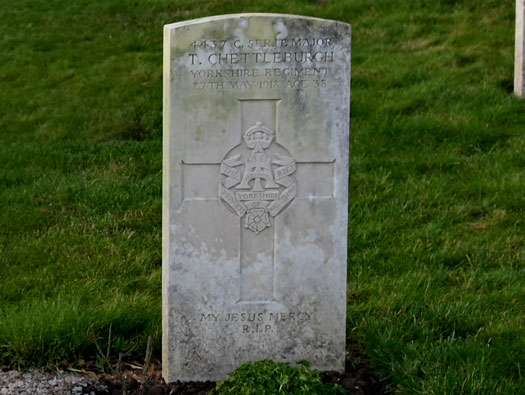
Company Serjeant Major Thomas Chettleburgh. 4437.
2nd Battalion the Yorkshire Regiment. Son of Thomas and Ellen Chettleburgh; husband of Julia Chettleburgh, of 53, Charlotte St., Redcar, Yorks. Born at East Dulwich, London. Killed 27 May 1918. Aged 38.
Born Camberwell (Middx), Enlisted Warley, Resided Redcar.
A quiet sector, the British troops of IX Corps (including the 50th (Northumbrian) Division and 8th Division) were sent to the Aisne and Chemin des Dames in May 1918 to recover, train reinforcements, and hold what was expected to be a quieter front after heavy fighting on the Somme and the Lys . On 27 May 1918, the Germans launched Operation Blücher-Yorck with a massive artillery and poison-gas bombardment followed by storm troops. 4th and 5th Battalions, The Yorkshire Regiment (Green Howards): Serving in the 50th (Northumbrian) Division (150th Brigade), these battalions were positioned around Craonne, the Plateau de Californie, and the Aisne valley. As detailed in the5th Battalion War Diary, the battalion was decimated during the assault. Commanding officer Lt. Col. J. A. R. Thomson was killed near Craonne, and many men were killed, wounded, or taken prisoner.
There are some very good books about the battles up here on the Chemin des Dames.
31 January 2025
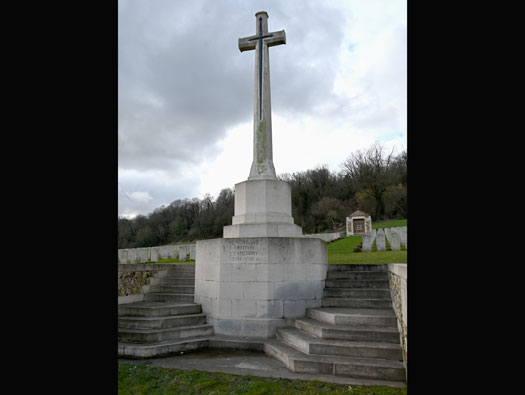
CWGC Cimetière Militaire Britannique de Vendresse-Beaulne.
31 January 2025
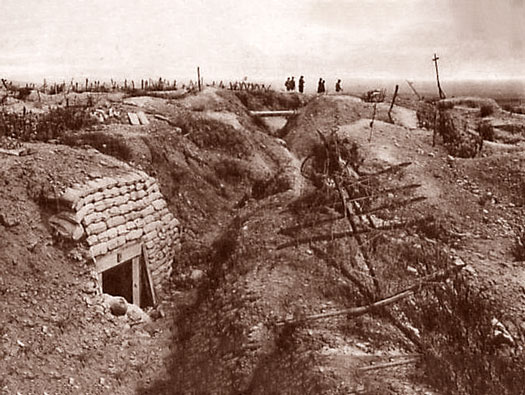
Trenches around Craonne on the Chemins des Danes, not far from here.
31 January 2025