RAF Kemble
RAF · Gloucester · England · United Kingdom

Html
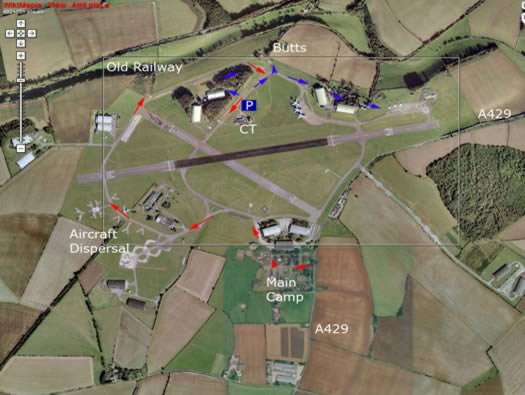
The very small red arrows are where we drove around and the are blue are where we walked.
History : the airfield opened in 1938 as an Aircraft Storage Unit of the RAF Expansion Scheme. The Expansion Scheme era is very interesting in an architectural sense. Buildings were allowed to be designed by modern architects in an English/Georgian style and made to fit in to the surroundings by using local materials,
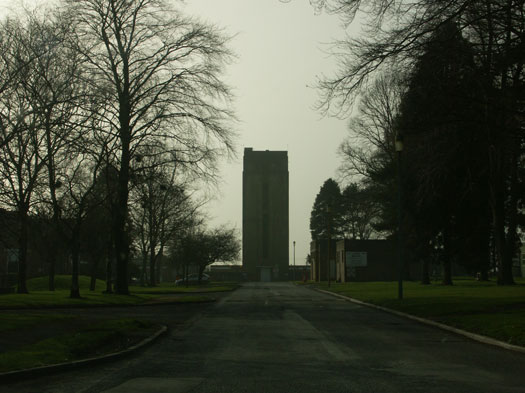
Just inside the main gate, we were so taken aback by Kemble being open that we forgot to take some of the most important pictures, like the entrance and the fire tender shed which is a very trendy cafe bar.
History : look at the Google Airphoto you will see a well designed layout of the main camp using the expansion era design with hangars facing the grass airfield, the technical and living accommodation behind.
20 March 2005
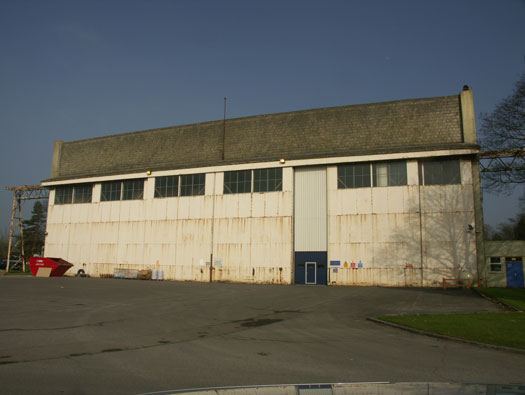
C Type hangar one of the main three (1 C, 2 D type)
History : type C airplane shed was designed as a standard hangar for the period to house larger aircraft.
20 March 2005
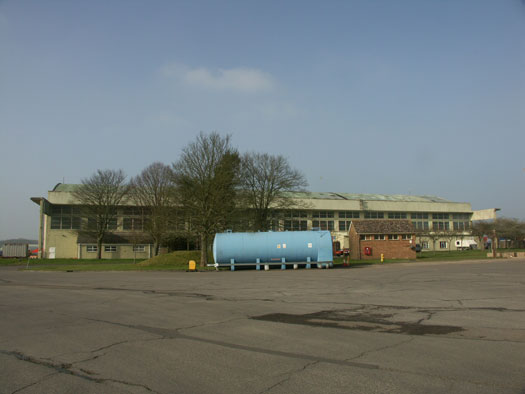
Side view of this D Type of 1936 design.
History : made of 14inch reinforced concrete walls and steel doors filled with gravel (armoured type). Concrete door gantry and glazed all along its sides.
20 March 2005
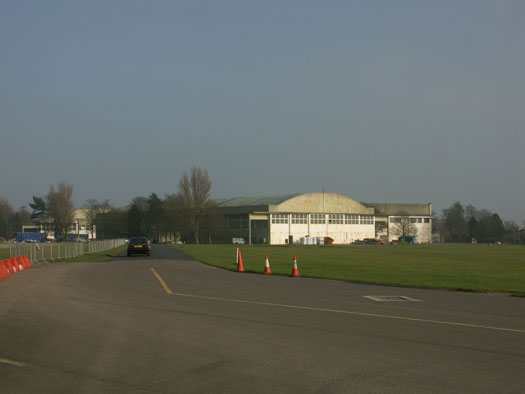
Looking back at the distinctive front of a D Type hangar with its six large steel doors and concrete door gantries.
20 March 2005
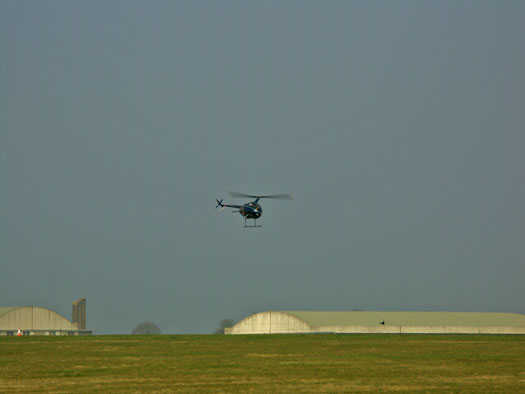
Helicopter training takes place here.
Go To Robinsons website.
20 March 2005
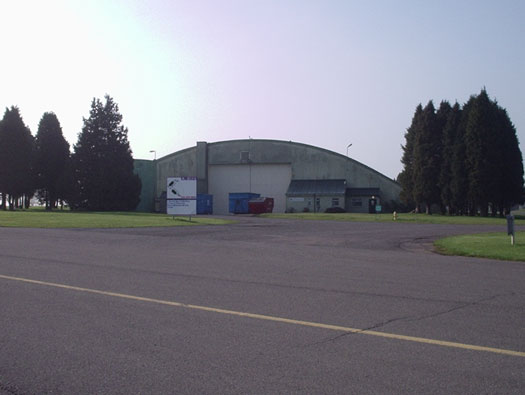
E type storage shed
History : E shed designed in 1937 for aircraft storage.
20 March 2005
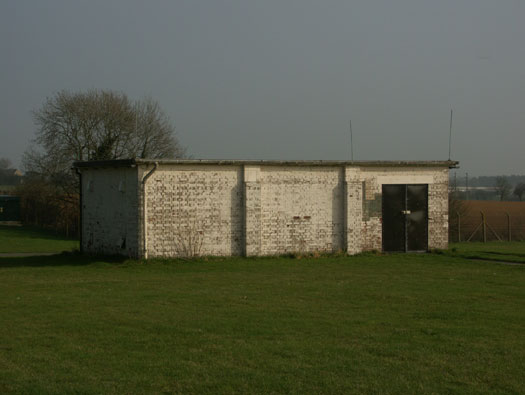
So what was it , it has four lightning conductors on its corners?
History : No5 MU was formed here in 1938 as an aircraft storage unit. Late 1941 work started on its runways and two were laid out in an east/westerly direction.
20 March 2005
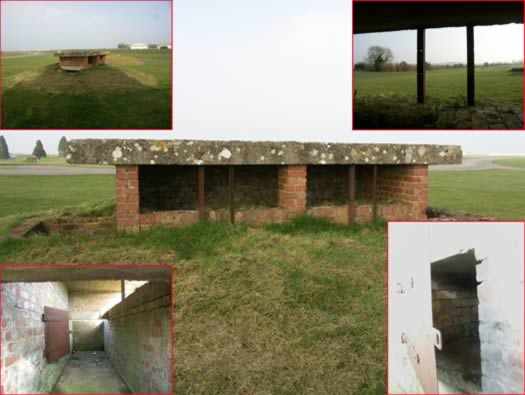
There are several defence positions around the airfield, they are made of brick walls and concrete roofs with an ammunition space behind a steel door in the back wall.
The iron bars may have held the mountings for machine-guns?
Below: looking along the trench with the ammunition space and its steel door.
20 March 2005
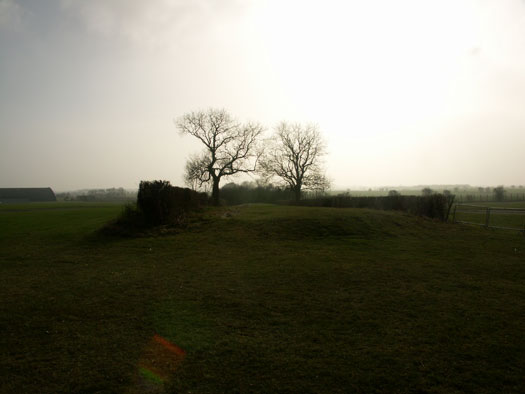
The Roman road the Fosse Way.
It ran from Exeter (Isca Dumnoniorum) NE past Bath (Aquae Sulis), Cirencester (Corinium Dobunnorum), and Leicester (Ratae Coritanorum) to Lincoln (Lindum). You can see the Roman design of road making. One of the connecting roadways runs along the route of the old road .For Roman Road construction Click Here.
20 March 2005
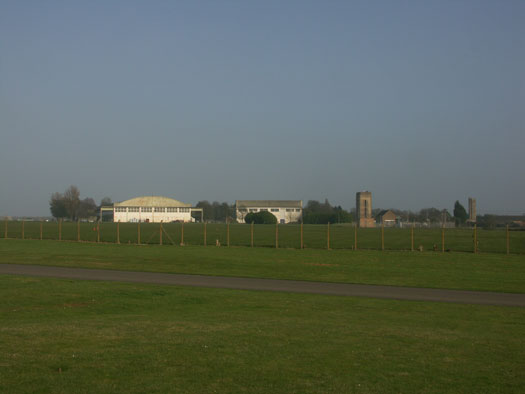
looking back at the technical site with a D & C type hangars , water tower and heating chimney.
History : glider assembly started in 1942
Over 500 Wellington's were converted here to go out to the middle east. By December 1945 at its peak 1,030 aircraft were in storage here.
20 March 2005
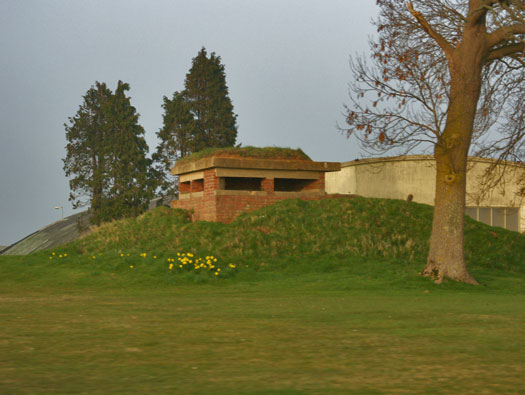
Another defence position (pillbox type) made of the same red bricked and concrete roof.
20 March 2005
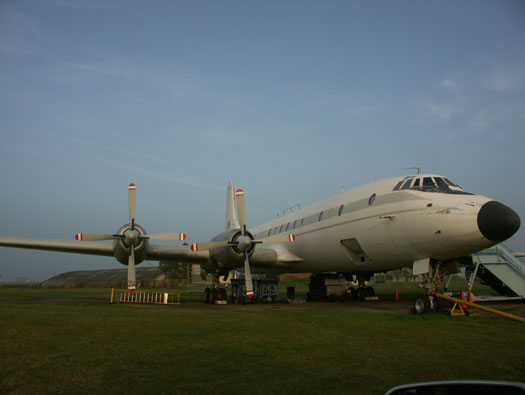
Bristol Britannia, possibly the best looking prop plane ever made. Bristol type 175 Britannia Series 253 (RAF C.MK1).
History : with the end of the war jets started to arrive and by 1952, 550 Sabres came in batches from Canada to be stored and made ready for squadron use.
20 March 2005
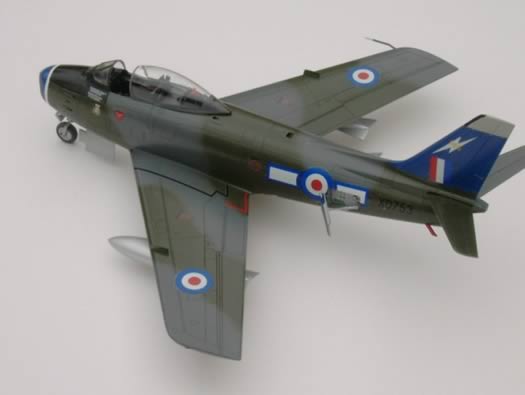
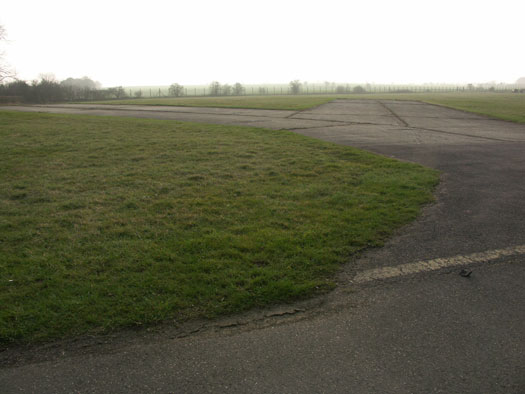
Aircraft dispersal. There were several types of aircraft dispersal's and this is one used mostly in aircraft storage units. Y type.
History : Central Flying School arrived with Foland Gnats and thus the Red Arrows were formed.
1983 saw its closure.
20 March 2005


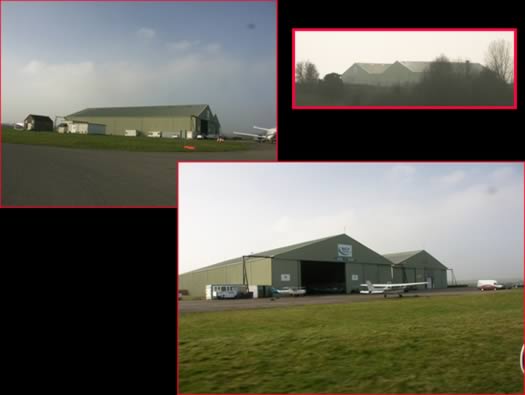
Ministry of Aircraft Production Hangars B1 repair sheds. At RAF Wroughton they were used for glider assembly.
20 March 2005
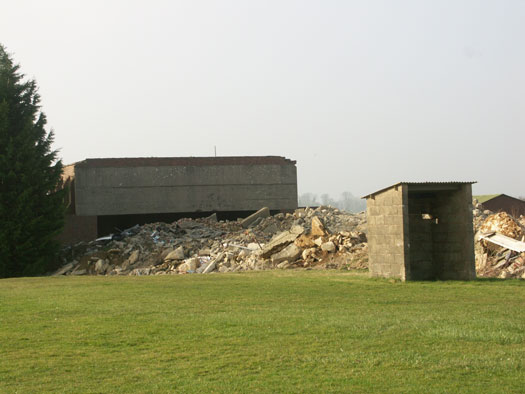
Cannon stop butts for aircraft to test and aim their guns.
20 March 2005